
Catalogue Search | MBRL


Are you sure you want to remove the book from the shelf?

{{itemTitle}}
7
result(s) for
"Davis, Kenneth C. author"
Sort by:

War debate shouldn't go to 'waste', Discussing troop deaths but avoiding use of the 'W' word denies truth to a grieving country
In a recent unscripted moment, Republican Sen. John McCain remarked to David Letterman, \"We've wasted a lot of our most precious treasure, which is American lives, over there.\" McCain should have taken a cue from the public spanking Democratic Sen. Barack Obama had received only a few weeks earlier when he spoke the unspeakable: \"We now have spent $400 billion and have seen over 3,000 lives of the bravest young Americans wasted.\" Chastened and apologetic, both men quickly covered their tracks by claiming they should have said \"sacrificed,\" not \"wasted.\" In word-wise America, \"sacrifice\" has triumphed as the socially polite term of choice for referring to the now more than 3,400 American lives lost in four years of difficult fighting in Iraq. As the wounds of the Civil War were forgotten in the early 20th century, Decoration Day emerged as the kickoff for summer picnics. But the deadly trenches of World War I, the \"war to end all wars,\" gave Decoration Day, later renamed Memorial Day, a new salience. Inspired by \"In Flanders Fields,\" a Canadian army surgeon's poem, the poppy became the symbol of the holiday's poignant purpose - remembering the fallen soldier.
Newspaper Article

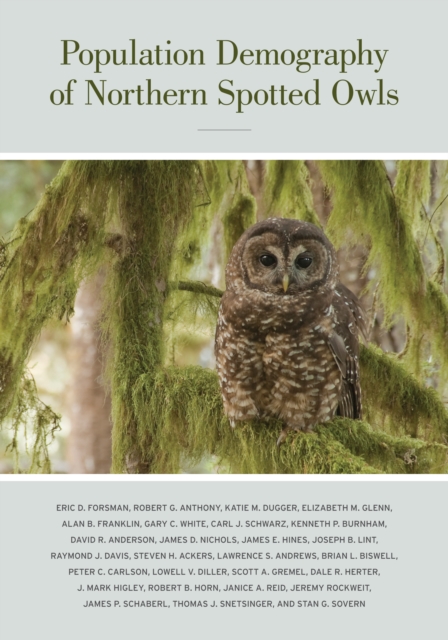
Population demography of northern spotted owls
The Northern Spotted Owl, a threatened species that occurs in coniferous forests in the western United States, has become a well-known environmental symbol. But how is the owl actually faring? This book contains the results of a long-term effort by a large group of leading researchers to document population trends of the Northern Spotted Owl. The study was conducted on 11 areas in the Pacific Northwest from 1985 to 2008, and its objectives were both to evaluate population trends and to assess relationships between reproductive rates and recruitment of owls and covariates such as weather, habitat, and the invasion of a closely related species, the Barred Owl. Among other findings, the study shows that fecundity was declining in five populations, stable in three, and increasing in three areas. Annual apparent survival rates of adults were declining in 10 out of 11 areas. This broad, synthetic work provides the most complete and up-to-date picture of the population status of this inconspicuous forest owl, which is at the center of the complex and often volatile debate regarding the management of forest lands in the western United States.
eBook

Population Demography of Northern Spotted Owls
The Northern Spotted Owl, a threatened species that occurs in coniferous forests in the western United States, has become a well-known environmental symbol. But how is the owl actually faring? This book contains the results of a long-term effort by a large group of leading researchers to document population trends of the Northern Spotted Owl. The study was conducted on 11 areas in the Pacific Northwest from 1985 to 2008, and its objectives were both to evaluate population trends and to assess relationships between reproductive rates and recruitment of owls and covariates such as weather, habitat, and the invasion of a closely related species, the Barred Owl. Among other findings, the study shows that fecundity was declining in five populations, stable in three, and increasing in three areas. Annual apparent survival rates of adults were declining in 10 out of 11 areas. This broad, synthetic work provides the most complete and up-to-date picture of the population status of this inconspicuous forest owl, which is at the center of the complex and often volatile debate regarding the management of forest lands in the western United States.
eBook

Neurobiology of mental illness
This updated second edition reviews the basic neurosciences and the tools that are available for the study of mental disorders in humans. It covers the major psychiatric disorders in a consistent way: their diagnostic classification, molecular genetics, functional neuroanatomy, neurochemistry and pharmacology, neuroimaging, and more.
eBook

CHILDREN'S BOOKS
The narrator of ''That New Pet!'' by [Alane Ferguson], illustrated by [Catherine Stock], is a Siamese cat, who, along with a dog and a parrot, finds his life disrupted by the arrival of their human owners' baby daughter. At first they don't know what the new critter is, but the cat, the smartest of the bunch, figures it out and says ominously, ''When a baby comes - EVERYTHING CHANGES!'' Getting the baby to smile is also the key to ''Little Rabbit's Baby Brother,'' by [Fran Manushkin], illustrated by Diane de Groat. Little Rabbit, whom some may remember from the popular ''Little Rabbit's Loose Tooth,'' goes on a picnic with her father and pregnant mother. She does tricks for her doting parents and basks in their attention. But at home, when her parents talk about the coming new baby, Little Rabbit worries about losing her place in the house. She has an anxious, though not too scary, dream about searching for a new home: She runs across some friendly polar bears who invite her to live with them but finds their hugs too icy. A more realistic, less rosy approach marks ''It's Not Fair!'' by [Anita Harper], illustrated by [Susan Hellard]. The story is told by a young kangaroo who gets angry when her new brother seems to receive preferential treatment. ''That's not fair,'' the kangaroo sulks as her brother's messes are ignored while hers are criticized. ''It's not fair,'' she fumes as the baby sitter comforts her screaming brother while shushing her. But the tables start to turn as the book explores her baby brother's feelings. The little kangaroo begins to realize that her brother has some complaints too. He can't splash through puddles on rainy days or go sledding like his sister. He can't accompany her to her play-group. When the baby brother finally learns to talk, he watches his sister leave for a party and howls ''It's not fair!''
Book Review