
Catalogue Search | MBRL


Are you sure you want to remove the book from the shelf?

{{itemTitle}}
391
result(s) for
"Davis, Sarah H"
Sort by:

Evaluation of the implementation of the H1N1 pandemic influenza vaccine in local health departments (LHDs) in North Carolina
Effective conduct of vaccination campaigns by public health authorities can reduce morbidity and mortality associated with influenza. The emergence of the pandemic H1N1 influenza in April 2009 resulted in an unprecedented vaccination campaign in the US during the 2009–2010 influenza season. The variety of methods local health departments (LHDs) utilized to cope with a mismatch between public demand and supply and ever-changing guidelines have gone unexamined thus far. The purpose of this research is to identify and share lessons learned related to H1N1 influenza vaccination activities at LHDs.
In April 2010, a comprehensive survey was developed to evaluate 2009-10 LHD H1N1 vaccination practices and document lessons learned. A stratified random sample was selected from NC's 85 LHDs. Interviews were conducted with key personnel involved in LHD vaccination campaigns. Results were analyzed to identify quantitative trends and qualitative themes.
Twenty-five of 26 LHDs (96% response rate) participated in our survey. Each LHD utilized a different approach to address the challenges they faced during their H1N1 vaccination campaign. Variation between LHDs was found in terms of the types of vaccine-dispensing methods implemented and in the selection of outside organizations LHDs partnered with to assist with vaccinations.
Having a Continuity of Operations Plan (COOP) and pandemic influenza plan, hiring temporary staff, building on existing community partnerships, implementing a variety of vaccination strategies and using a variety of sites are strategies that will help LHDs deal more effectively with challenges posed by future pandemics.
Journal Article
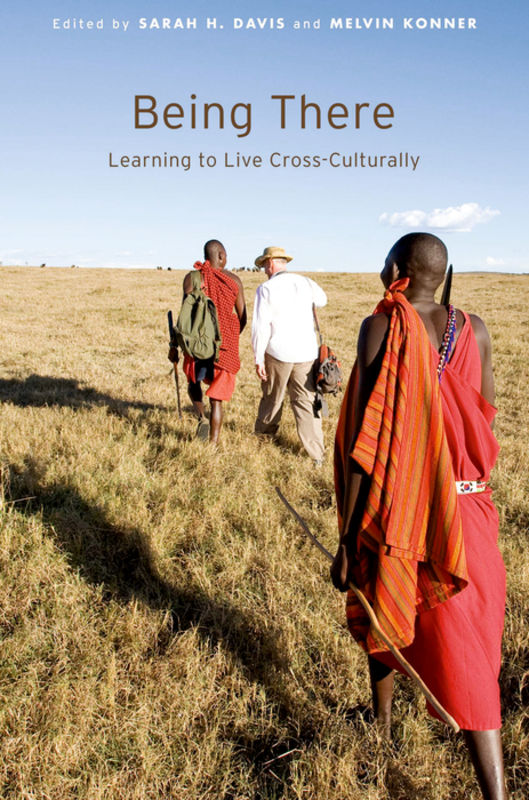
Being there : learning to live cross-culturally
How can an academic who does not believe evil spirits cause illness harbor the hope that her cancer may be cured by a healer who enters a trance to battle her demons? Whose actions are more (or less) honorable: those of a prostitute who sells her daughter's virginity to a rich man, or those of a professor who sanctions her daughter's hook-ups with casual acquaintances? As they immerse themselves in foreign cultures and navigate the relationships that take shape, the authors of these essays, most of them trained anthropologists, find that accepting cultural difference is one thing, experiencing it is quite another. In tales that entertain as much as they illuminate, these writers show how the moral and intellectual challenges of living cross-culturally revealed to them the limits of their perception and understanding.
Their insights were gained only after discomforts resulting mainly from the authors' own blunders in the field. From Brazil to Botswana, Egypt to Indonesia, Mongolia to Pakistan, mistakes were made. Offering a gift to a Navajo man at the beginning of an interview, rather than the end, caused one author to lose his entire research project. In Côte d'Ivoire, a Western family was targeted by the village madman, leading the parents to fear for the safety of their child even as they suspected that their very presence had triggered his madness. At a time when misunderstanding of cultural difference is an undeniable source of conflict, we need stories like these more than ever before.
eBook

An Evaluation of Community Assessment for Public Health Emergency Response (CASPER) in North Carolina, 2003-2010
Community Assessment for Public Health Emergency Response (CASPER) is a group of tools and methods designed by the US Centers for Disease Control and Prevention (CDC) to provide rapid, reliable, and accurate population-based public health information. Since 2003, North Carolina public health professionals have used CASPERs to facilitate public health emergency responses and gather information on other topics including routine community health assessments.
To date, there has been no evaluation of CASPER use by public health agencies at the state or local level in the US.
Local health departments of North Carolina reported when and how CASPERs were used during the period 2003 to 2010 via an online survey. Data on barriers and future plans for using CASPERs also were collected.
Fifty-two of North Carolina's 85 local health departments (61%) completed the survey. Twenty-eight departments reported 46 instances of CASPER use during 2003 to 2010. The majority of CASPERs were performed for community health assessments (n = 20, 43%) or exercises (n = 11, 24%). Fifty-six percent of respondents indicated they were \"likely\" or \"very likely\" to use CASPERs in the future; those who had prior experience with CASPERs were significantly more likely (P = .02) to report planned future use of CASPERs compared to those without prior experience with the tool. Lack of training, equipment, and time were the most frequently reported barriers to using CASPERs.
Local public health agencies with clear objectives and goals can effectively use CASPERs in both routine public health practice and disaster settings.
Journal Article

O-Mannosyl Phosphorylation of Alpha-Dystroglycan Is Required for Laminin Binding
Alpha-dystroglycan (α-DG) is a cell-surface glycoprotein that acts as a receptor for both extracellular matrix proteins containing laminin-G domains and certain arenaviruses. Receptor binding is thought to be mediated by a posttranslational modification, and defective binding with laminin underlies a subclass of congenital muscular dystrophy. Using mass spectrometry- and nuclear magnetic resonance (NMR)-based structural analyses, we identified a phosphorylated O-mannosyl glycan on the mucin-like domain of recombinant α-DG, which was required for laminin binding. We demonstrated that patients with muscle-eye-brain disease and Fukuyama congenital muscular dystrophy, as well as mice with myodystrophy, commonly have defects in a postphosphoryl modification of this phosphorylated O-linked mannose, and that this modification is mediated by the like-acetylglucosaminyltransferase (LARGE) protein. These findings expand our understanding of the mechanisms that underlie congenital muscular dystrophy.
Journal Article
My Family’s Honor
As the monstrous ferryboat pulled into Bastia, one of the two cities on the island of Corsica, I stood with my husband, David, and my fifteen-month-old son, Jackson, on the deck of the boat looking expectantly, if with tired, jet-lagged eyes, upon the shores that would be our new home. The cluster of buildings that we approached was weathered and gray, nearly blending in with the craggy mountain scape and gray skies that rose up behind it. It looked like a photograph of a bright, Mediterranean port-city you’d see in a coffee-table book, but stripped of its color, like a
Book Chapter
Introduction
When I first read Marjorie Shostak’sNisa(Harvard University Press, 1981) and saw that I was not only dealing with a vivid life history of a !Kung woman but also Shostak’s account of her personal relationship with that woman, the world of anthropology opened up to me. Shostak does not set out to “prove” a point about Nisa, about !Kung women, or about female sexuality and medicinal practices in !Kung culture (though her work is revealing of all of these things). Rather,Nisais an exploration of another real person’s views of the world—winding, intricate, full of ellipses and
Book Chapter

The Corsican Quest for the Real: The Struggle for Self Identification among Cultural Militants in Corsica's Movement for Cultural Reacquisition
Over the past 35 years on the French island of Corsica, self-described cultural militants have led a movement for cultural reacquisition called the riacquistu. Militants have fought to re-appropriate and valorize the vrai (true) Corsican tradition, identity and language. The riacquistu overlaps with Corsica’s violent nationalist movement, which seeks political autonomy from the French State. This dissertation focuses on the riacquistu, in particular the population of cultural militants in Northern Corsica, in the area roughly corresponding to the arrondissement of Corte, which has been a center of cultural and political activism on the island since the late 1960s. During 14 months of fieldwork, I found that these militants are, in fact, highly critical of the deluge of riacquistu discourse and cultural production that they themselves have helped create and successfully perpetuate over the past few decades. Now many feel that the riacquistu has done more harm than good, and they argue that it has further buried the true Corsican tradition and identity rather than vindicate it, as the movement was meant to do. This anti-riacquistu sentiment has led to a fascinating new genres of identity discourse and methods of cultural reacquisition, which attempt to bring to the surface what these militants feel has been lost as a result of their riacquistu efforts. The discourse, activities, and cultural production of militants in, what I call, this “second wave” of activism is the focus of the dissertation. Ultimately, what I found is that these militants are expressing an understanding of cultural essence and authenticity that they argue is corrupted when standardized, extracted from life through research, and put into books, museums, or even political platforms (which is largely what the riacquistu has done). This is particularly interesting because the vision of cultural essence they are now invoking does not align with what anthropologists have come to expect from movements waged in the name of essential or true identity (whether ethnic, national, or cultural). Rather than problematic Enlightenment ideals of homogeneity, ethnic or linguistic purity, a bounded homeland, or an immemorial past, these Corsicans are expressing something remarkably different.
Dissertation

