
Catalogue Search | MBRL


Are you sure you want to remove the book from the shelf?

{{itemTitle}}
106
result(s) for
"DeSombre, Elizabeth R"
Sort by:


The security implications of fisheries
Although frequently ignored in discussion of ocean security, fisheries have had central security implications throughout history. This article re-centres fisheries issues as both a cause and effect of security conflicts, and examines the implications of this re-framing for addressing this intersection. Underlying the security concerns that arise related to fisheries is depletion of global fish stocks. When stocks are overfished or not well managed, fishing vessels move to other areas, where they are more likely to come into conflict with each other and to threaten vulnerable stocks that some populations rely on, and states will claim or defend more ocean territory. These issues are explored here with four sets of security crises that can be best understood by examining the underlying or contributing aspect of fishery depletion: conflicts over sovereignty of small maritime islands, the rise of Somali maritime piracy, the ‘fish wars’ between otherwise friendly states in the middle and latter parts of the twentieth century, and the human insecurity represented by slavery-like conditions aboard some fishing vessels. Understanding the security implications of fisheries grants new reason and new approaches—ideally multijurisdictional, transnational and focused on capacity-building—to better protect fisheries and prevent security threats.
Journal Article

Fish
\"Fishing has played a vital role in human history and culture. But, today this key resource faces a serious crisis as most species are being overfished or fished to their very limit. Governments have tried to tackle the problem with limited success. Many of their actions have been counterproductive or ineffective. What will happen to global fisheries, and the populations that depend on them, as we continue to catch more fish than the oceans can reproduce? This book explores the causes of the current crisis in the world's fisheries, and what needs to be done to address the situation. It explains the structure of the fishing industry, the incentives that persuade individuals or companies to catch fish at unsustainable levels, and illuminates the problems created by governmental efforts to use fishing policy as a tool for economic development or to win votes in domestic elections. It also looks at the role of aquaculture in either decreasing or increasing the pressure on wild fish stocks. The dire condition of fish stocks has led governments and consumer organizations to consider new approaches to protect the global supply of fish. DeSombre and Barkin conclude by showing how such methods, along with new forms of international regulation and informed decision-making by consumers, all have an important part to play in rewarding and thus encouraging sustainable fishing behaviour in the future.\"--Pub. website.
Book

Saving global fisheries: reducing fishing capacity to promote sustainability
The Earth's oceans are overfished, despite more than fifty years of cooperation among the world's fishing nations. There are too many boats chasing too few fish. In Saving Global Fisheries, J. Samuel Barkin and Elizabeth DeSombre analyze the problem of overfishing and offer a provocative proposal for a global regulatory and policy approach.Existing patterns of international fisheries management try to limit the number of fish that can be caught while governments simultaneously subsidize increased fishing capacity, focusing on fisheries as an industry to be developed rather than on fish as a resource to be conserved. Regionally based international management means that protection in one area simply shifts fishing efforts to other species or regions. Barkin and DeSombre argue that global rather than regional regulation is necessary for successful fisheries management and emphasize the need to reduce subsidies. They propose an international system of individual transferable quotas that would give holders of permits an interest in the long-term health of fish stocks and help create a sustainable level of fishing capacity globally.
eBook

Globalization, Competition, and Convergence: Shipping and the Race to the Middle
This article examines the impact of globalization on international environmental, safety, and labor standards through the lens of impact of open registration in shipping—the ability of shipowners to choose in which states to register their ships. Shipowners have moved registration of ships to low-standard states, while traditional national registries relaxed standards in an effort to keep ship registrations. But recent successes in increasing standards have come from mechanisms of exclusion: ships that remain outside the international regulatory process are prevented from benefiting from their free riding by the imposition of trade restrictions, dockworker boycotts, and inspection and detention processes that single out those operating outside the international regulatory framework.
Journal Article
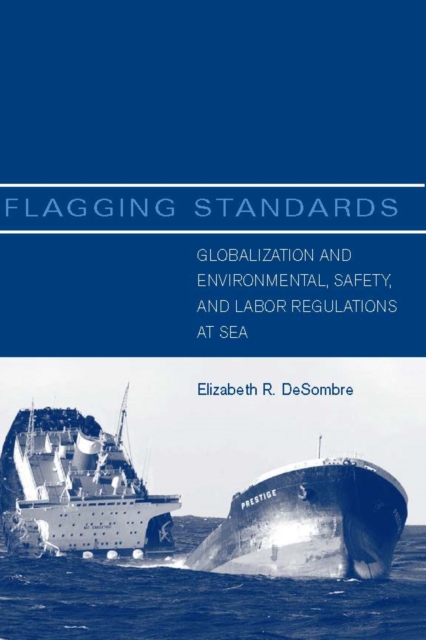
Flagging standards : globalization and environmental, safety, and labor regulations at sea
Shipping is among the most globalized of industries. Ship owners can choose where to register their vessels, based on cost, convenience, and the international and domestic regulations that would govern their operation. This system of open registration, also known as flags of convenience (FOC), can encourage a competition in regulatory laxity among states that want to attract shipping revenues—a race to the regulatory bottom. In Flagging Standards, Elizabeth DeSombre examines the effect of globalization on environmental, safety, and labor standards in the shipping industry. She finds that the economic advantages of lowered standards can be offset by the collective action of international organizations, states, and non-governmental actors to exclude low-standard ships from the advantages of globalization. Open registries are pressured to raise their standards while traditional maritime states lower theirs somewhat when they create international or second registries. The result is a competition not for the regulatory bottom but for the middle ground. DeSombre examines the decisions made by states and ship owners that lead to this race to the middle and explores the effectiveness of strategies used by both state and nonstate actors aimed at raising regulatory standards, including port control, labor actions against FOC ships that fail to meet international labor standards, and trade restrictions against shipped goods that were not obtained within the requirements of international agreements. Globalization, DeSombre finds, may lead to a downward trend in regulatory standards but has also created many opportunities to raise these standards and does not necessarily signal a reduction of state control.
eBook

Studying and Protecting the Global Environment: Protecting the Trees but Sometimes Missing the Forest
There are few issue areas within international relations in which the policy realm has followed the scholarship quite as quickly or as far as in the area of the environment. After simple identification of the existence and causes of existing environmental problems, both scholarship and policy initially focused on formal institutional approaches for addressing these problems, and both have expanded that focus to include greater consideration of informal approaches, expansion of the environmental issues considered, and concentration on the importance of nonstate actors. Critical scholarship, the one area of scholarship with little connection to policy, calls attention to the interests, power structures, and assumptions that underlie environmental behavior and suggests that small-scale improvements over business-as-usual are misleading and even counterproductive. But most environmental politics scholarship has drawn direct influence from, and contributed to, policy pertaining to the environment. Ultimately, it is likely that both scholarship and policy have been strengthened by this close connection, but at the same time, both have perhaps been narrowed by it as well, so that some important issues or approaches have been understudied. While there are advantages to the close relationship in this subfield between scholarship and policy, there may be some advantages in the future to encouraging some distance between the two, even for those ultimately concerned about the fate of the global environment.
Journal Article

Do we need a global fisheries management organization?
Global fisheries are increasingly overfished. The existing international regulatory structure, a set of regional fisheries management organizations (RFMOs), has failed to prevent overfishing. Regulatory problems exist because of the common pool resource character of fisheries and the fishing overcapacity that results from short-term planning and the political power of domestic fishing constituencies. But the regulatory problem comes from the region and species focus of RFMOs (micro-regulation), which creates what we refer to as a “balloon problem.” Even when RFMO regulations restrict access to a particular species or region, fishers move to another region to fish or target different species to maintain their fishing effort. We argue that in order to address these issues successfully and create more effective international fisheries governance, we need to begin a focus on macro-regulation, the creation of rules that address the amount of total fishing industry capacity in the overall system.
Journal Article
Unilateralism and Multilateralism in International Fisheries Management
Barkin and DeSombre argue that the key predictor of attempts by countries of unilateral action in pursuit of managing particular international environmental goods is the relative degree of substitutability of the resource. They examine seven international attempts to manage conflicts over fishery resources.
Journal Article

Global Warming: More Common Than Tragic
Global warming is indeed a difficult international environmental problem to address: it has tragedy of the commons characteristics, and problems of time horizons and uncertainty. But previous efforts at international cooperation on other environmental issues such as ozone depletion suggest that international cooperation should be possible–though difficult–on climate change. Cooperation on issues that involve long time horizons suggests that the present generation is not calculating utility quite so narrowly as game theorists posit. Experience also suggests that successful cooperation on climate change will start with measures so small as to seem inconsequential, but will set in place an institutional and scientific process that will ultimately result in much more significant cooperative efforts. Rather than representing a tragedy, the Kyoto Protocol (or something much like it) could represent the beginnings of a process in which current generations take the first steps at collective action that dramatically improve the lives of future generations. Those who are concerned about the weakness of the Kyoto Protocol should first focus on persuading the United States to join-since this is the best way to let the process work and avoid a tragedy of the commons.
Journal Article