
Catalogue Search | MBRL


Are you sure you want to remove the book from the shelf?

{{itemTitle}}
8
result(s) for
"DeVirgilis, Megan"
Sort by:

Gothic Foundations
Colombian author and President Juan José Nieto Gil’s novels remain curiously understudied, especially outside Colombia, a nation that just recently, in 2018, officially recognized him as its only president of African descent. This article provides the first Gothic reading of his three novels: Yngermina o la hija de Calamar (1844), Los moriscos (1845), and Rosina o la prisión del castillo de Chagres (1850). By exploring the Gothic strategies present in his works (suffering female heroines and male “monsters,” torture and body horror, confinement in dungeons and prisons, allusions to rape, the cultivation of suspense, repulsion, and fear) within the broader context of Doris Sommer’s notion of “foundational fictions” and nineteenth-century racial politics, I suggest that Nieto Gil adapts the traditional European Gothic formula to imagine a broader civilizing and miscegenation project that unveils the racial and authoritarian horrors plaguing the emerging Colombian nation. In line with what Gothic scholar Maisha L. Wester has observed in African American literature, Nieto Gil “speaks back” to the Gothic tradition by challenging the victim/villain dichotomy and its propensity towards linking Blackness with monstrosity, engaging the mode to instead interrogate the horrors of enslavement and the makeup of the body politic. Ultimately, my analysis reveals an encoding of African elements to advance his democratic and abolitionist agenda, providing a valuable case in point of the relationship between the Gothic and Latin American nation-building narratives.
Las novelas del autor y presidente colombiano Juan José Nieto Gil siguen siendo curiosamente poco estudiadas, especialmente fuera de Colombia, nación que, apenas en 2018, lo reconoció oficialmente como su único presidente de ascendencia africana. Este artículo ofrece la primera lectura gótica de sus tres novelas: Yngermina o la hija de Calamar (1844), Los moriscos (1845) y Rosina o la prisión del castillo de Chagres (1850). Al explorar las estrategias góticas presentes en sus obras (heroínas que sufren a las manos de hombres “monstruosos,” la tortura y el horror corporal, el confinamiento en mazmorras y prisiones, alusiones a la violación, el cultivo del suspenso, la repulsión y el miedo) dentro del contexto más amplio de la noción de “ficciones fundacionales” de Doris Sommer y la política racial del siglo XIX, sugiero que Nieto Gil adapta la fórmula gótica europea tradicional para imaginar un proyecto más amplio de civilización y mestizaje que revela los horrores raciales y autoritarios que asolaban a la naciente nación colombiana. De acuerdo con lo que la crítica del gótico Maisha L. Wester ha observado en la literatura afroamericana, Nieto Gil “responde” a la tradición gótica al desafiar la dicotomía víctima/villano que vincula la negritud con la monstruosidad, recurriendo a este género para, en cambio, indagar en los horrores de la esclavitud y la constitución del cuerpo político. En definitiva, mi análisis revela una codificación de elementos africanos para impulsar su agenda democrática y abolicionista, lo que constituye un valioso ejemplo de la relación entre lo gótico y las narrativas de construcción nacional latinoamericanas.
Journal Article
The Female Vampire in Hispanic Literature
This book exposes how turn-of-the-twentieth-century Hispanic authors broke from European and American Gothic models to contend with their own anxieties over modernity and rising first-wave feminisms. The result was a trend of sympathetic female vampires, predating comparable Anglo and European representations by several decades. In its analysis of the female vampire in Hispanic literature, the critical introduction also traces the Gothic's origins and developments in Latin America and Spain, presenting a working theory of Gothic traditions in the form of a transhispanic literary phenomenon. The tales compiled in the collection include Leopoldo Lugones's 'The Female Vampire' (1899), Clemente Palma's 'The White Farmhouse' (1904), Antonio de Hoyos y Vinent's 'Mr. Cadaver and Miss Vampire' (1910), Carmen de Burgos's The Cold Woman (1922), and Horacio Quiroga's 'The Vampire' (1927). Only two of these tales have been previously been translated into English, and each appears here for the first time with scholarly annotations and accompanying analysis.
eBook
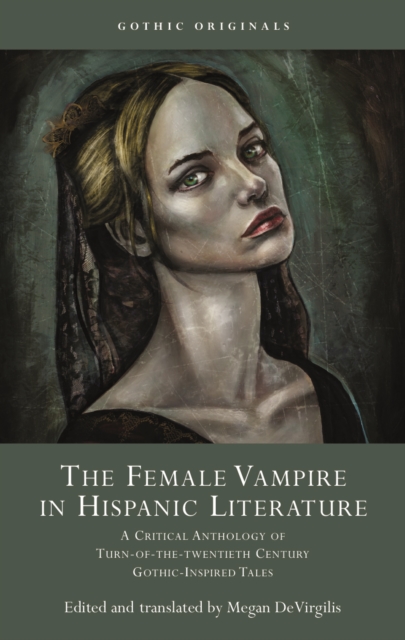
The Female Vampire in Hispanic Literature: A Critical Anthology of Turn of the 20th Century Gothic-Inspired Tales
This book exposes how turn-of-the-twentieth-century Hispanic authors broke from European and American Gothic models to contend with their own anxieties over modernity and rising first-wave feminisms. The result was a trend of sympathetic female vampires, predating comparable Anglo and European representations by several decades. In its analysis of the female vampire in Hispanic literature, the critical introduction also traces the Gothic's origins and developments in Latin America and Spain, presenting a working theory of Gothic traditions in the form of a transhispanic literary phenomenon. The tales compiled in the collection include Leopoldo Lugones's 'The Female Vampire' (1899), Clemente Palma's 'The White Farmhouse' (1904), Antonio de Hoyos y Vinent's 'Mr. Cadaver and Miss Vampire' (1910), Carmen de Burgos's The Cold Woman (1922), and Horacio Quiroga's 'The Vampire' (1927). Only two of these tales have been previously been translated into English, and each appears here for the first time with scholarly annotations and accompanying analysis.
eBook
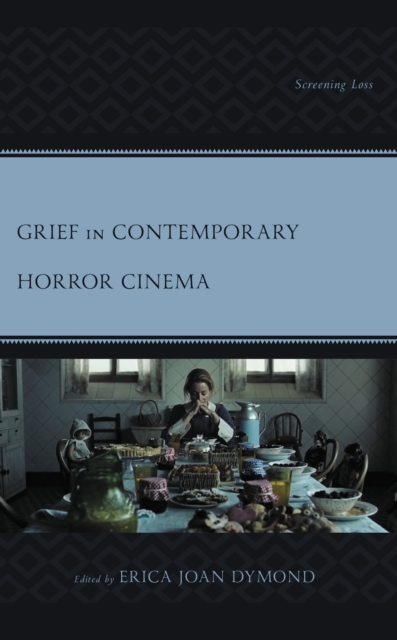
Grief in Contemporary Horror Cinema
Grief in Contemporary Horror Cinema: Screening Loss examines bereavement as it appears in horror films of the last two decades. This book addresses global hits such as Guillermo del Toro's Pan's Labyrinth and Jennifer Kent's The Babadook as well as lauded arthouse films such as Lars von Trier's Melancholia and Ari Aster's Midsommar.
eBook

Blood Disorders: A Transatlantic Study of the Vampire as an Expression of Ideological, Political, and Economic Tensions in Late 19 th and Early 20th Century Hispanic Short Fiction
This dissertation explores vampire logic in Hispanic short fiction of the last decade of the 19th century and first three decades of the 20th century, and is thus a comparative study; not simply between Spanish and Latin American literary production, but also between Hispanic and European literary traditions. As such, this study not only draws attention to how Hispanic authors employed traditional Gothic conventions—and by extension, how Hispanic nations produced \"modern\" literature—but also to how these authors adapted previous models and therefore deviated from and questioned the European Gothic tradition, and accordingly, established trends and traditions of their own. This study does not pretend to be exhaustive. Even though I mention poetry, plays, and novels from the first appearance of the literary vampire in the mid-18th century through the fin de siglo and the first few decades of the 20th century, I focus on short fiction produced within and shortly thereafter the fin de siglo, as this time period saw a resurgence of the vampire figure on a global scale and the first legitimate appearance in Hispanic letters, being as it coincided with a rise in periodicals and short story production and represented developments and anxieties related to the physical and behavioral sciences, technological advances and urban development, waves of immigration and disease, and war. While Chapter 1 establishes a working theory of the vampire from a historical and materialist perspective, each of the following chapters explores a different trend in Hispanic vampire literature: Chapter 2 looks at how vampire narratives represent political and economic anxieties particular to Spain and Latin America; Chapter 3 studies newly married couples and how vampire logic leads to the death of the wife—and thus the death of the \"angel of the house\" ideal—therefore challenging ideas surrounding marriage, the family, and the home; lastly, Chapter 4 explores courting couples and how disruptions in the makeup of the public/private divide influenced images of female monstrosity—complex, parodic ones in the Hispanic case. One of the main conclusions this study reaches is that Hispanic authors were indeed producing Gothic images, but that these images deviated from the European Gothic vampire literary tradition and prevailing literary tendencies of the time through aesthetic and narrative experimentation and as a result of particular anxieties related to their histories, developments, and current realities. While Latin America and Spain produced few explicit, Dracula-like vampires, the vampire figures, metaphors, and allegories discussed in the chapters speak to Spain and Latin America’s political, economic, and ideological uncertainties, and as a result, their \"place\" within the modern global landscape. This dissertation ultimately suggests that Hispanic Gothic representations are unique because they were being produced within peripheral spaces, places considered \"non-modern\" because of their distinct histories of exploitation and development and their distinct cultural, religious, and racial compositions, therefore shifting perceptions of Otherness and turning the Gothic on its head. The vampire in the Hispanic context, I suggest, is a fusion of different literary currents, such as Romanticism, aesthetic movements, such as Decadence, and modes, such as the Gothic and the Fantastic, and is therefore different in many ways from its predecessors. These texts abound with complex representations that challenge the status quo, question dominant narratives, parody literary formulas, and break with tradition.
Dissertation
