
Catalogue Search | MBRL


Are you sure you want to remove the book from the shelf?

{{itemTitle}}
709
result(s) for
"Dean, Peter J"
Sort by:

Fighting Australia's Cold War
In the first two decades of the Cold War, Australia fought in
three conflicts and prepared to fight in a possible wider
conflagration in Southeast Asia and the Pacific. In Korea, Malaya
and Borneo, Australian forces encountered new types of warfare,
integrated new equipment and ideas, and were part of the longest
continual overseas deployments in Australia's history. Working
closely with its allies, Australia also trained for a large
conventional war in Southeast Asia, while a significant percentage
of the defence force guarded the Papua New Guinea-Indonesian
border. At home, the Defence organisation grappled with new threats
and military expansion, while the Australian Security Intelligence
Organisation defended the nation from domestic and foreign threats.
This book examines this crucial part of Australia's security
history, so often overlooked as merely a precursor to the Vietnam
War. It addresses key questions such as how did Australia achieve
its security goals at home and in the region in this new Cold War
environment? What were the experiences of the services, units and
individuals serving in Southeast Asia? How did this period shape
Australia's defence for years to come?
eBook

Australia 1942 : in the shadow of war
\"In 1942, the shadow of modern war reached Australia's shores for the first time. In this compelling volume, leading historians explore why 1942 was such a pivotal year in Australia's history, and explain how the nation confronted some of its greatest challenges. This broad ranging study covers key issues from political, economic and home front reform to the establishment of a new partnership with the United States; the role of the Air Force and the Navy; the bombing of Darwin; as well as the battles of Kokoda, Milne Bay, the Beachheads and Guadalcanal. Australia 1942 provides a unique and in-depth exploration of the controversy surrounding the potential for invasion. Japanese and Australian historians offer perspectives on Japanese military intentions and strategies towards Australia and the South Pacific. Generously illustrated, it is essential reading for anyone interested in one of Australia's most decisive and critical years\"--Publisher's website.
Book


Australia 1942
In 1942, the shadow of modern war reached Australia's shores for the first time. In this compelling volume, leading historians explore why 1942 was such a pivotal year in Australia's history and explain how the nation confronted some of its greatest challenges. This broad ranging study covers key issues from political, economic and home front reform to the establishment of a new partnership with the United States; the role of the Air Force and the Navy; the bombing of Darwin; as well as the battles of Kokoda, Milne Bay, the Beachheads and Guadalcanal. Australia 1942 provides a unique and in-depth exploration of the controversy surrounding the potential for invasion. Japanese and Australian historians offer perspectives on Japanese military intentions and strategies towards Australia and the South Pacific. Generously illustrated, it is essential reading for anyone interested in one of Australia's most decisive and critical years.
eBook

Australia 1943 : the liberation of New Guinea
By January 1943, Australia had emerged from the shadow of war in a strong position. The victories in 1942 at Kokoda, Guadalcanal, Buna, Gona and Sanananda had secured the northern coastlines of Papua and Australia. Australian forces were now poised for a full scale offensive to liberate New Guinea from the Japanese, the largest and most complicated operations in their history. Australia 1943 explores the high point of Australia's influence on operations and strategy in the South West Pacific, a campaign that has been traditionally overshadowed by the drama of Kokoda. It investigates critical operations from January 1943 to April 1944, including Salamaua, Lae/Nadzab, Finschhafen, Shaggy Ridge, the Markham Valley and the Huon Peninsula. Australia 1943 is the first detailed single-volume study of Australia's military operations in the Pacific during 1943 - Australia's 'finest hour' in the Second World War.
Book

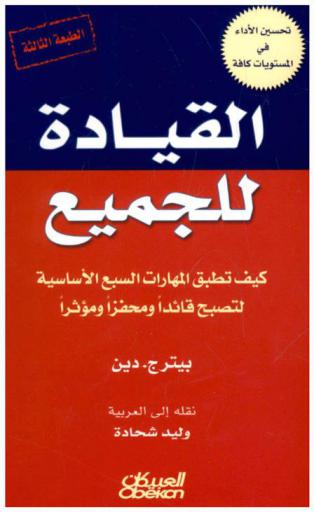
القيادة للجميع : كيف تطبق المهارات السبع الأساسية لتصبح قائدا ومحفزا ومؤثرا
يستطيع المرء مهما تكن مرتبته أو مسماه الوظيفي، أو منزلته الاجتماعية، أن يكون قائدا. هذا ما يؤكده الدكتور (بيتر دين) الأستاذ الممارس في علوم القيادة، والحاصل على العديد من الجوائز، في كتابه هذا (القيادة للجميع)، مبينا كيف أن الشركات في هذه الأيام تحتاج إلى موظفين يتمتعون بالقدرة على الإدارة الذاتية في كل مستوى من مستويات المؤسسة. والمفتاح لتطوير هذه القدرات القيادية وتعزيزها في أي موقف يكمن في هذا الكتاب. في كتاب \"القيادة للجميع\" الذي وضعه بيتر دين استنادا إلى منهجه المعروف باسم (منهجية ليدرز) ذات العلامة المسجلة والتي ثبتت فاعليتها، يقدم الأدوات والأساليب لإتقان سبع مهارات أساسية تمكنك من القيام بدور القائد في كل يوم وفي كل مكان.
Book

AMPHIBIOUS OPERATIONS AND THE EVOLUTION OF AUSTRALIAN DEFENSE POLICY
Since its European settlement in 1788, Australia has been dependent on great-power protectors for its security. Initially this security was achieved by virtue of Australia's status as a British colony, later as a member of the British Commonwealth. In return for its protection, Australia committed military forces in support of British interests to the Sudan, in the Boer War, and in the First and Second World Wars. Australian support for these actions was premised on two key factors: Australia's membership in the Empire (and with that the identity of its citizens as \"independent Australian-Britons\") and the assessment, universal among Australians, that support and protection of the Empire and of British interests were also in their interest. Following the Second World War, Australia strongly supported the establishment of the United Nations, forged a new security partnership with Great Britain, and, along with New Zealand, formed the ANZUS alliance with the US.
Journal Article