
Catalogue Search | MBRL


Are you sure you want to remove the book from the shelf?

{{itemTitle}}
3
result(s) for
"Dear, Peter, 1958- author"
Sort by:

Revolutionizing the sciences : European knowledge in transition, 1500-1700
Reflecting on the origins of scientific practice in early modern Europe, Peter Dear traces the revolution in thought that changed the natural world from something to be contemplated into something to be used.
Book
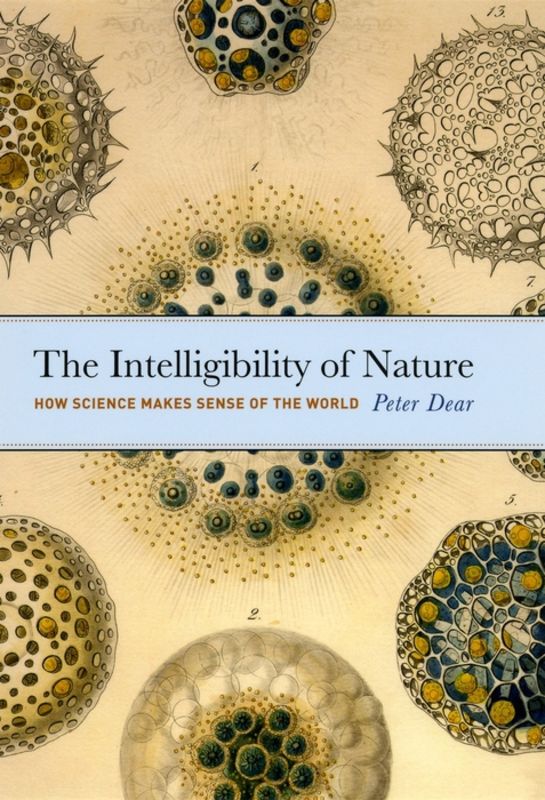
The intelligibility of nature
Throughout the history of the Western world, science has possessed an extraordinary amount of authority and prestige. And while its pedestal has been jostled by numerous evolutions and revolutions, science has always managed to maintain its stronghold as the knowing enterprise that explains how the natural world works: we treat such legendary scientists as Galileo, Newton, Darwin, and Einstein with admiration and reverence because they offer profound and sustaining insight into the meaning of the universe. In The Intelligibility of Nature, Peter Dear considers how science as such has evolved and how it has marshaled itself to make sense of the world. His intellectual journey begins with a crucial observation: that the enterprise of science is, and has been, directed toward two distinct but frequently conflated ends—doing and knowing. The ancient Greeks developed this distinction of value between craft on the one hand and understanding on the other, and according to Dear, that distinction has survived to shape attitudes toward science ever since. Teasing out this tension between doing and knowing during key episodes in the history of science—mechanical philosophy and Newtonian gravitation, elective affinities and the chemical revolution, enlightened natural history and taxonomy, evolutionary biology, the dynamical theory of electromagnetism, and quantum theory—Dear reveals how the two principles became formalized into a single enterprise, science, that would be carried out by a new kind of person, the scientist. Finely nuanced and elegantly conceived, The Intelligibility of Nature will be essential reading for aficionados and historians of science alike.
eBook
Discipline & experience
Although the Scientific Revolution has long been regarded as the beginning of modern science, there has been little consensus about its true character. While the application of mathematics to the study of the natural world has always been recognized as an important factor, the role of experiment has been less clearly understood. Peter Dear investigates the nature of the change that occurred during this period, focusing particular attention on evolving notions of experience and how these developed into the experimental work that is at the center of modern science. He examines seventeenth-century mathematical sciences—astronomy, optics, and mechanics—not as abstract ideas, but as vital enterprises that involved practices related to both experience and experiment. Dear illuminates how mathematicians and natural philosophers of the period—Mersenne, Descartes, Pascal, Barrow, Newton, Boyle, and the Jesuits—used experience in their argumentation, and how and why these approaches changed over the course of a century. Drawing on mathematical texts and works of natural philosophy from all over Europe, he describes a process of change that was gradual, halting, sometimes contradictory—far from the sharp break with intellectual tradition implied by the term \"revolution.\"
eBook