
Catalogue Search | MBRL


Are you sure you want to remove the book from the shelf?

{{itemTitle}}
120
result(s) for
"Deffeyes, Kenneth S"
Sort by:


Hubbert’s peak
In 2001, Kenneth Deffeyes made a grim prediction: world oil production would reach a peak within the next decade--and there was nothing anyone could do to stop it. Deffeyes's claim echoed the work of geophysicist M. King Hubbert, who in 1956 predicted that U.S. oil production would reach its highest level in the early 1970s. Though roundly criticized by oil experts and economists, Hubbert's prediction came true in 1970.
In this updated edition ofHubbert's Peak, Deffeyes explains the crisis that few now deny we are headed toward. Using geology and economics, he shows how everything from the rising price of groceries to the subprime mortgage crisis has been exacerbated by the shrinking supply--and growing price--of oil. Although there is no easy solution to these problems, Deffeyes argues that the first step is understanding the trouble that we are in.
eBook

ما بعد النفط : منظورا إليه من ذروة هابرت
يبدو أن هذا شيء محتوم، وقد لا يكون الاختلاف إلا على توقيته. وإذا ما حدث ذلك فما هو البديل ؟ هل ستتوقف عجلة الصناعة والنقل اللذين تحركهما الطاقة النفطية ؟ أسئلة تؤرق صناع القرار الاقتصادي والصناعي والسياسي في مختلف أقطار العالم، وتؤثر في حياة كل فرد سواء أكان في ناطحات سحاب مانهاتن أم في واحات الصحراء الكبرى أم في أدغال الكونغو. يركز البروفسور ديفيس، وهو خبير جيولوجي نفطي، على المصادر الأخرى للطاقة التي يمكن أن توفر البديل، وذلك على الرغم من رأيه في أن البحث عن الجدوى الفنية والاقتصادية لاستغلال هذه المصادر، كان يجب أن يبدأ قبل عشر سنوات ضاعت من دون إنجاز شيء يذكر، ولذا فإن السنوات المقبلة ستكون حرجة بحسب توقعاته.
Book
The future of fossil fuels
As debates about the effects of fossil fuels on our climate and foreign policy intensify, the question of just how much longer we can depend on this finite source of energy becomes more and more pressing. This selection from Hubbert's Peak, the leading book on the limits of our oil supply, forecasts what the future will bring for fossil fuels and what the alternatives are likely to be.
eBook
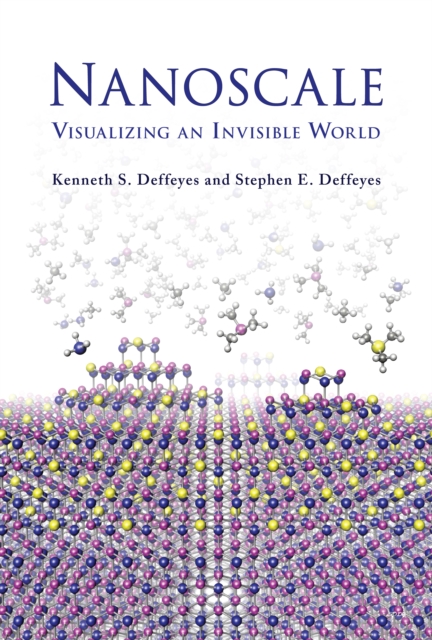
Nanoscale
The world is made up of structures too small to see with the naked eye, too small to see even with an electron microscope. Einstein established the reality of atoms and molecules in the early 1900s. How can we see a world measured in fractions of nanometers? (Most atoms are less than one nanometer, less than one-billionth of a meter, in diameter.) This beautiful and fascinating book gives us a tour of the invisible nanoscale world. It offers many vivid color illustrations of atomic structures, each accompanied by a short, engagingly written essay. The structures advance from the simple (air, ice) to the complex (supercapacitator, rare earth magnet). Each subject was chosen not in search of comprehensiveness but because it illustrates how atomic structure creates a property (such as hardness, color, or toxicity), or because it has a great story, or simply because it is beautiful. Thus we learn how diamonds ride volcanoes to the earth's surface (if they came up more slowly, they'd be graphite, as in pencils); what form of carbon is named after Buckminster Fuller; who won in the x-ray vs. mineralogy professor smackdown; how a fuel cell works; when we use spinodal decomposition in our daily lives (it involves hot water and a package of Jell-O), and much more. The amazing color illustrations by Stephen Deffeyes are based on data from x-ray diffraction (a method used in crystallography). They are not just pretty pictures but visualizations of scientific data derived directly from those data. Together with Kenneth Deffeyes's witty commentary, they offer a vivid demonstration of the diversity and beauty found at the nanometer scale.
eBook


Hubbert's Peak
In 2001, Kenneth Deffeyes made a grim prediction: world oil production would reach a peak within the next decade--and there was nothing anyone could do to stop it. Deffeyes's claim echoed the work of geophysicist M. King Hubbert, who in 1956 predicted that U.S. oil production would reach its highest level in the early 1970s. Though roundly criticized by oil experts and economists, Hubbert's prediction came true in 1970.
In this updated edition of Hubbert's Peak , Deffeyes explains the crisis that few now deny we are headed toward. Using geology and economics, he shows how everything from the rising price of groceries to the subprime mortgage crisis has been exacerbated by the shrinking supply--and growing price--of oil. Although there is no easy solution to these problems, Deffeyes argues that the first step is understanding the trouble that we are in.
Some images inside the book are unavailable due to digital copyright restrictions.
eBook


CARBONATE EQUILIBRIA: A GRAPHIC AND ALGEBRAIC APPROACH1
Graphic solutions for a wide variety of problems in carbonate equilibrium can be obtained if one uses the total carbonate carbon and alkalinity as abscissa and ordinate. At any point on such a diagram the carbonate system is completely defined and the pH, carbon dioxide pressure, bicarbonate concentration, and carbonate concentration can be presented as contours. The diagrams can be prepared for systems which contain other buffers in addition to carbonate. On such diagrams, the addition or removal of CO2, HCO3-, CO3=, acid, or base is a vector property. Diagrams have been prepared for systems that are buffered only by H+ and OH- ions and by the carbonate species at 25C and 1 atm pressure. For solutions in equilibrium with calcite, the magnitude of the alkalinity minus the calcium can also be contoured. An algebraic treatment that is equivalent to graphic solutions can be used either to obtain greater precision or to work with different equilibrium constants.
Journal Article