
Catalogue Search | MBRL


Are you sure you want to remove the book from the shelf?

{{itemTitle}}
8
result(s) for
"Dekeyser, Elizabeth"
Sort by:

Elections, Party Rhetoric, and Public Attitudes Toward Immigration in Europe
Recent elections have highlighted how electoral cycles are often accompanied by increases in negative rhetoric surrounding immigration. Exploiting as-if random assignment in individual interview dates for the European Social Survey, this paper examines how proximity to elections affects individual preferences on immigration. We find that closer to elections, attitudes toward immigration become more negative. This effect is primarily driven by country-elections where party platforms are more likely to include anti-immigrant rhetoric. When elections are more distant, these effects largely disappear, highlighting the possibility that anti-immigration electoral mandates are based on artificially inflated concerns of the electorate about immigration. Overall, these results provide important insights into how elections influence issue stances and social cohesion in Europe.
Journal Article
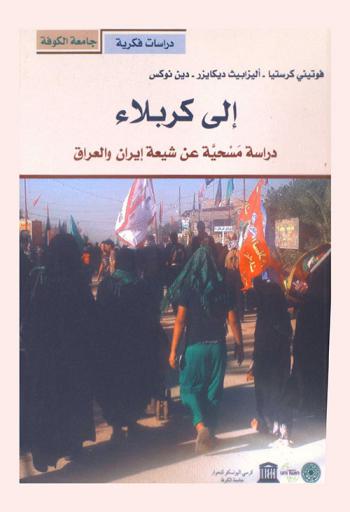
Evidence on the nature of sectarian animosity from a geographically representative survey of Iraqi and Iranian Shia pilgrims
Sectarian tensions underlie conflicts across the Middle East, but little is known about their roots and associated beliefs. We conducted a large-scale empirical analysis, drawing on an original, geographically representative survey of over 4,000 devout Shiites across Iran and Iraq. We find that sectarian animosity is linked to economic deprivation, political disillusionment, lack of out-group contact and a sect-based view of domestic politics—paralleling patterns seen in ethno-nationalism elsewhere. In contrast, two alternative accounts are largely unsupported: sectarian animosity is not consistently associated with solidarity with a transnational sect-based community, nor does it seem to stem from disputes over religious doctrine. Nonetheless, this identity’s religious roots manifest in differences from typical ethno-nationalism; practising men are less sectarian, consistent with official doctrine encouraging unity, whereas practising women are more sectarian. These gendered patterns suggest an understudied mechanism: religiously mediated socialization, or the transmission of non-religious norms through religious practice.Using a survey of over 4,000 devout Shia pilgrims across Iran and Iraq, Knox and collaborators evaluate theories about the nature of sectarian animosity and find similarities to ethno-nationalism but not transnational or religious movements.
Journal Article
Islam, Exclusivity, and the State in France
This dissertation examines why individuals believe that their religious identity is incompatible with mainstream identities. Using the case of Islam in France, I demonstrate that government engagement with marginalized immigrant-origin communities plays a central role in influencing these beliefs, which I term religious exclusivity. I examine whether, why, and which type of government engagement matters, both historically and today, highlighting the central role of group identity and religious community structures and norms. I demonstrate that positive (negative) engagement decreases (increases) religious exclusivity and that this relationship is mediated by religious community structures. Beyond this, I show that positive government engagement is most effective in decreasing religious exclusivity when religious groups are not used as mediators in engaging with marginalized populations. These relationships are driven both by governments' provision of material benefits as well as the impact of government actions on perceptions of group rejection. I base this theory on nearly two years of ethnographic fieldwork across France, including visits to 130 French towns and over 200 in-depth interviews. The hypotheses are tested with causal designs and computational methods using innovative data sources, including social media responses to terror attacks, online town reviews, and a novel dataset of religious community structures. This examination is essential to understanding when and why religion conflicts versus cooperates with the state; it is also integral to discussions of how religion and identity interact with integration, radicalization, social cohesion, and conflict.
Dissertation
Germany’s AfD wants to roll back birthright citizenship. The right-wing party has the wrong idea
Reversing this legislation is likely to backfire My recent research has found that the implementation of birthright citizenship in Germany has a significant positive impact on the attitudes and beliefs of the parents of citizen children. The SOEP surveys also revealed that parents of citizen children in Germany felt more satisfied with their overall standard of living, and were more likely to believe that others could be trusted. While data constraints hindered subgroup analyses, the effects are consistent for permanent residents of various origins, ages, ethnicities and religions.
Newspaper Article

Direct Anterior Approach for AO43B/43C Pilon Fracture Fixation Demonstrates No Difference in Rate of Reoperation Compared to Other Surgical Approaches
Category:
Trauma; Ankle
Introduction/Purpose:
The direct anterior (DA) approach is commonly used for reconstructive procedures to treat posttraumatic ankle osteoarthritis (PTOA), however, literature investigating utilization of the DA approach (defined as the interval between the tibialis anterior tendon and extensor hallucis longus tendon) for initial fixation of pilon fractures is lacking. This retrospective study of patients undergoing fixation of pilon fractures hypothesizes that there is no difference in reoperation rate for patients whose pilon fractures were treated with DA approach.
Methods:
A retrospective radiographic and chart review of patients undergoing surgical fixation of tibial plafond fractures over a nine year period (2013-2022) at an urban, level 1 trauma center was undertaken. Review of operative notes for reoperation for infection, PTOA, nonunion and symptomatic hardware was utilized to determine reoperation rates. Injuries were radiographically stratified by AO/OTA classification, and quality of fracture reduction was assessed via measurement of the lateral distal tibial angle (LDTA) and lateral talar station (LTS) at the first postoperative radiograph. Likelihood of reoperation within one year of index surgery was analyzed using Kaplan-Meier estimations. Reoperation risk factors were determined with multivariable logistic regression analyses created using a backwards stepwise process.
Results:
135 fractures in 130 patients met inclusion criteria; 44 fractures were treated via a DA approach, 91 treated via all other approaches, many in combination. Between groups, AO/OTA classification, demographics, injury characteristics and operative time were no different. Overall reoperation rate was 40.7%. There was no significant difference between DA and all other approaches in rate of reoperation for infection (2.3% vs. 10%, p=0.21), nonunion (15.9% vs. 16.5%, p=1), PTOA (9.1% vs. 7.8%, p=1) and removal of symptomatic hardware (25% vs. 36.3%, P=0.27). Multivariable regression showed DA approach was associated with lower risk of reoperation within one year (OR 0.25, 95% CI 0.07-0.71, P=0.02). The DA group lateral talar station (LTS) was significantly greater (more anterior) by 0.9mm (2.75mm DA vs. 1.85mm all others, P=0.01).
Conclusion:
Utilization of the direct anterior approach to the ankle for initial fixation of pilon fractures has no difference in overall reoperation rates and a lower likelihood of reoperation within one year compared to all other combinations of approaches to the tibial plafond. Radiographic outcomes were different between groups, but the clinical significance of this is unclear. The DA approach should be considered for fracture patterns amenable to its use and may offer benefit should reconstructive procedures become necessary.
Journal Article