
Catalogue Search | MBRL


Are you sure you want to remove the book from the shelf?

{{itemTitle}}
8
result(s) for
"Denoon, David editor"
Sort by:
U.S.-China relations
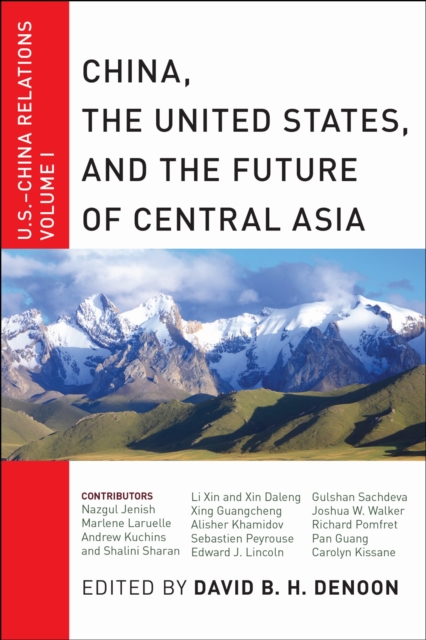
The first of a three-volume series on the interaction of the US and China in different regions of the world, China, the United States, and the Future of Central Asia explores the delicate balance of competing foreign interests in this resource-rich and politically tumultuous region. Editor David Denoon and his internationally renowned set of contributors assess the different objectives and strategies the U.S. and China deploy in the region and examine how the two world powers are indirectly competitive with one another for influence in Central Asia. While the US is focused on maintaining and supporting its military forces in neighboring states, China has its sights on procuring natural resources for its fast-growing economy and preventing the expansion of fundamentalist Islam inside its borders. This book covers important issues such as the creation of international gas pipelines, the challenges of building crucial transcontinental roadways that must pass through countries facing insurgencies, the efforts of the US and China to encourage and provide better security in the region, and how the Central Asian countries themselves view their role in international politics and the global economy. The book also covers key outside powers with influence in the region; Russia, with its historical ties to the many Central Asian countries that used to belong to the USSR, is perhaps the biggest international presence in the area, and other countries on the region's periphery like Iran, Turkey, Pakistan, and India have a stake in the fortunes and future of Central Asia as well. A comprehensive, original, and up-to-date collection, this book is a wide-ranging look from noted scholars at a vital part of the world which is likely to receive more attention and face greater instability as NATO forces withdraw from Afghanistan.
eBook

China, the United States, and the future of Latin America
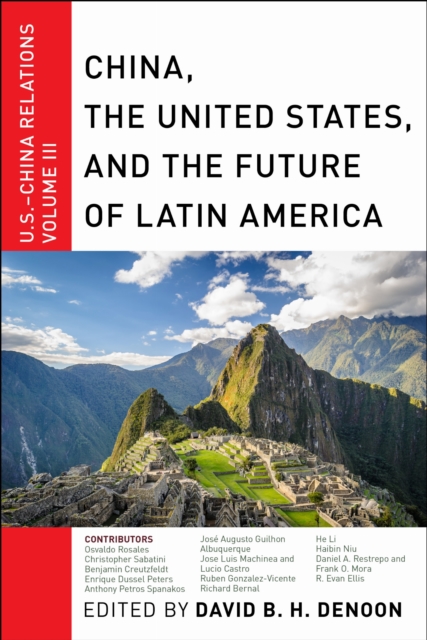
Provides insight into U.S. and Chinese involvement in aid, trade, direct investment and strategic ties in Latin America In recent years, China has become the largest trading partner for more than half the countries in Latin America, and demonstrated major commitments in aid and direct investment in various parts of the region. China has also made a number of strategic commitments to countries like Nicaragua, Cuba, and Venezuela which have long-standing policies opposing U.S. influence in the region. China, the United States, and the Future of Latin America posits that this activity is a direct challenge to the role of the U.S. in Latin America and the Caribbean. Part of a three-volume series analyzing U.S.-China relations in parts of the world where neither country is dominant, this volume analyzes the interactions between the U.S., China, and Latin America. The book series has so far considered the differences in operating styles between China and the U.S. in Central Asia and Southeast Asia. This third volume unpacks the implications of competing U.S. and Chinese interests in countries such as Brazil and Argentina, and China's commitments in Nicaragua and Venezuela. This volume draws upon a variety of policy experts, focusing on the viewpoints of South American and Caribbean scholars as well as scholars from outside states. China's new global reach and its ambitions, as well as the U.S. response, are analyzed in detail.A nuanced examination of current complexities and future implications, China, the United States and the Future of Latin America provides readers with varied perspectives on the changing economic and strategic picture in Latin America and the Caribbean.
eBook


China, The United States, and the Future of Latin America
p strongProvides insight into U.S. and Chinese involvement in aid, trade, direct investment and strategic ties in Latin America/strong In recent years, China has become the largest trading partner for more than half the countries in Latin America, and demonstrated major commitments in aid and direct investment in various parts of the region. China has also made a number of strategic commitments to countries like Nicaragua, Cuba, and Venezuela which have long-standing policies opposing U.S. influence in the region. China, the United States, and the Future of Latin America posits that this activity is a direct challenge to the role of the U.S. in Latin America and the Caribbean. Part of a three-volume series analyzing U.S.-China relations in parts of the world where neither country is dominant, this volume analyzes the interactions between the U.S., China, and Latin America. The book series has so far considered the differences in operating styles between China and the U.S. in Central Asia and Southeast Asia. This third volume unpacks the implications of competing U.S. and Chinese interests in countries such as Brazil and Argentina, and China's commitments in Nicaragua and Venezuela. This volume draws upon a variety of policy experts, focusing on the viewpoints of South American and Caribbean scholars as well as scholars from outside states. China's new global reach and its ambitions, as well as the U.S. response, are analyzed in detail.A nuanced examination of current complexities and future implications, China, the United States and the Future of Latin America provides readers with varied perspectives on the changing economic and strategic picture in Latin America and the Caribbean./p
eBook

China, the United States, and the Future of Central Asia
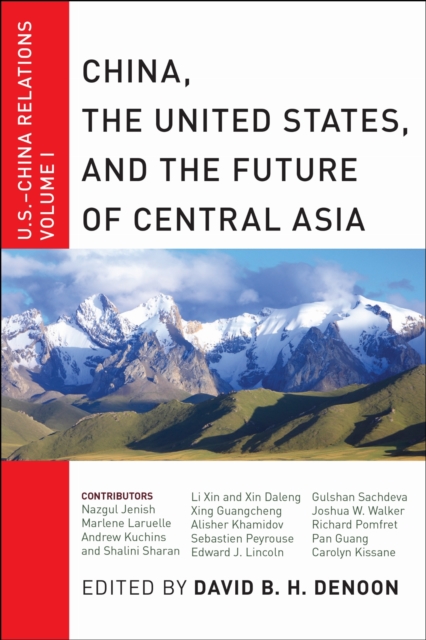
The first of a three-volume series on the interaction of the US and China in different regions of the world, China, the United States, and the Future of Central Asia explores the delicate balance of competing foreign interests in this resource-rich and politically tumultuous region. Editor David Denoon and his internationally renowned set of contributors assess the different objectives and strategies the U.S. and China deploy in the region and examine how the two world powers are indirectly competitive with one another for influence in Central Asia. While the US is focused on maintaining and supporting its military forces in neighboring states, China has its sights on procuring natural resources for its fast-growing economy and preventing the expansion of fundamentalist Islam inside its borders. This book covers important issues such as the creation of international gas pipelines, the challenges of building crucial transcontinental roadways that must pass through countries facing insurgencies, the efforts of the US and China to encourage and provide better security in the region, and how the Central Asian countries themselves view their role in international politics and the global economy. The book also covers key outside powers with influence in the region; Russia, with its historical ties to the many Central Asian countries that used to belong to the USSR, is perhaps the biggest international presence in the area, and other countries on the region's periphery like Iran, Turkey, Pakistan, and India have a stake in the fortunes and future of Central Asia as well. A comprehensive, original, and up-to-date collection, this book is a wide-ranging look from noted scholars at a vital part of the world which is likely to receive more attention and face greater instability as NATO forces withdraw from Afghanistan.
eBook