
Catalogue Search | MBRL


Are you sure you want to remove the book from the shelf?

{{itemTitle}}
21
result(s) for
"Denzer, LaRay"
Sort by:


The Craving for Intelligibility
This chapter focuses on what Friedrich von Hayek considered the grave dangers of “the craving for intelligibility” (1944: 204) with respect to economic life. Hayek publishedThe Road to Serfdomtoward the end of a war that he saw as having profoundly entrenched centralized economic management in the state and in the hands of ideologues, with disastrous results for Germany and for the world. He argued not only against National Socialism, but also against the Keynesian formula for selective state intervention, and was in favor of a return to markets as soon as the war was over. To “submit” to
Book Chapter
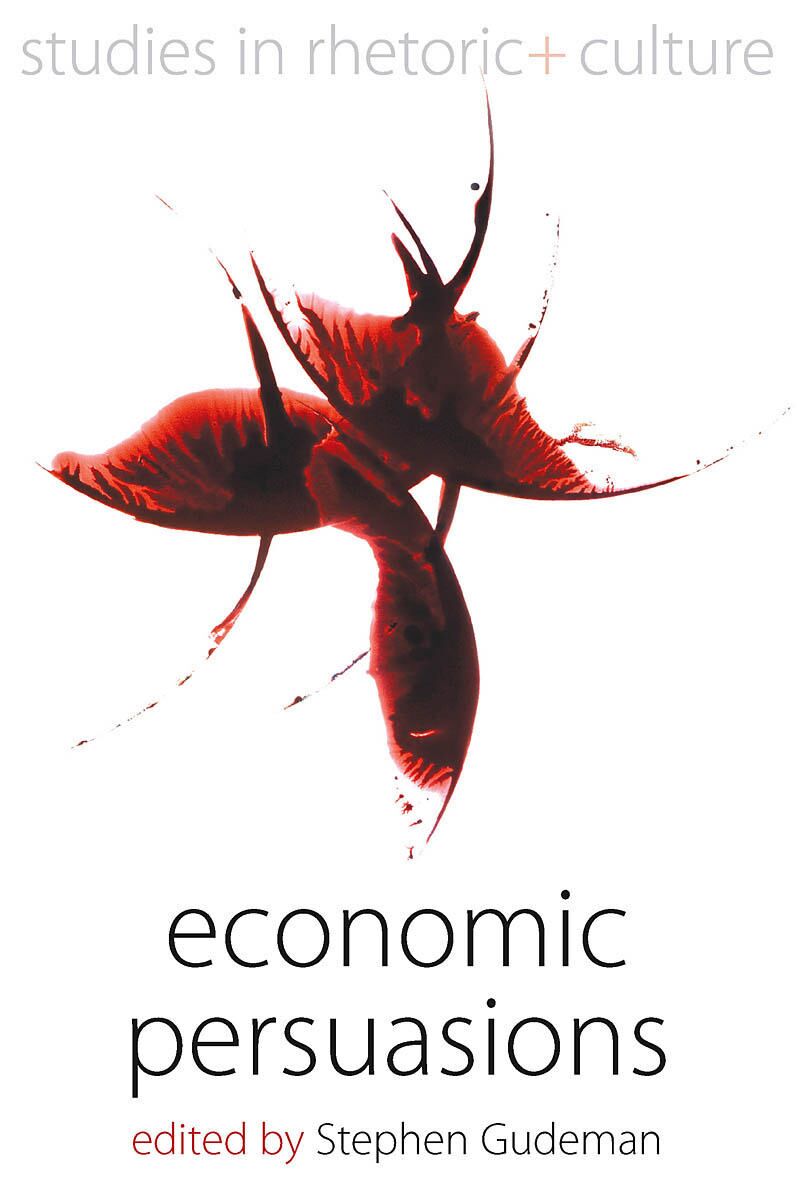
Economic Persuasions
As the transition from socialism to a market economy gathered speed in the early 1990s, many people proclaimed the final success of capitalism as a practice and neoliberal economics as its accompanying science. But with the uneven achievements of the \"transition\"-the deepening problems of \"development,\" persistent unemployment, the widening of the wealth gap, and expressions of resistance-the discipline of economics is no longer seen as a mirror of reality or as a unified science. How should we understand economics and, more broadly, the organization and disorganization of material life? In this book, international scholars from anthropology and economics adopt a rhetorical perspective in order to make sense of material life and the theories about it. Re-examining central problems in the two fields and using ethnographic and historical examples, they explore the intersections between these disciplines, contrast their methods and epistemologies, and show how a rhetorical approach offers a new mode of analysis while drawing on established contributions.
eBook

Yoruba Women: A Historiographical Study
The study of women's place in Nigerian history is growing. An examination of research material provides a preliminary synthesis of the main themes in Yoruba women's history from precolonial times to independence.
Journal Article

Introduction
The story of the imposition of colonial rule and its impact on African peoples has been told at length in numerous volumes. A half century of European control resulted in the successful implanting of European capitalist infrastructure throughout the African continent. The degree of success depended on many variables–ecology, mineral resources, agricultural productivity, the absence or presence of white settlers, African cultural attitudes, European administrative acumen, and, to a certain extent, luck and chance. The main goals of the colonial system were to replace a subsistence economy with a cash economy, to spread Christianity and western education and to inculcate a western mode of thought concerning government and development. Like it or not, African peoples experienced escalating socioeconomic changes which emanated from vaguely understood sources, had unanticipated consequences, and transformed their ideas and manners. How did ordinary people cope in this situation? What was the range of their options? The papers presented in this special issue seek to address these questions. The papers collected here originate from the symposium, “Grassroots Involvement in Modern Africa,” sponsored by the African Studies Council of the University of Minnesota and held in Minneapolis on February 28/29, 1980. The symposium's central theme dealt with the question of how ordinary people operated within the context of the socioeconomic and political changes that took place in modern Africa from colonial times to the present era of independence. Ordinary folk–farmers, market women, clerks, laborers, domestic servants, beer brewers, drivers, school teachers, and the like–helped create their own history and restructure their own societies. They bore the brunt of the far-reaching changes which took place after the colonial conquest and they continue to do so to the present day.
Journal Article
Introduction
The story of the imposition of colonial rule and its impact on African peoples has been told at length in numerous volumes. A half century of European control resulted in the successful implanting of European capitalist infrastructure throughout the African continent. The degree of success depended on many variables–ecology, mineral resources, agricultural productivity, the absence or presence of white settlers, African cultural attitudes, European administrative acumen, and, to a certain extent, luck and chance. The main goals of the colonial system were to replace a subsistence economy with a cash economy, to spread Christianity and western education and to inculcate a western mode of thought concerning government and development. Like it or not, African peoples experienced escalating socioeconomic changes which emanated from vaguely understood sources, had unanticipated consequences, and transformed their ideas and manners. How did ordinary people cope in this situation? What was the range of their options? The papers presented in this special issue seek to address these questions. The papers collected here originate from the symposium, “Grassroots Involvement in Modern Africa,” sponsored by the African Studies Council of the University of Minnesota and held in Minneapolis on February 28/29, 1980. The symposium's central theme dealt with the question of how ordinary people operated within the context of the socioeconomic and political changes that took place in modern Africa from colonial times to the present era of independence. Ordinary folk–farmers, market women, clerks, laborers, domestic servants, beer brewers, drivers, school teachers, and the like–helped create their own history and restructure their own societies. They bore the brunt of the far-reaching changes which took place after the colonial conquest and they continue to do so to the present day.
Journal Article

Women in Freetown politics, 1914–61: a preliminary study
The study of women in Sierra Leone has been well launched. Except for the work of Carol P. MacCormack (formerly Hoffer) on political leadership and socio-economic development among Mende and Sherbro women (1972, 1974, 1975, 1976, 1977, 1978, 1979, 1981, 1982), most of this scholarship focuses on women in Freetown, mainly the Krio. Filomena Steady (1975, 1976) has analysed Krio women's leadership in church and political organisations. The history of their economic contribution to the evolution of the city has been discussed by E. Frances White (1976, 1978, 1981a, b). Gender relationships in modern marriage have been examined by Barbara Harrell-Bond (1975). In addition, there are a number of biographical studies of prominent leaders: Paramount Chief Madam Yoko (Hoffer, 1974), Adelaide Casely Hayford (Okonkwo, 1985; Cromwell, 1986), Constance A. Cummings-John (Denzer, 1981, forthcoming a, b), Hannah S. Benka Coker (Metzger, 1973: 50–2), and Lottie Hamilton-Hazeley (Metzger, 1973: 52–3). On the basis of this body of work it is possible to study more closely the contribution of women in modern politics in Freetown and the socioeconomic forces behind their participation. This account covers the period from the emergence of the proto-nationalist movement, the National Congress of British West Africa (NCBWA), up to the campaign for independence. Les femmes et la politique de Freetown, 1914–61: étude préliminaire L'article en grandes lignes décrit les organisations créées par les femmes du Sierra Leone et le role qu'elles ont joué dans la politique de Freetown entre la première guerre mondiale et l'lndépendance. L'article commence avec les auxilaires des femmes dans les branches locales des mouvements panafricains, et examine ensuite l'impact de la Ligue de la Jeunesse d'Afrique occidentale dans les années 30; en 1940, il existait deux syndicats de femmes. Finalement, en 1951, le mouvement féminin du Sierra Leone commença sous la direction de C. A. Cummings-John et autres. Bien que les femmes s'avérèrent des alliées inestimables et jouèrent toujours un rôle important de militantes, il resta néanmoins une certaine réticence à nommer des femmes aux fonctions publiques.
Journal Article
