
Catalogue Search | MBRL


Are you sure you want to remove the book from the shelf?

{{itemTitle}}
594
result(s) for
"Derrida, Jacques"
Sort by:


The animal that therefore I am
The Animal That Therefore I Am is the long-awaited translation of the complete text of Jacques Derrida's ten-hour address to the 1997 Crisy conference entitled The Autobiographical Animal,the third of four such colloquia on his work. The book was assembled posthumously on the basis of two published sections, one written and recorded session, and one informal recorded session.The book is at once an affectionate look back over the multiple roles played by animals in Derrida's work and a profound philosophical investigation and critique of the relegation of animal life that takes place as a result of the distinction-dating from Descartes-between man as thinking animal and every other living species. That starts with the very fact of the line of separation drawn between the human and the millions of other species that are reduced to a single the animal.Derrida finds that distinction, or versions of it, surfacing in thinkers as far apart as Descartes, Kant, Heidegger, Lacan, and Levinas, and he dedicates extended analyses tothe question in the work of each of them.The book's autobiographical theme intersects with its philosophical analysis through the figures of looking and nakedness, staged in terms of Derrida's experience when his cat follows him into the bathroom in the morning. In a classic deconstructive reversal, Derrida asks what this animal sees and thinks when it sees this naked man. Yet the experiences of nakedness and shame also lead all the way back into the mythologies of man's dominion over the beastsand trace a history of how man has systematically displaced onto the animal his own failings or btises. The Animal That Therefore I Am is at times a militant plea and indictment regarding, especially, the modern industrialized treatment of animals. However, Derrida cannot subscribe to a simplistic version of animal rights that fails to follow through, in all its implications, the questions and definitions of lifeto which he returned in much of his later work.
eBook

تاريخ الكذب : مقدمة
الكتاب عبارة عن دراسة كرسها الكاتب جاك دريدا لمفهوم الكذب، وهي صياغة مختصرة للدروس التي ألقاها في مدرسة الدراسات العليا للعلوم الاجتماعية بباريس، حيث تلقى الضوء على ضرورة التمييز بين تاريخ الكذب كمفهوم وتاريخه في حد ذاته والذى يحيل على عوامل تاريخية وثقافية تساهم في بلورة الممارسات والأساليب والدوافع التي تتعلق بالكذب والتي تختلف من حضارة إلى أخرى بل وحتى داخل الحضارة الواحدة نفسها.
BOOK

Before the Law
Thinking judgment in relation to the work of Jean-François Lyotard
\"How to judge-Jean-François Lyotard?\" It is from this initial question that one of France's most heralded philosophers of the twentieth century begins his essay on the origin of the law, of judgment, and the work of his colleague Jean-François Lyotard. If Jacques Derrida begins with the termpréjugés, it is in part because of its impossibility to be rendered properly in other languages and also contain all its meanings: topre-judge, to judgebeforejudging, to hold prejudices, to know \"how to judge,\" and more still, to be already prejudged oneself.
Striving to contain that which comes before the law, that is in front of the law and also prior to it, how to judge Jean-François Lyotard then becomes perhaps a beneficial attempt for Derrida to explore humanity's rapport with judgment, origins, and naming. For how does one come to judge the author of theDifferend? How does one abstain from judgment to accept the termpréjugésas suspending judgment and at once as taking into account the impossibility ofspeakingbefore the law, prior to naming or judging? If this task indeed seems insurmountable, it is the site where Lyotard's work itself is played out. Hence this sincere and intriguing essay presented by Jacques Derrida, published here for the first time in English.
eBook


Heidegger, philosophy, and politics
In February of 1988, Hans-Georg Gadamer, Jacques Derrida, and Philippe Lacoue-Labarthe came together in Heidelberg before a large audience to discuss, in French, the philosophical and political implications of Martin Heidegger's thought, particularly in light of the philosopher's engagement in Nazism. This book presents a transcription and translation of their reflections and exchanges with the audience.
eBook


A Certain Impossible Possibility of Saying the Event
The text of a lecture by Jacques Derrida is presented. Derrida talks about the difficulties of communication and the nature of giving.
Journal Article

For Strasbourg
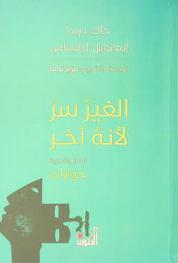
For Strasbourg consists of a series of essays and interviews by French philosopher and literary theorist Jacques Derrida (1930-2004) about the city of Strasbourg and the philosophical friendships he developed there over a forty year period. It is a profound interrogation of the relationship between philosophy and place, philosophy and language, and philosophy and friendship.
eBook