
Catalogue Search | MBRL


Are you sure you want to remove the book from the shelf?

{{itemTitle}}
1
result(s) for
"Desai, Jimmy author"
Sort by:
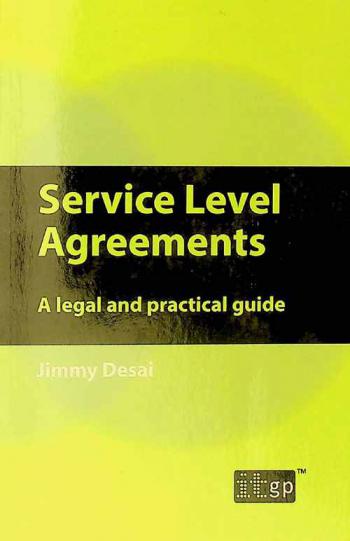
Service level agreements : a legal and practical guide
Annotation Make your SLA work for you _ Read this essential guide to SLAs today!
A wide range of industry sectors will outsource service provision (for example, banking, pharmaceuticals, and insurance companies). This can happen where an organisation outsources its IT payroll needs, its helpdesk and IT maintenance requirements, its payment processing, or its whole IT function.
The key risk
The key risk for an organisation that enters into an outsourcing transaction, are that the services that it receives from the supplier will be worse than the services they were receiving before, or that the cost savings that were anticipated or promised, are not achieved.
The SLA
To try and avoid this scenario, the outsourcing contract should include a Service Level Agreement (SLA). The SLA must be drafted to govern the standard of service that you require, including the cost of those services and the consequences of not achieving pre-agreed standards.
The wider environment
While Service Level Agreements are a key method, within ITIL, for setting out how two parties have agreed that a specific service (usually, but not necessarily, IT-related) will be delivered by one to the other, and the standards or levels to which it will be delivered, the basic concept is now far more widely applied than just in ITIL® and ITSM environments.
This pocket guide provides information and guidance on SLAs to those in the wider environment, from a legal and practical view point.
The benefits and the pitfalls
Identifying some of the benefits and the pitfalls that an organisation can encounter when negotiating and drafting SLAs, this pocket guide provides an overview of SLAs, highlighting typical scenarios that can arise, and provides information on typical solutions that have been adopted by other organisations.
Read this pocket guide to _
* Understand what an SLA is and why you need one
When negotiating any type of service-related deal (including any IT outsourcing deal), it is essential that sufficient time is devoted to ensuring that the service is of sufficient quality and that this is recorded in an SLA.
* Understand where SLAs go wrong.
SLAs can go wrong for a number of reasons. For example, the SLA may not reflect reality, your service requirements may not be defined properly, or there may be too many service levels and service level targets which can then become difficult to manage.
* Learn how to build foundations for the SLA.
There are elements that you should be considering well before even engaging with potential suppliers. This pocket guide details what your organisation should consider, in order to find the proposal which most closely matches its needs.
* Understand the issues to consider when drafting the SLA.
This pocket guide covers the issues to consider when drafting an SLA, as there are certain provisions in SLAs which either should, or should not, appear.
By reading this a short, legal and practical guide to SLAs, you should be able to quickly come up to speed with some of the legal and practical issues that might arise. Negotiating the SLA and putting the SLA into action are also discussed in the pocket guide. Whilst short and easy to digest, case references and weblinks have been provided in the text so readers can find out more information about SLAs.
A wide range of industry sectors will outsource service provision (for example, banking, pharmaceuticals, and insurance companies). This can happen where an organisation outsources its IT payroll needs, its helpdesk and IT maintenance requirements, its payment processing, or its whole IT function.
The key risk
The key risk for an organisation that enters into an outsourcing transaction, are that the services that it receives from the supplier will be worse than the services they were receiving before, or that the cost savings that were anticipated or promised, are not achieved.
The SLA
To try and avoid this scenario, the outsourcing contract should include a Service Level Agreement (SLA). The SLA must be drafted to govern the standard of service that you require, including the cost of those services and the consequences of not achieving pre-agreed standards.
The wider environment
While Service Level Agreements are a key method, within ITIL, for setting out how two parties have agreed that a specific service (usually, but not necessarily, IT-related) will be delivered by one to the other, and the standards or levels to which it will be delivered, the basic concept is now far more widely applied than just in ITIL® and ITSM environments.
This pocket guide provides information and guidance on SLAs to those in the wider environment, from a legal and practical view point.
The benefits and the pitfalls
Identifying some of the benefits and the pitfalls that an organisation can encounter when negotiating and drafting SLAs, this pocket guide provides an overview of SLAs, highlighting typical scenarios that can arise, and provides information on typical solutions that have been adopted by other organisations.
Read this pocket guide to _
* Understand what an SLA is and why you need one
When negotiating any type of service-related deal (including any IT outsourcing deal), it is essential that sufficient time is devoted to ensuring that the service is of sufficient quality and that this is recorded in an SLA.
* Understand where SLAs go wrong.
SLAs can go wrong for a number of reasons. For example, the SLA may not reflect reality, your service requirements may not be defined properly, or there may be too many service levels and service level targets which can then become difficult to manage.
* Learn how to build foundations for the SLA.
There are elements that you should be considering well before even engaging with potential suppliers. This pocket guide details what your organisation should consider, in order to find the proposal which most closely matches its needs.
* Understand the issues to consider when drafting the SLA.
This pocket guide covers the issues to consider when drafting an SLA, as there are certain provisions in SLAs which either should, or should not, appear.
By reading this a short, legal and practical guide to SLAs, you should be able to quickly come up to speed with some of the legal and practical issues that might arise. Negotiating the SLA and putting the SLA into action are also discussed in the pocket guide. Whilst short and easy to digest, case references and weblinks have been provided in the text so readers can find out more information about SLAs.
Book