
Catalogue Search | MBRL


Are you sure you want to remove the book from the shelf?

{{itemTitle}}
12
result(s) for
"Desrochers, Jessica"
Sort by:

Why are males not doing these environmental behaviors?: exploring males’ psychological barriers to environmental action
Previous research has reported that females are more likely than males to do pro-environmental behaviors. This research focused on understanding this relationship by exploring individual difference characteristics that may explain the sex difference, specifically traits and psychological barriers to pro-environmental action. Two studies (
N
= 246 and
N
= 357) confirm that males were less likely to report doing pro-environmental behaviors; males also reported more of Gifford’s (
2011
) Dragons of Inaction Psychological Barriers (DIP-Barriers) to pro-environmental action than females. Broad traits predicted pro-environmental attitudes and behaviors similar to past research, but they did not account for the sex difference. In addition, we suggest a new psychological barrier for males: perceptions of femininity may dissuade males from some pro-environmental behaviors. Results provide preliminary support for this idea and complement previous suggestions that environmentalism is perceived as more feminine. We discuss ways that future research can build on these suggestions with the ultimate goal of more effectively promoting environmentalism to males.
Journal Article

The Role of Nature Cues and Nature Relatedness in Academic Motivation and Engagement
Nature exposure in the form of immersion in natural environments can benefit students in multiple ways. Across four studies, we examined whether nature exposure in the form of visual nature cues on instructional materials might increase academic motivation and engagement among university students. Visual nature cues were presented via PowerPoint backgrounds (Study 1), online Zoom lecture backgrounds (Study 2), and on the background of calendars people used to plan for an upcoming assignment or exam (Studies 3 and 4). In each study and an internal meta-analysis, we found no evidence that nature cues increased academic engagement or motivation compared to other background images. However, participants’ self-reported nature relatedness was linked to greater academic engagement and motivation in each study and the internal meta-analysis. The interaction between nature relatedness and nature exposure was not significant. We conclude that embedding visual nature cues in educational material is not sufficiently impactful to have an effect on academic motivation and that immersion and interaction with nature in a fuller sense may be necessary to reap motivational benefits.
Journal Article

Does Spending Time in Nature Help Students Cope with the COVID-19 Pandemic?
The COVID-19 pandemic has disrupted our economy, social lives, and mental health, and it therefore provides a unique chance for researchers to examine how people cope with changes to their everyday activities. Research suggests that people may be spending more time in nature than they did pre-pandemic. The current study sheds light on how nature is being used to cope with the stresses of the global health crisis and lockdowns. Canadian undergraduate students (N = 559) filled out a questionnaire during the fall of 2020 about their pandemic experience, including their affects, life satisfaction, and feelings of flourishing and vitality, in addition to a wide variety of nature variables. The weekly exposures, the perceived increases or decreases in the exposure to nature during the pandemic, and the feelings of connectedness (nature relatedness) were assessed. Those who felt like they were spending more time in nature than they did pre-pandemic experienced more subjective well-being. Nature-related individuals were more likely to access nature and to appreciate it more during the pandemic than others, but all people (even those less connected) experienced well-being benefits from spending more time in nature. Going into nature appears to be an increasingly popular and effective coping strategy to boost or maintain subjective well-being during the pandemic.
Journal Article

Sex Differences in Response to Deception Across Mate-Value Traits of Attractiveness, Job Status, and Altruism in Online Dating
Sex differences in mate preferences are well established. It is also well understood that humans often seek to manipulate their standing on important mate-value traits. Yet, there is a paucity of work examining potential sex differences in response to deception along these important dimensions. In Study 1, a sample of 280 undergraduates (123 females) responded to a hypothetical online dating scenario asking participants to rank how upset they would be if deceived about a date’s attractiveness, occupation, or volunteerism. Women ranked occupation deception as more upsetting than men did, and men ranked attractiveness deception as more upsetting than women did. Given potential measurement differences between forced-choice and continuous response options, Study 2 randomly assigned 364 undergraduates (188 females) to one of the deceptions conditions and asked them to report their level of upset and willingness to go on the date using a continuous response scale. Women were more likely than men to cancel the date if the deception involved volunteerism or occupation. There was no significant sex difference in the attractiveness condition. Neither mate value nor sociosexuality moderated the sex difference in the levels of upset due to the deception. Together, these findings demonstrate that women and men exhibit differences in the degree to which they become upset by opposite sex deceptions in online dating, regardless of self-perceived mate value and sociosexuality, in alignment with evolved sex differences in mate preferences.
Journal Article
Men’s Mate Value Correlates with a Less Restricted Sociosexual Orientation: A Meta-Analysis
Men, relative to women, can benefit their total reproductive success by engaging in short-term pluralistic mating. Yet not all men enact such a mating strategy. It has previously been hypothesized that high mate value men should be most likely to adopt a short-term mating strategy, with this prediction being firmly grounded in some important mid-level evolutionary psychological theories. Yet evidence to support such a link has been mixed. This paper presents a comprehensive meta-analysis of 33 published and unpublished studies (
N
= 5928) in which we find that that self-reported mate value accounts for roughly 6% of variance in men’s sociosexual orientation. The meta-analysis provides evidence that men’s self-perceived mate value positively predicts their tendency to engage in short-term mating, but that the total effect size is small.
Journal Article
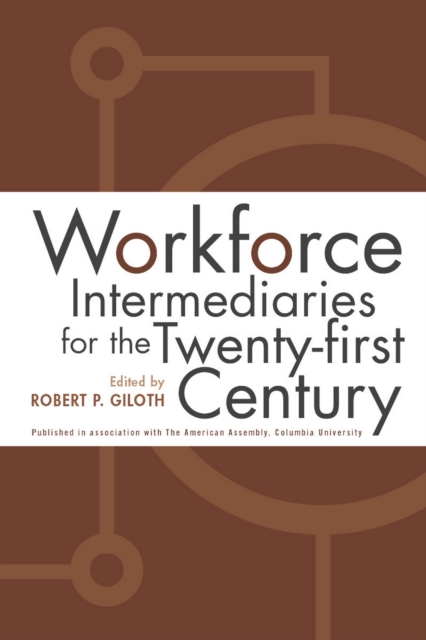
Workforce intermediaries for the twenty-first century
Confronted with businesses facing a long-term shortage of skilled workers and evaluations showing that job training for the poor over the past 25 years had produced only meager results, a number of groups throughout the country have sought to find a more effective approach. The efforts of these partnerships, which editor Robert Giloth calls \"workforce intermediaries,\" are characterized by a focus on improving business productivity and helping low-income individuals not just find a job, but advance over time to jobs that enable them to support themselves and their families. This book takes stock of the world of workforce intermediaries: entrepreneurial partnerships that include businesses, unions, community colleges, and community organizations. Noted scholars and policy makers examine the development and effectiveness of these intermediaries, and a concluding chapter discusses where we need to go from here, if society is to provide a more coherent approach to increasing the viability and capacity of these important institutions.Published in association with The American Assembly, Columbia University.
eBook
Kentucky’s Secretary of State Turns Up Heat in Fight With Elections Board
Read More Kentucky Legislature Passes Bill Stripping Grimes of Authority Over State Board of Elections The bill takes multiple steps to scale back the level of control Secretary of State Alison Lundergan Grimes has asserted over the board in recent years. According to federal and state officials, last September Dearing was in the process of being approved for a security clearance when Grimes abruptly asked the Department of Homeland Security to halt the process. “At a time when election security is a top concern for our nation, our Republican majority wants to remove the only member of the State Board of Elections with a National Security Clearance from having a voice in protecting Kentucky, placing the process solely in the hands of unelected bureaucrats appointed by the Governor,” Grimes said in a statement last month.
Newspaper Article
Kentucky Secretary of State Staff Searched Voting Records for Investigators and Rivals, Records Show
Kentucky officials publicly released records Wednesday that show employees in the secretary of state’s office used the voter registration system to look up political rivals, state investigators and a range of political operatives. After ProPublica and the Lexington Herald-Leader reported on the use of voter rolls this year, Grimes, a Democrat, had maintained that her office had done no inappropriate searches, and she called for the State Board of Elections to release records of who had looked up what, if anything. The investigator, appointed by the state’s attorney general, is also looking into complaints of inappropriate contracts and compliance with a federal consent decree governing Kentucky’s efforts to keep accurate records of registered voters. Read More A Onetime Rising Democratic Star Faces Questions About Voter Privacy Kentucky Secretary of State Alison Lundergan Grimes, who attained national prominence for a failed Senate run against Mitch McConnell, is taking heat because her staff has routinely examined the voting records of state employees, job applicants and even potential political rivals.
Newspaper Article
The Curious Case of a Kentucky Cybersecurity Contract
[...]they don’t offer any security devices or real-world experience of any type.” --- (According to its website, CyberScout was founded in 2003 as a consumer-oriented operation called Identity Theft 911 and adopted its current name in 2017. [...]CyberScout’s contract is with SBE. Read More A Onetime Rising Democratic Star Faces Questions About Voter Privacy Kentucky Secretary of State Alison Lundergan Grimes, who attained national prominence for a failed Senate run against Mitch McConnell, is taking heat because her staff has routinely examined the voting records of state employees, job applicants and even potential political rivals.
Newspaper Article