
Catalogue Search | MBRL


Are you sure you want to remove the book from the shelf?

{{itemTitle}}
6
result(s) for
"Devlin, Keith J. author"
Sort by:

Finding Fibonacci : the quest to rediscover the forgotten mathematical genius who changed the world
In 2000, Keith Devlin set out to research the life and legacy of the medieval mathematician Leonardo of Pisa, popularly known as Fibonacci, whose book Liber abbaci has quite literally affected the lives of everyone alive today. Although he is most famous for the Fibonacci numbers--which, it so happens, he didn't invent--Fibonacci's greatest contribution was as an expositor of mathematical ideas at a level ordinary people could understand. In 1202, Liber abbaci--the \"Book of Calculation\"--Introduced modern arithmetic to the Western world. Yet Fibonacci was long forgotten after his death, and it was not until the 1960s that his true achievements were finally recognized. Finding Fibonacci is Devlin's compelling firsthand account of his ten-year quest to tell Fibonacci's story. Devlin, a math expositor himself, kept a diary of the undertaking, which he draws on here to describe the project's highs and lows, its false starts and disappointments, the tragedies and unexpected turns, some hilarious episodes, and the occasional lucky breaks. You will also meet the unique individuals Devlin encountered along the way, people who, each for their own reasons, became fascinated by Fibonacci, from the Yale professor who traced modern finance back to Fibonacci to the Italian historian who made the crucial archival discovery that brought together all the threads of Fibonacci's astonishing story. Fibonacci helped to revive the West as the cradle of science, technology, and commerce, yet he vanished from the pages of history. This is Devlin's search to find him. -- Back cover.
Book
The joy of sets : fundamentals of contemporary set theory
This book provides an account of those parts of contemporary set theory of direct relevance to other areas of pure mathematics.The intended reader is either an advanced-level mathematics undergraduate, a beginning graduate student in mathematics, or an accomplished mathematician who desires or needs some familiarity with modern set theory.
eBook

The man of numbers : Fibonacci's arithmetic revolution
\"The untold story of Leonardo of Pisa, the medieval mathematician who introduced Arabic numbers to the West and helped launch the modern era.\"--Page [2] of dust jacket.
Book
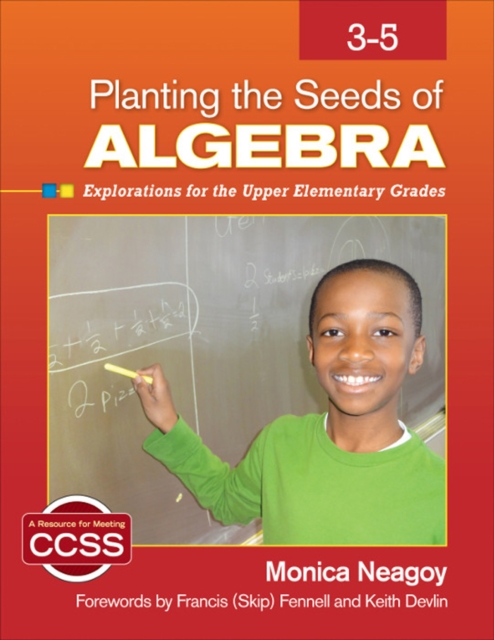
Planting the Seeds of Algebra, 3-5
Planting the Seeds of Algebra will empower teachers with theoretical and practical knowledge about both the content and pedagogy of algebraic instruction, showing them the different faces of algebra as it appears in the early years.
eBook
Decision Making in Spinal Care
A comprehensive and concise reference for determining treatment options of the spine
Updated and expanded to reflect current management strategies and new technologies, Decision Making in Spinal Care, Second Edition provides readers with focused guidance to every major topic in spine, with an emphasis on clinical decision making. Covering the most common spine problems, this new edition covers the spectrum of diagnoses seen in a typical spinal practice, from trauma injuries to metabolic and degenerative diseases to spinal deformities.
Highlights of the Second Edition:
* Focuses on \"must-know\" information that significantly impacts clinical decisions
* Includes new spinal technologies in the Contemporary Topics section to keep readers current
* Contains more algorithms, figures, and diagrams to aid understanding and facilitate rapid management guidance
* Written by world-renowned spinal care experts
This handy portable reference will enable residents, fellows, spine surgeons, and associated clinicians in orthopedic surgery and neurosurgery to quickly access the information they need to make the right decisions in treating typical spinal conditions.
eBook
Introduction to Mathematical Structures and Proofs
This is a textbook for a one-term course whose goal is to ease the transition from lower-division calculus courses to upper-division courses in linear and abstract algebra, real and complex analysis, number theory, topology, combinatorics, and so on. Without such a \"bridge\" course, most upper division instructors feel the need to start their courses with the . rudiments of logic, set theory, equivalence relations, and other basic mathematiCal raw materials before getting on with the subject at hand. Students who are new to higher mathematics are often startled to discover that mathematics is a subject of ideas, and not just formulaic rituals, and that they are now expected to understand and create mathematical proofs. Mastery of an assortment of technical tricks may have carried tHe students through calculus, but it is no longer a guarantee of academic success. Students need experience in working with abstract ideas at a n.
eBook