
Catalogue Search | MBRL


Are you sure you want to remove the book from the shelf?

{{itemTitle}}
63
result(s) for
"Dixon, Franklin W"
Sort by:
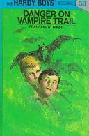
Danger on Vampire Trail
The Hardy boys and two friends take a camping trip to the Rocky Mountains in an attempt to locate a gang of credit-card counterfeiters.
Book

Hardy Boys -- The Secret of the Soldier's Gold
\"The one on the right is Grandmother Otero,\" [Catarina Otero] said. \"The woman with her is Frau Rilke, Grandmother Otero's good friend.' \"Frau Rilke lived in Lisbon for several years during World War II,\" Catarina explained. \"Grandmother Otero knows all about your famous father and the mysteries the two of you have solved. When I told her that you were coming she asked me if you could help her friend Frau Rilke with a problem. I didn't know what to tell her \" \"Grandmother Otero!\" Catarina called. \"I'd like to introduce [Frank Hardy] and [Joe Hardy].\"
Newspaper Article

Hunting for hidden gold
The Hardy boys must brave a blizzard, a mine cave-in, and hungry timber wolves in an effort to search for the gang responsible for a robbery.
Book

Boys, uninterrupted
An excerpt from The Writer's Guide to Hardy Boys Rack Books is presented. The books, aimed at ten-to fourteen-year-old boys, have been published since 1927 under the pseudonym Franklin W. Dixon.
Book Review

The secret of the old mill
Teenage detectives Frank and Joe Hardy investigate a case of counterfeiting.
Book

Hippo pathway regulation by phosphatidylinositol transfer protein and phosphoinositides
The Hippo pathway plays a key role in development, organ size control and tissue homeostasis, and its dysregulation contributes to cancer. The LATS tumor suppressor kinases phosphorylate and inhibit the YAP/TAZ transcriptional co-activators to suppress gene expression and cell growth. Through a screen of marine natural products, we identified microcolin B (MCB) as a Hippo activator that preferentially kills YAP-dependent cancer cells. Structure–activity optimization yielded more potent MCB analogs, which led to the identification of phosphatidylinositol transfer proteins α and β (PITPα/β) as the direct molecular targets. We established a critical role of PITPα/β in regulating LATS and YAP. Moreover, we showed that PITPα/β influence the Hippo pathway via plasma membrane phosphatidylinositol-4-phosphate. This study uncovers a previously unrecognized role of PITPα/β in Hippo pathway regulation and as potential cancer therapeutic targets.The marine compound microcolin B stimulates the Hippo pathway and selectively kills YAP-dependent cancer cells by inhibiting phosphatidylinositol transfer protein and depleting plasma membrane phosphatidylinositol-4-phosphate.
Journal Article

The mark on the door
The search for a missing boat leads the Hardy boys and their father down to Mexico where they encounter a tribe of Indians.
Book

Antisense oligonucleotide targeting eukaryotic translation initiation factor 4E reduces growth and enhances chemosensitivity of non-small-cell lung cancer cells
Elevated levels of eukaryotic translation initiation factor 4E (eIF4E) enhance translation of many malignancy-related proteins, such as vascular endothelial growth factor (VEGF), c-Myc and osteopontin. In non-small-cell lung cancer (NSCLC), levels of eIF4E are significantly increased compared with normal lung tissue. Here, we used an antisense oligonucleotide (ASO) to inhibit the expression of eIF4E in NSCLC cell lines. eIF4E levels were significantly reduced in a dose-dependent manner in NSCLC cells treated with eIF4E-specific ASO (4EASO) compared with control ASO. Treatment of NSCLC cells with the 4EASO resulted in decreased cap-dependent complex formation, decreased cell proliferation and increased sensitivity to gemcitabine. At the molecular level, repression of eIF4E with ASO resulted in decreased expression of the oncogenic proteins VEGF, c-Myc and osteopontin, whereas expression of β-actin was unaffected. Based on these findings, we conclude that eIF4E-silencing therapy alone or in conjunction with chemotherapy represents a promising approach deserving of further investigation in future NSCLC clinical trials.
Journal Article

The great airport mystery
Valuable electronic parts containing platinum are being stolen from shipments made by Stanwide Mining Equipment Company's cargo planes, and Frank and Joe Hardy are called upon to assist their world-renowned detective father in solving the case.
Book

Determination of Proton Flux and Conductance at pH 6.8 through Single F o Sectors from Escherichia coli
We have developed a mathematical model in concert with an assay that allows us to calculate proton (H
+) flux and conductance through a single F
o of the F
1F
o ATP synthase. Lipid vesicles reconstituted with just a few functional F
o from
Escherichia coli were loaded with 250
mM K
+ and suspended in a low K
+ solution. The pH of the weakly buffered external solution was recorded during sequential treatment with the potassium ionophore valinomycin, the protonophore carbonyl cyanide 3-chlorophenylhydrazone, and HCl. From these pH traces and separate determinations of vesicle size and lipid concentration we calculate the proton conductance through a single F
o sector. This methodology is sensitive enough to detect small (15%) conductance changes. We find that wild-type F
o has a proton flux of 3100
±
500
H
+/s/F
o at a transmembrane potential of 106
mV (25°C and pH 6.8). This corresponds to a proton conductance of 4.4
fS.
Journal Article