
Catalogue Search | MBRL


Are you sure you want to remove the book from the shelf?

{{itemTitle}}
3,539
result(s) for
"Dixon, John"
Sort by:

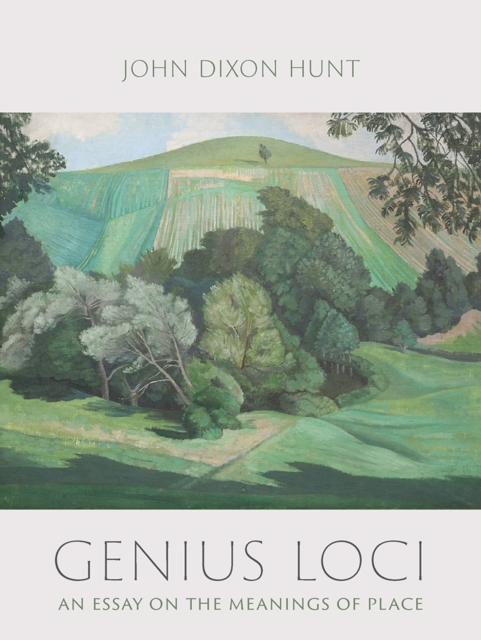
Genius Loci
From literature to landscape architecture, an expansive, contemplative exploration of the significance of place. For ancient Romans, genius loci was literally \"the genius of the place, \" the presiding divinity who inhabited a site and gave it meaning. While we are less attuned to divinity today, we still sense that a place has significance. In this book, eminent garden historian John Dixon Hunt explores genius loci in many settings, including contemporary land art, the paintings of Paul and John Nash, travel writers such as Henry James, Paul Theroux, and Lawrence Durrell on Provence, Mexico, and Cyprus, and landscape architects who invent new meanings for a site. This book is a nuanced, thoughtful exploration of how places become more significant to us through the myriad ways we see, talk about, and remember them.
eBook


The making of place : modern and contemporary gardens
\"From imposing sculptures discovered in woodlands or on hilly trails to community gardens, and along disused rail tracks to ones made on inhospitable seashores, this book offers insights into the history and make-up of contemporary gardens, whether they reflect the priorities of modern society, bring new ideas and materials into the world, or seek the reinvention of ancient cultures. The modern botanical gardens, sculpture parks, campuses, memorial gardens and vernacular gardens examined showcase the differences between cultures and countries around the world, including the United Kingdom, France, Germany, the United States, China and Australia\"--Jacket.
Book

Beyond Obesity and Lifestyle : A Review of 21st Century Chronic Disease Determinants
The obesity epidemic and associated chronic diseases are often attributed to modern lifestyles. The term “lifestyle” however, ignores broader social, economic, and environmental determinants while inadvertently “blaming the victim.” Seen more eclectically, lifestyle encompasses distal, medial, and proximal determinants. Hence any analysis of causality should include all these levels. The term “anthropogens,” or “…man-made environments, their by-products and/or lifestyles encouraged by these, some of which may be detrimental to human health” provides a monocausal focus for chronic diseases similar to that which the germ theory afforded infectious diseases. Anthropogens have in common an ability to induce a form of chronic, low-level systemic inflammation (“metaflammation”). A review of anthropogens, based on inducers with a metaflammatory association, is conducted here, together with the evidence for each in connection with a number of chronic diseases. This suggests a broader view of lifestyle and a focus on determinants, rather than obesity and lifestyle per se as the specific causes of modern chronic disease. Under such an analysis, obesity is seen more as “a canary in a mineshaft” signaling problems in the broader environment, suggesting that population obesity management should be focused more upstream if chronic diseases are to be better managed.
Journal Article


The Effects of Exercise Training in Addition to Energy Restriction on Functional Capacities and Body Composition in Obese Adults during Weight Loss: A Systematic Review
Obesity is associated with impairments of physical function, cardiovascular fitness, muscle strength and the capacity to perform activities of daily living. This review examines the specific effects of exercise training in relation to body composition and physical function demonstrated by changes in cardiovascular fitness, and muscle strength when obese adults undergo energy restriction.
Electronic databases were searched for randomised controlled trials comparing energy restriction plus exercise training to energy restriction alone. Studies published to May 2013 were included if they used multi-component methods for analysing body composition and assessed measures of fitness in obese adults.
Fourteen RCTs met the inclusion criteria. Heterogeneity of study characteristics prevented meta-analysis. Energy restriction plus exercise training was more effective than energy restriction alone for improving cardiovascular fitness, muscle strength, and increasing fat mass loss and preserving lean body mass, depending on the type of exercise training.
Adding exercise training to energy restriction for obese middle-aged and older individuals results in favourable changes to fitness and body composition. Whilst weight loss should be encouraged for obese individuals, exercise training should be included in lifestyle interventions as it offers additional benefits.
Journal Article

The Enlightenment of Cadwallader Colden : Empire, Science, and Intellectual Culture in British New York
\"Recreates the enlightened culture of an eighteenth-century statesman, botanist, historian, cartographer, and natural philosopher who claimed to have discovered the cause of gravity and who also became one of the most hated political figures in pre-Revolutionary New York\"-- Author's Web site.
Book

Beyond prejudice: Are negative evaluations the problem and is getting us to like one another more the solution?
For most of the history of prejudice research, negativity has been treated as its emotional and cognitive signature, a conception that continues to dominate work on the topic. By this definition, prejudice occurs when we dislike or derogate members of other groups. Recent research, however, has highlighted the need for a more nuanced and “inclusive” (Eagly 2004) perspective on the role of intergroup emotions and beliefs in sustaining discrimination. On the one hand, several independent lines of research have shown that unequal intergroup relations are often marked by attitudinal complexity, with positive responses such as affection and admiration mingling with negative responses such as contempt and resentment. Simple antipathy is the exception rather than the rule. On the other hand, there is mounting evidence that nurturing bonds of affection between the advantaged and the disadvantaged sometimes entrenches rather than disrupts wider patterns of discrimination. Notably, prejudice reduction interventions may have ironic effects on the political attitudes of the historically disadvantaged, decreasing their perceptions of injustice and willingness to engage in collective action to transform social inequalities. These developments raise a number of important questions. Has the time come to challenge the assumption that negative evaluations are inevitably the cognitive and affective hallmarks of discrimination? Is the orthodox concept of prejudice in danger of side-tracking, if not obstructing, progress towards social justice in a fuller sense? What are the prospects for reconciling a prejudice reduction model of change, designed to get people to like one another more, with a collective action model of change, designed to ignite struggles to achieve intergroup equality?
Journal Article