
Catalogue Search | MBRL


Are you sure you want to remove the book from the shelf?

{{itemTitle}}
5
result(s) for
"Djerassi, Carl, author"
Sort by:

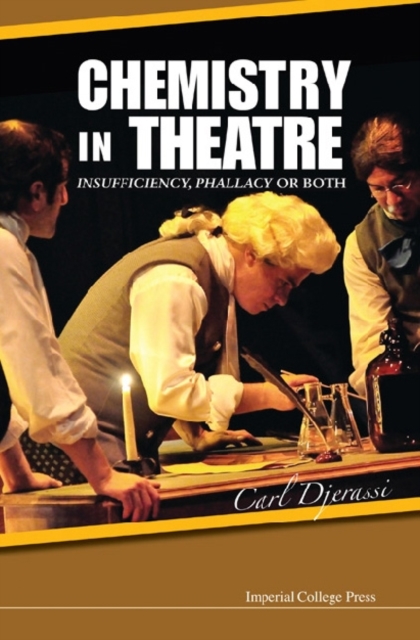
Chemistry in theatre
This book examines the questions “What can science do for the theatre?” and “What can the theatre do for science?” which raise challenges for both theatre professionals and scientists. Unusually, this book deals with plays first and foremost as reading material — as texts to be read alone or in dramatic readings — rather than emphasizing performances on the stage. Concrete examples are given to demonstrate the potential pedagogic value of using the dialogic style and plot structure of plays in science, with a special focus on chemistry.
eBook
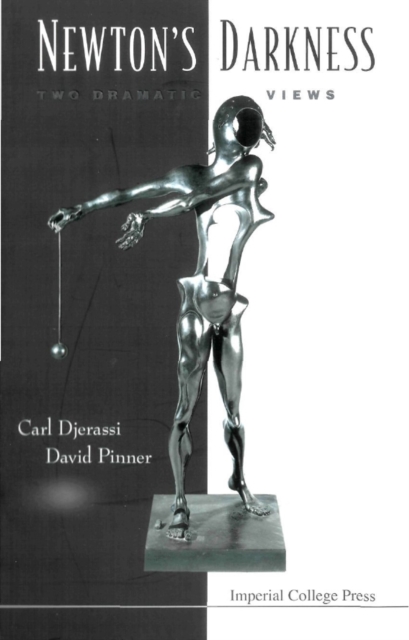
Newton's darkness
“What purpose is served by showing that England’s greatest natural philosopher is flawed … like other mortals?†asks one of the characters in Newton’s Darkness. “We need unsullied heroes!†But what if the hero is sullied? At stake is an issue that is as germane today as it was 300 years ago: a scientist’s ethics must not be divorced from scientific accomplishments. There is probably no other scientist of whom so many biographies and other historical analyses have been published than Isaac Newton - all of them in the standard format of documentary prose because of their didactic purpose to transmit historical information. Newton’s Darkness, however, illuminates the darker aspects of Newton’s persona through two historically grounded plays dealing with two of the bitterest struggles in the history of science. The name of Isaac Newton appears in virtually every survey of the public’s choice for the most important persons of the second millennium. Yet the term “darkness†can be applied to much of Newton’s personality. Adjectives that have been used to describe facets of his personality include “remoteâ€, “lonelyâ€, “secretiveâ€, “introvertedâ€, “melancholicâ€, “humorlessâ€, “puritanicalâ€, “cruelâ€, “vindictive†and, perhaps worst of all, “unforgivingâ€. The trait most relevant to the present book is Newton’s obsessively competitive nature, which was often out of proportion to the warranted facts, as demonstrated in three of Newton’s best-known bitter conflicts: with the physicist Robert Hooke, the astronomer royal John Flamsteed, and a German contemporary of almost equal intellectual prowess, Gottfried Wilhelm Leibniz - the last fight eventually turning into an England vs Continental Europe competition. It is two of these three relentless drawn-out battles that are illuminated in
Newton’s Darkness in the form of historically grounded drama. After a summary of the historical evidence, the book starts with the Newtonâ€\"Hooke struggle (Chapter 2), which was conducted mano a mano, and is then followed by little-known aspects of the Newtonâ€\"Leibniz confrontation (Chapter 3), which was fought largely through surrogates - notably the infamous, anonymous committee of 11 Fellows of the Royal Society. Readership: Undergraduate and graduate students interested in history of science and of literature, general readers interested in biographical history, and theatre-goers.
eBook

This Man's Pill
October 15, 1951 marks the birthday of one of the key episodes in 20th century social history: the first synthesis of a steroid oral contraceptive in a small laboratory in Mexico City - an event that triggered the development of the Pill. Carl Djerassi has been honoured worldwide for that accomplishment, which ultimately changed the life of women and the nature of human reproduction in ways that were not foreseeable. On the 50th anniversary of this pivotal event, Djerassi weaves a compelling personal narrative full of self-reflection and occasional humour on the impact this invention has had on the world at large and on him personally. He credits the Pill with radically altering his academic career at Stanford University to become one of the few American chemists writing novels and plays. This Man’s Pill presents a forcefully revisionist account of the early history of the Pill, debunking many of the journalistic and romantic accounts of its scientific origin. Djerassi does not shrink from exploring why we have no Pill for men or why Japan only approved the Pill in 1999 (together with Viagra). Emphasizing that development of the Pill occurred during the post-War period of technological euphoria, he believes that it could not be repeated in today’s climate. Would the sexual revolution of the 1960s or the impending separation of sex (“in bed”) and fertilization (“under the microscope”) still have happened? This Man’s Pill answers such questions while providing a uniquely authoritative account of a discovery that changed the world.
eBook

Foreplay
Hannah Arendt, Walter Benjamin, and Theodor W. Adorno were intellectual giants of the first half of the twentieth century. The drama
Foreplay explores their deeply human and psychologically intriguing private lives, focusing on professional and personal jealousies, the mutual dislike of Theodor Adorno and Hannah Arendt, the association between Walter Benjamin and Georges Bataille, and the border between erotica and pornography.
Djerassi’s extensive biographical research brings to light many fascinating details revealed in the dialogues among the characters, including Adorno’s obsession with his dreams, Benjamin’s admiration for Franz Kafka, and the intimate correspondence between Gretel Adorno and Walter Benjamin. The introduction of a fictitious character, Fräulein X, intensifies the complex interplay among the four lead protagonists and allows for a comparison of Adorno’s philandering and the similar behavior of Martin Heidegger, whose affair with Hannah Arendt is well known.
Foreplay brims with intrigue and the friction created when strong personalities clash.
eBook