
Catalogue Search | MBRL


Are you sure you want to remove the book from the shelf?

{{itemTitle}}
5,289
result(s) for
"Douglas, Steve"
Sort by:

Canada's dream shall be of them : Canadian epitaphs of the Great War
\"There could be no truer witness to the enormity of the First World War, and its terrible cost in lives, than the memorials and war cemeteries along the old Western Front. In Canada, no less than in the other Dominions of the British Empire, the war left a conflicting legacy of pride and sorrow that endures to this day. The soaring Vimy Memorial, the Brooding Soldier, and the monuments honouring Canada's significant contribution to the Allied victory symbolize the spirit of shared sacrifice and nationhood that emerged from the crucible of the war; but alongside this official commemoration there exists a poignant, strangely overlooked, record of the grief and search for consolation among the Canadian populace in the years after the Armistice. This has come down in the personal inscriptions which the Imperial War Graves Commission invited next of kin to have engraved on the headstones of the fallen. Simple, heartfelt, often gems of compression, these farewells preserve the voice of Canada's bereaved, the parents, the wives, the children, who were left to mourn and to seek meaning and comfort in their loss\"-- Publisher description.
Book

Habitual Breakfast Patterns Do Not Influence Appetite and Satiety Responses in Normal vs. High-Protein Breakfasts in Overweight Adolescent Girls
Differences in postprandial insulin, glucose, and/or free fatty acid concentrations, following the consumption of breakfast, have been demonstrated to be dependent on habitual breakfast patterns. This study examined the effects of habitual breakfast patterns on postprandial appetite, satiety, and hormonal responses along with daily food intake following the consumption of normal-protein (NP) vs. higher-protein (HP) breakfasts in overweight adolescents. Thirty-seven girls (age: 19 ± 1 year; BMI: 29.0 ± 3.4 kg/m2) participated in the semi-randomized crossover design study. Participants were grouped according to whether they habitually skipped (SKIP, n = 18) or consumed breakfast (CONSUME, n = 19), and consumed a NP (350 kcal; 13 g protein) or HP (350 kcal; 35 g protein) breakfast for 3 days/pattern. On day 4, breakfast was provided, and appetite questionnaires and blood samples were collected throughout an 8 h testing day. Daily food intake was also assessed. Regardless of habitual breakfast patterns, the consumption of HP breakfast led to greater daily fullness (29,030 ± 6,010 min × mm) vs. NP breakfast (26,910 ± 5580 min × mm; p = 0.03). Daily protein consumption was greater (98 ± 15 g vs. 78 ± 15 g), and carbohydrate consumption was lower (331 ± 98 g vs. 367 ± 94 g) with HP vs. NP (both, p < 0.001). No other differences were observed. These data suggest that the recommendation to consume a HP breakfast for improved satiety and ingestive behavior is appropriate for overweight adolescent girls, regardless of habitual breakfast patterns.
Journal Article
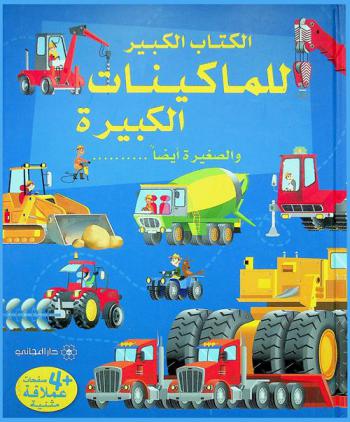
الكتاب الكبير للماكينات الكبيرة
هذا الكتاب مخصص للأطفال يستهدف الطفولة المبكرة وتعمل علي اسثمار الطفل في بناء المهارات المختلفة المرتبطة بالخيال والابتكار وقوة الشخصية والبحث عن حلول إبداعية ويستمد الطفل الكثير من العلم والمعرفة والمعلومات من المنهج السلوكي التربوي رائع يعلم الطفل كيف يستخلص من مشكلاته وكيف يبني شخصيته بشكل مميز ويعطي المربي حلولا لحل مشكلات أبنه تعنيه عن تجاوز الأزمة وإنهائها.
BOOK

Effects of high-protein vs. high- fat snacks on appetite control, satiety, and eating initiation in healthy women
BACKGROUND: The purpose of this study was to determine whether a high-protein afternoon yogurt snack improves appetite control, satiety, and reduces subsequent food intake compared to other commonly-consumed, energy dense, high-fat snacks. FINDINGS: Twenty, healthy women (age: 27 ± 2 y; BMI: 23.4 ± 0.7 kg/m²) completed the randomized crossover design study which included 3, 8-h testing days comparing the following 160 kcal afternoon snacks: high-protein yogurt (14 g protein/25 g CHO/0 g fat); high-fat crackers (0 g protein/19 g CHO/9 g fat); and high-fat chocolate (2 g protein/19 g CHO/9 g fat). Participants were acclimated to each snack for 3 consecutive days. On day 4, the participants consumed a standardized breakfast and lunch; the respective snack was consumed 3-h post-lunch. Perceived hunger and fullness were assessed throughout the afternoon until dinner was voluntarily requested. An ad libitum dinner was then provided. The consumption of the yogurt snack led to greater reductions in afternoon hunger vs. chocolate (p < 0.01). No differences in afternoon fullness were detected. The yogurt snack also delayed eating initiation by approximately 30 min compared to the chocolate snack (p < 0.01) and approximately 20 min vs. crackers (p = 0.07). The yogurt snack led to approximately 100 fewer kcals consumed at dinner vs. the crackers (p = 0.08) and chocolate (p < 0.05). No other differences were detected. CONCLUSION: These data suggest that, when compared to high-fat snacks, eating less energy dense, high-protein snacks like yogurt improves appetite control, satiety, and reduces subsequent food intake in healthy women.
Journal Article
The effects of increased dietary protein yogurt snack in the afternoon on appetite control and eating initiation in healthy women
Background
A large portion of daily intake comes from snacking. One of the increasingly common, healthier snacks includes Greek-style yogurt, which is typically higher in protein than regular yogurt. This study evaluated whether a 160 kcal higher-protein (HP) Greek-style yogurt snack improves appetite control, satiety, and delays subsequent eating compared to an isocaloric normal protein (NP) regular yogurt in healthy women. This study also identified the factors that predict the onset of eating.
Findings
Thirty-two healthy women (age: 27 ± 2y; BMI: 23.0 ± 0.4 kg/m
2
) completed the acute, randomized crossover-design study. On separate days, participants came to our facility to consume a standardized lunch followed by the consumption of the NP (5.0 g protein) or HP (14.0 g protein) yogurt at 3 h post-lunch. Perceived hunger and fullness were assessed throughout the afternoon until dinner was voluntarily requested; ad libitum dinner was then provided. Snacking led to reductions in hunger and increases in fullness. No differences in post-snack perceived hunger or fullness were observed between the NP and HP yogurt snacks. Dinner was voluntarily requested at approximately 2:40 ± 0:05 h post-snack with no differences between the HP vs. NP yogurts. Ad libitum dinner intake was not different between the snacks (NP: 686 ± 33 kcal vs. HP: 709 ± 34 kcal; p = 0.324). In identifying key factors that predict eating initiation, perceived hunger, fullness, and habitual dinner time accounted for 30% of the variability of time to dinner request (r = 0.55; p < 0.001).
Conclusions
The additional 9 g of protein contained in the high protein Greek yogurt was insufficient to elicit protein-related improvements in markers of energy intake regulation.
Journal Article