
Catalogue Search | MBRL


Are you sure you want to remove the book from the shelf?

{{itemTitle}}
55
result(s) for
"Dow, Bonnie J"
Sort by:


Watching Women's Liberation, 1970
In 1970, ABC, CBS, and NBC--the \"Big Three\" of the pre-cable television era--discovered the feminist movement. From the famed sit-in at Ladies Home Journal to multi-part feature stories on the movement's ideas and leaders, nightly news broadcasts covered feminism more than in any year before or since, bringing women's liberation into American homes. In Watching Women's Liberation, 1970: Feminism's Pivotal Year on the Network News , Bonnie J. Dow uses case studies of key media events to delve into the ways national TV news mediated the emergence of feminism's second wave. First legitimized as a big story by print media, the feminist movement gained broadcast attention as the networks eagerness to get in on the action was accompanied by feminists efforts to use national media for their own purposes. Dow chronicles the conditions that precipitated feminism's new visibility and analyzes the verbal and visual strategies of broadcast news discourses that tried to make sense of the movement. Groundbreaking and packed with detail, Watching Women's Liberation, 1970 shows how feminism went mainstream--and what it gained and lost on the way.
eBook
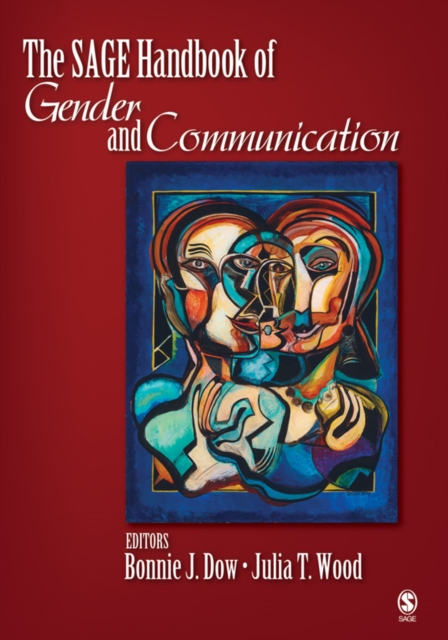
The Sage handbook of gender and communication
The SAGE Handbook of Gender and Communication is a vital resource for those seeking to explore the complex interactions of gender and communication. Editors Bonnie J. Dow and Julia T. Wood, together with an illustrious group of contributors, review and evaluate the state of the gender and communication field through the discussion of existing theories and research, as well as through identification of important directions for future scholarship. The first of its kind, this Handbook examines the primary contexts in which gender and communication are shaped, reflected, and expressed: interpersonal, organizational, rhetoric, media, and intercultural/global.
eBook

The Traffic in Men and the Fatal Attraction of Postfeminist Masculinity
This essay juxtaposes readings of three films-1975's The Stepford Wives, 1987's Fatal Attraction, and the 2004 version of The Stepford Wives-to suggest that feminist media critics' understanding of the dynamics of feminist, postfeminist, and \"post-postfeminist\" discourses in popular culture should include attention to the rhetorical and political implications of representations of men and masculinity.
Journal Article


Spectacle, spectatorship, and gender anxiety in television news coverage of the 1970 women's strike for equality
This essay examines television news coverage of the August 2 6, 19 70 Women's Strike for Equality, the first major media event of the second wave offeminism in the U.S. It explores three levels on which the news reports on the three broadcast networks (ABC, CBS, and NBC), rely on notions of women and visual pleasure: first, in their positioning of the Strike as sheer spectacle; second, in their verbal and visual framing of the Strike as absurdist entertainment rather than reasoned protest, and third, in their emphasis on the issue of femininity under attack, an emphasis in which femininity is largely represented by women's bodies. I conclude with a discussion of the ways in which the framing of the events functions both to assert and to assuage a profound sense of gender anxiety on the part of the assumed male spectator for the coverage.
Journal Article
Feminism, difference(s), and rhetorical studies
Feminist rhetorical studies have traditionally engaged the agendas of speech communication and feminist/women's studies. Dow presents an argument for the need of feminism to be more self-reflexive and to understand the rhetorical nature of its arguments and how they constitute feminist rhetorical theory and criticism in terms of its place in the field of speech communication and its place in the world of feminist studies.
Journal Article

Politicizing voice
When we speak and write, we do so from social locations that are constituted by discourse and experience. Moreover, because all social locations are not equal, because some are attended by privilege and others by marginalization, our socially located voices have political implications. In this essay I explore some troublesome implications of uncritically equating social location with political position in our evaluation of the voices we create and hear. I argue that crucial to unpacking the politics of social location are (1) an understanding of differences within as well as among categories of oppression and privilege, and (2) a recognition that the political implications of social locations are not necessarily the same as the political commitments of the individuals who occupy them.
Journal Article
Magazines and the Marketing of the Movement
On January 26, 1970, a coalition of leftist women staged a takeover of the underground New Left newspaperRAT Subterranean Newsin New York City. Founded in 1968,RATwas an important voice in radical politics in New York, but it was controlled by men and displayed an increasing emphasis on whatRATwriter Robin Morgan called “‘cultural nationalism’ for young white males: rock music coverage, pornography articles, and sex-wanted ads” (1978, p. 115). Leftist women who wrote for the paper had grown weary ofRAT’s sexist tone and content and with its treatment of women writers as second-class citizens.
Book Chapter
Making a Spectacle of the Movement
On August 10, 1970, the U.S. House of Representatives passed the ERA by a wide margin, and each of the three network evening newscasts dutifully reported the event. The stories were strikingly similar. Each included, for instance, a quotation from a supporter—Representative Martha Griffiths from Michigan—and from an adversary—Representative Emanuel (“Manny”) Celler of New York. Griffiths was a logical choice to speak for the amendment; she had pushed hard to include the prohibition of sex discrimination under Title VII of the Civil Rights Act of 1964, and she had led the discharge petition drive that finally freed
Book Chapter