
Catalogue Search | MBRL


Are you sure you want to remove the book from the shelf?

{{itemTitle}}
13
result(s) for
"Doyle, William, author"
Sort by:


Aristocracy and its enemies in the age of revolution
Since time immemorial Europe had been dominated by nobles and nobilities. In the 18th century their power seemed better entrenched than ever. But in 1790 the French revolutionaries made a determined attempt to abolish nobility entirely. ‘Aristocracy’ became the term for everything they were against, and the nobility of France, so recently the most dazzling and sophisticated elite in the European world, found itself persecuted in ways that horrified counterparts in other countries. This book traces the roots of the attack on nobility at this time, looking at intellectual developments over the preceding centuries, in particular the impact of the American Revolution. It traces the steps by which French nobles were disempowered and persecuted, a period during which large numbers fled the country and many perished or were imprisoned. In the end, abolition of the aristocracy proved impossible, and nobles recovered much of their property. Napoleon set out to reconcile the remnants of the old nobility to the consequences of revolution, and created a titled elite of his own. After his fall, the restored Bourbons offered renewed recognition to all forms of nobility. But 19th-century French nobles were a group transformed and traumatized by the revolutionary experience, and they never recovered their old hegemony and privileges. As the author shows, if the revolutionaries failed in their attempt to abolish nobility, they nevertheless began the longer term process of aristocratic decline that has marked the last two centuries.
eBook


Rethinking college student retention
Drawing on studies funded by the Lumina Foundation, the nation's largest private foundation focused solely on increasing Americans' success in higher education, the authors revise current theories of college student departure, including Tinto's, making the important distinction between residential and commuter colleges and universities, and thereby taking into account the role of the external environment and the characteristics of social communities in student departure and retention. A unique feature of the authors' approach is that they also consider the role that the various characteristics of different states play in degree completion and first-year persistence. First-year college student retention and degree completion is a multi-layered, multi-dimensional problem, and the book's recommendations for state- and institutional-level policy and practice will help policy-makers and planners at all levels as well as anyone concerned with institutional retention rates-and helping students reach their maximum potential for success-understand the complexities of the issue and develop policies and initiatives to increase student persistence.
eBook

American entrepreneur : how 400 years of risk-takers, innovators, and business visionaries built the U.S.A.
\"'Redneck Tycoon' Willie Robertson--CEO of Duck Commander, star of Duck Dynasty--explores how the entrepreneurial spirit has shaped 400 years of American history\"-- Provided by publisher.
Book

William Carlos Williams
This set comprises of 40 volumes covering nineteenth and twentieth century European and American authors. These volumes will be available as a complete set, mini boxed sets (by theme) or as individual volumes. This second set compliments the first 68 volume set of Critical Heritage published by Routledge in October 1995.
eBook

Let the children play : how more play will save our schools and help children thrive
\"Play is the key to giving children skills they need to succeed - creativity, innovation, teamwork, focus, resilience, expressiveness, empathy, concentration, and execution function. Yet our policies are destroying authentic play in our schools and replacing it with standardization and stress. Not so in Finland, which is ranked as having the #1 education system in the world as well as the happiest citizens. In Let the Children Play, Pasi Sahlberg, former Director General of Finland's Ministry of Education and Culture, and William Doyle, documentary producer, author, and Fulbright Scholar, announce a platform for bringing the Finnish style of education to the U.S. Providing a glimpse into the play-based experiments ongoing now all over the world, readers will find the book to be both a call for change and a guide for making that change happen in their own communities\"-- Provided by publisher.
Book
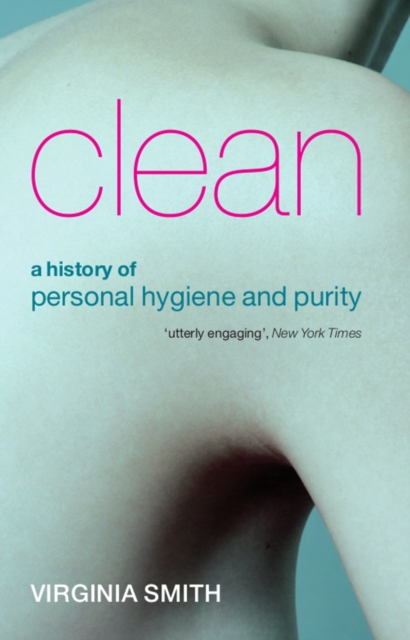
Clean
Why do we still have nits? What exactly are ‘purity rules’? And why have baths scarcely changed in 200 years? The long history of personal hygiene and purity is a fascinating subject that reveals how closely we are linked to our deeper past. In this pioneering book, Virginia Smith covers the global history of human body-care from the Neolithic to the present, using first-hand accounts and sources. From pre-historic grooming rituals to New Age medicine, from ascetics to cosmetics, Smith looks at how different cultures have interpreted and striven for personal cleanliness and shows how, throughout history, this striving for purity has brought great social benefits as well as great tragedies. It is probably safe to sayh that no-one who reads this book will look at his or her body (or bathroom) in quite the same way again.
eBook