
Catalogue Search | MBRL


Are you sure you want to remove the book from the shelf?

{{itemTitle}}
44
result(s) for
"Draaisma, D"
Sort by:

Why life speeds up as you get older : how memory shapes our past
Why Life Speeds Up As You Get Older raises almost as many questions as it answers. Draaisma explores the nature of autobiographical memory, covering subjects such as dejvu, near death experiences and the effect of severe trauma on memory recall, as well as human perceptions of time at different stages in life.
Book
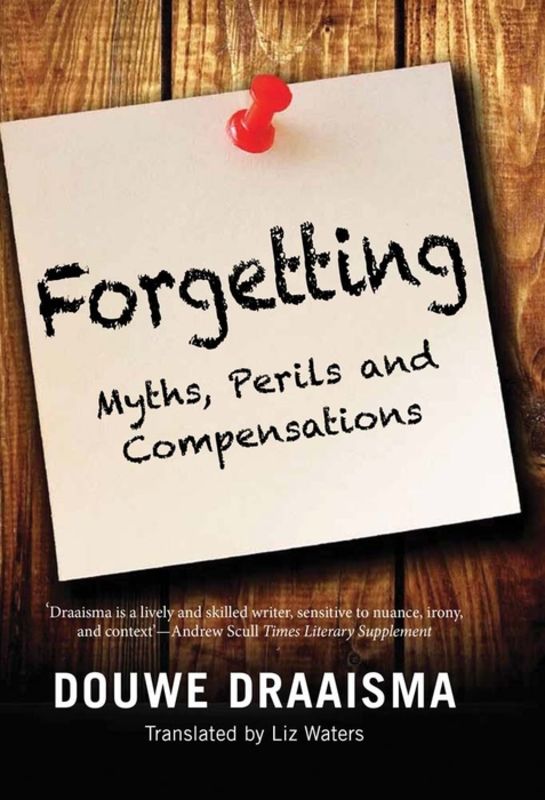
Forgetting
In his highly praised bookThe Nostalgia Factory, renowned memory scholar Douwe Draaisma explored the puzzling logic of memory in later life with humor and deep insight. In this compelling new book he turns to the \"miracle\" of forgetting. Far from being a defect that may indicate Alzheimer's or another form of dementia, Draaisma claims, forgetting is one of memory's crucial capacities. In fact, forgetting is essential.Weaving together an engaging array of literary, historical, and scientific sources, the author considers forgetting from every angle. He pierces false clichés and asks important questions: Is a forgotten memory lost forever? What makes a colleague remember an idea but forget that it was yours? Draaisma explores \"first memories\" of young children, how experiences are translated into memory, the controversies over repression and \"recovered\" memories, and weird examples of memory dysfunction. He movingly examines the impact on personal memories when a hidden truth comes to light. In a persuasive conclusion the author advocates the undervalued practice of \"the art of forgetting\"-a set of techniques that assist in erasing memories, thereby preserving valuable relationships and encouraging personal contentment.
eBook


The tracks of thought
In both science and technology, metaphors direct the way people think, reason and hypothesize. Metaphors, particularly the powerful ones such as reading and writing, lay the tracks for trains of associations.
Journal Article

عقول مريضة : الأمراض النفسية والعصبية والسلوكية : النشأة والتاريخ والأعراض
يبث \"دوي درايسما\" الحياة ببراعة في سيرة هؤلاء وثمانية علماء أخرين من علماء علم العقل والدماغ حيث يمدنا الكتاب برؤية جلية ومثيرة للاهتمام وفي بعض الأحيان المؤثرة حول تاريخ أبحاث العقل وبفضل نظرة \"درايسما\" الثاقبة وأسلوب عرضه الجذاب ونجد أن تواريخ حالات متلازمات أسبرجر وبونيه وكابجرا وكليرامبو وكورساكوف وجيل دولاتوريت وأمراض الزهايمر وباركنسون ومناطق بروكا وبرودمان وصرع جاكسون ومصفوفة جيج وقد رأت النور وتحولت إلى حكايات مشهودة لا تنسى.
BOOK

Edible oils from microalgae: insights in TAG accumulation
•Microalgal lipids are a promising source of sustainable edible oils.•Improving TAG productivity and TAG content is necessary for economical production.•Proper understanding of lipid metabolism in oleaginous microalgae is required.•Process and strain optimization for TAG production should be a complementary approach.
Microalgae are a promising future source for sustainable edible oils. To make microalgal oil a cost-effective alternative for common vegetable oils, increasing TAG productivity and TAG content are of high importance. Fulfilling these targets requires proper understanding of lipid metabolism in microalgae. Here, we provide an overview of our current knowledge on the biology of TAG accumulation as well as the latest developments and future directions for increasing oil production in microalgae, considering both metabolic engineering techniques and cultivation strategies.
Journal Article


Thermal ablation versus surgical resection of small-size colorectal liver metastases (COLLISION): an international, randomised, controlled, phase 3 non-inferiority trial
For patients with small-size colorectal liver metastases, growing evidence suggests thermal ablation to be associated with fewer adverse events and faster recovery than resection while also challenging resection in terms of local control and overall survival. This study assessed the potential non-inferiority of thermal ablation compared with surgical resection in patients with small-size resectable colorectal liver metastases.
Adult patients (aged ≥18 years) from 14 centres in the Netherlands, Belgium, and Italy with ten or fewer small-size (≤3 cm) colorectal liver metastases, no extrahepatic metastases, and an Eastern Cooperative Oncology Group performance status of 0–2, were stratified per centre, and according to their disease burden, into low, intermediate, and high disease burden subgroups and randomly assigned 1:1 to receive either thermal ablation (experimental group) or surgical resection (control group) of all target colorectal liver metastases using the web-based module Castor electronic data capture with variable block sizes of 4, 6, and 8. Although at the operator's discretion, a minimally invasive approach in both treatment groups was recommended. The primary endpoint was overall survival, assessed in the intention-to-treat population. A hazard ratio (HR) of 1·30 was considered the upper limit of non-inferiority for the primary endpoint. A preplanned interim analysis with predefined stopping rules for futility (conditional power to prove the null hypothesis <20%) and early benefit (conditional power >90%, superior safety outcomes for the experimental group, and no difference or superiority regarding local control for the experimental group) was done 12 months after enrolment of 50% of the planned sample size. Safety was assessed per treatment group. This trial is registered with ClinicalTrials.gov, NCT03088150.
Between Aug 7, 2017, and Feb 14, 2024, 300 patients were randomly assigned to the experimental group (n=148, 100 male [68%] and 48 female [32%]; median age 67·9 years [range 29·2–85·7]) or to the control group (n=148, 107 male [72%] and 41 female [28%]; median age 65·1 [range 31·4–87·4]); four patients (two in each treatment group) were excluded after randomisation because they were found to have other disease pathology. Median follow-up at the prespecified interim analysis was 28·9 months (range 0·3–77·8). The trial was stopped early for meeting the predefined stopping rules: (1) a conditional likelihood to prove non-inferiority for overall survival of 90·5% (median overall survival not reached in both groups; HR 1·05; 95% CI 0·69–1·58; p=0·83), (2) a non-inferior local control (median local control not reached in both groups; HR 0·13, 95% CI 0·02–1·06; p=0·057), and (3) a superior safety profile for the experimental group. Patients in the experimental group had fewer adverse events than those in the control group (28 [19%] vs 67 [46%]; p<0·0001). Serious adverse events occurred in 11 (7%) of 148 patients in the experimental group and 29 (20%) of 146 in the control group, mostly periprocedural haemorrhage requiring intervention (one [1%] vs eight [5%]), and infectious complications requiring intervention (six [4%] vs 11 [8%]). There were no treatment-related deaths in the experimental group and three treatment-related deaths (2%) in the control group (two due to postoperative cardiac complications and one due to sepsis and liver failure).
The assumption that thermal ablation should be reserved for unresectable colorectal liver metastases requires re-evaluation and the preferred treatment should be individualised and based on clinical characteristics and available expertise.
Medtronic-Covidien.
Journal Article

Short-term effects of an elimination diet and healthy diet in children with attention-deficit/hyperactivity disorder: a randomized-controlled trial
An Elimination Diet (ED) may be effective in reducing symptoms of Attention-Deficit/Hyperactivity Disorder (ADHD), but has never been compared to an active control condition [i.e., Healthy Diet (HD)]. In a two-armed RCT, a total of N = 165 children (5–12 years) with ADHD were randomized by means of minimization (1:1) to either an ED (N = 84) or HD (N = 81) within two Dutch child and adolescent psychiatry centers. The design included a non-randomized comparator arm including N = 58 children being treated with Care as Usual (CAU). Treatment allocation was unblinded. The primary outcome was a 5-point ordinal measure of respondership based on a combination of parent and teacher ratings on ADHD and emotion regulation, determined after 5 weeks of treatment. Ordinal regression analyses were done on an intention-to-treat basis. Fewer ED (35%) than HD (51%) participants showed a partial to full response, despite overall good-to-excellent treatment adherence (> 88%) and comparable high parental prior believes. A younger age and higher problem severity predicted a better respondership. CAU-preferring participants responded more often favorably (56%) compared to ED—but not HD—participants. Small-to-medium improvements in physical health (blood pressure, heart rate, and somatic complaints) were found in response to ED/HD versus decrements in response to CAU (74% received psychostimulants). The lack of superiority of the ED versus HD suggests that for the majority of children, dietary treatment response is not rooted in food-allergies/-sensitivities. The comparable results for treatment with HD and CAU are remarkable given that CAU participants were probably ‘easier to treat’ than HD (and ED) participants with proportionally fewer with a (suboptimal/non-response to) prior treatment with medication (4% versus 20%). Further assessment of long-term effects is needed to evaluate the potential place of dietary treatment within clinical guidelines. The trial is closed and registered in the Dutch trial registry, number NL5324 (https://www.onderzoekmetmensen.nl/en/trial/25997).
Journal Article