
Catalogue Search | MBRL


Are you sure you want to remove the book from the shelf?

{{itemTitle}}
139
result(s) for
"Dubinsky, Karen"
Sort by:

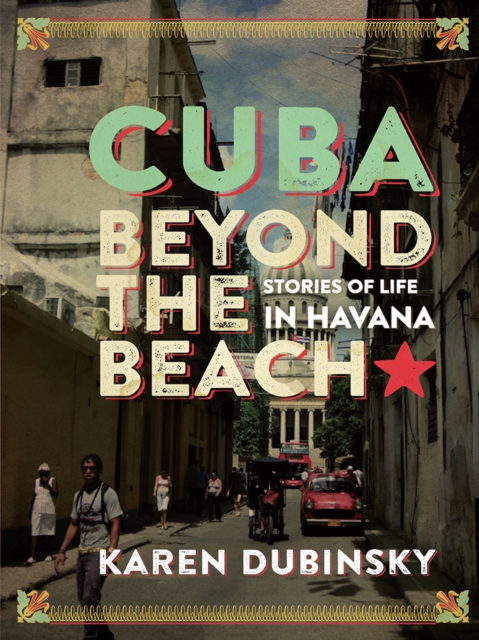
Cuba beyond the Beach
Havana is Cuba's soul: a mix of Third World, First World, and Other World. After over a decade of visits as a teacher, researcher, and friend, Karen Dubinsky looks past political slogans and tourist postcards to the streets, neighbourhoods, and personalities of a complicated and contradictory city. Her affectionate, humorous vignettes illustrate how Havana's residents—old Communist ladies, their sceptical offspring, musicians, underground vendors, entrepreneurial landlords, and poverty-stricken professors—go about their daily lives. As Cuba undergoes dramatic change, there is much to appreciate, and learn from, in the unlikely world Cubans have collectively built for themselves. A portion of the proceeds from the sale of this book will go to the Queen's University Student Overseas Travel Fund—The Sonia Enjamio Fund, which funds Cuban/Canadian student exchange.
eBook

Canada and the Third World : overlapping histories
\"Canada and the Third World provides a much needed and long overdue introduction to Canada's historical relationship with the Third World. The book critically explores this relationship by asking four central questions: how can we understand the historical roots of Canada's relations with the countries of the Third World? How have Canadians, individuals and institutions alike, practiced and imagined \"development\"? How can we integrate Canada into global histories of empire, decolonization, and development? And how should we understand the relationship between issues such as poverty, racism, gender equality, and community development in the First and Third World alike? The anthology begins with a general introduction followed by 9 essays. Each essay ends with discussions questions and suggestions for further reading.\"-- Provided by publisher.
Book


Cuban Music without Cubans: Cuban Sounds in 1980s and 1990s Toronto
How did world music, a term no one likes much but everyone uses, make its way north? [...]what do beer companies have to do with promoting world music? [...]laughs] we didn't really know what world music was or where it was going to go, and my hunch was that they really should be there, because it really reflected Toronto and, sure, they could promote rock bands and rodeos or whatever macho thing that historically has been associated with the beer festivals but if they wanted to get hip they needed to touch the nerve of the city. Lorraine Segato Lorraine Segato was a founder and lead vocalist of Parachute Club, Canada's best-known 1980s world music band. Segato starts her story of Parachute Club's rise with the economic recession of the 1980s, which fueled a cultural burst on Queen Street West downtown.
Journal Article


Children, Ideology, and Iconography: How Babies Rule the World
What Laura Briggs has termed \"the visual iconography of rescue\" has been a central trope in adoption and other child welfare systems for decades.4 In Picturing Childhood, a rare study of children in a wide range of popular iconography, Patricia Holland argues that contemporary childhood is imagined by adults as \"that space beyond conflict, . . . an optimistic universal image that smoothes over adult problems. The process of what Jo Boyden has termed \"setting the agenda for a happy childhood\" has helped to concentrate development power and definitions of \"childhood\" in Western hands.7 The third-world children that stare forlornly from development non-governmental organization fundraising ads become abstract symbols of underdeveloped countries (or infantilized nations) that have simply not reached maturity.
Journal Article

Babies Without Borders: Rescue, Kidnap, and the Symbolic Child
calls the \"visual iconography of rescue\"; how a particular visual culture of adoptable children has provided a portal for middle-class whites in the West to imagine the needs of the poor-domestic and international-and to position themselves as their champions.20 While there has been far too much assertion and insufficient research on the motives and experiences of adoptive parents, the history of child welfare in the West suggests that child-saving has always conferred a kind of nobility; there are vast and blinding pleasures attached to rescue.21 The kidnap narrative has its own complicated history. Linda Gordon's story of the Great Arizona Orphan Abduction of 1911 notwithstanding, the kidnap narrative emerged most famously during the era of integrationist fervor for interracial adoption, when black social workers in the United States used the powerful language of pro-natalist nationalism to oppose the adoption of black children by whites.22 Nationalist politics of adoption appear less profound among blacks in Canada, however the kidnap narrative finds strong expression among aboriginal groups in both countries.23 It's been revived in the testimonies and political activism of domestic birth mothers, survivors of the era of redemption through adoption of whom Rickie Solinger has written.24 At this point we know little about the social history of birth parents across national borders.
Journal Article

Cuba’s Monumental Children
As common sense tells us, and political scientists are beginning to analyze, the alleged separation of children from political citizenship is one of the mainstays of our world. “The concept of the ‘political,’” writes Helen Brocklehurst, “is formulated … as if separate from children. The contribution children may make to a community is often not recognized as political until it is invited to be so by adults.”¹
Anyone who believes that children are not political subjects has not been paying much attention to Cuba. The politics of children are inscribed in the iconography and geography of Havana, to take one
Book Chapter