
Catalogue Search | MBRL


Are you sure you want to remove the book from the shelf?

{{itemTitle}}
7
result(s) for
"Ducharme, Alexandra M."
Sort by:

Single‐cell deconstruction of post‐sepsis skeletal muscle and adipose tissue microenvironments
Background Persistent loss of skeletal muscle mass and function as well as altered fat metabolism are frequently observed in severe sepsis survivors. Studies examining sepsis‐associated tissue dysfunction from the perspective of the tissue microenvironment are scarce. In this study, we comprehensively assessed transcriptional changes in muscle and fat at single‐cell resolution following experimental sepsis induction. Methods Skeletal muscle and visceral white adipose tissue from control mice or mice 1 day or 1 month following faecal slurry‐induced sepsis were used. Single cells were mechanically and enzymatically prepared from whole tissue, and viable cells were further isolated by fluorescence activated cell sorting. Droplet‐based single‐cell RNA‐sequencing (scRNA‐seq; 10× Genomics) was used to generate single‐cell gene expression profiles of thousands of muscle and fat‐resident cells. Bioinformatics analyses were performed to identify and compare individual cell populations in both tissues. Results In skeletal muscle, scRNA‐seq analysis classified 1438 single cells into myocytes, endothelial cells, fibroblasts, mesenchymal stem cells, macrophages, neutrophils, T‐cells, B‐cells, and dendritic cells. In adipose tissue, scRNA‐seq analysis classified 2281 single cells into adipose stem cells, preadipocytes, endothelial cells, fibroblasts, macrophages, dendritic cells, B‐cells, T‐cells, NK cells, and gamma delta T‐cells. One day post‐sepsis, the proportion of most non‐immune cell populations was decreased, while immune cell populations, particularly neutrophils and macrophages, were highly enriched. Proportional changes of endothelial cells, neutrophils, and macrophages were validated using faecal slurry and cecal ligation and puncture models. At 1 month post‐sepsis, we observed persistent enrichment/depletion of cell populations and further uncovered a cell‐type and tissue‐specific ability to return to a baseline transcriptomic state. Differential gene expression analyses revealed key genes and pathways altered in post‐sepsis muscle and fat and highlighted the engagement of infection/inflammation and tissue damage signalling. Finally, regulator analysis identified gonadotropin‐releasing hormone and Bay 11‐7082 as targets/compounds that we show can reduce sepsis‐associated loss of lean or fat mass. Conclusions These data demonstrate persistent post‐sepsis muscle and adipose tissue disruption at the single‐cell level and highlight opportunities to combat long‐term post‐sepsis tissue wasting using bioinformatics‐guided therapeutic interventions.
Journal Article
Muscle stem cells contribute to long‐term tissue repletion following surgical sepsis
Background Over the past decade, advances in sepsis identification and management have resulted in decreased sepsis mortality. This increase in survivorship has highlighted a new clinical obstacle: chronic critical illness (CCI), for which there are no effective treatment options. Up to half of sepsis survivors suffer from CCI, which can include multi‐organ dysfunction, chronic inflammation, muscle wasting, physical and mental disabilities, and enhanced frailty. These symptoms prevent survivors from returning to regular day‐to‐day activities and are directly associated with poor quality of life. Methods Mice were subjected to cecal ligation and puncture (CLP) with daily chronic stress (DCS) as an in vivo model to study sepsis late‐effects/sequelae on skeletal muscle components. Longitudinal monitoring was performed via magnetic resonance imaging, skeletal muscle and/or muscle stem cell (MuSCs) assays (e.g., post‐necropsy wet muscle weights, minimum Feret diameter measurements, in vitro MuSC proliferation and differentiation, number of regenerating myofibres and numbers of Pax7‐positive nuclei per myofibre), post‐sepsis whole muscle metabolomics and MuSC isolation and high‐content transcriptional profiling. Results We report several findings supporting the hypothesis that MuSCs/muscle regeneration are critically involved in post‐sepsis muscle recovery. First, we show that genetic ablation of muscle stem cells (MuSCs) impairs post‐sepsis muscle recovery (maintenance of 5–8% average lean mass loss compared with controls). Second, we observe impaired MuSCs expansion capacity and morphological defects at 26 days post‐sepsis compared with control MuSCs (P < 0.001). Third, when subjected to an experimental muscle injury, sepsis‐recovered mice exhibited evidence of impaired muscle regeneration compared with non‐septic mice receiving the same muscle injury (CLP/DCS injured mean minimum Feret is 92.1% of control injured, P < 0.01). Fourth, we performed a longitudinal RNA sequencing study on MuSCs isolated from post‐sepsis mice and found clear transcriptional differences in all post‐sepsis samples compared with controls. At Day 28, CLP/DCS mice satellite cells have multiple altered metabolic pathways, such as oxidative phosphorylation, mitochondrial dysfunction, sirtuin signalling and oestrogen receptor signalling, compared with controls (P < 0.001). Conclusions Our data show that MuSCs and muscle regeneration are required for effective post‐sepsis muscle recovery and that sepsis triggers morphological, functional, and transcriptional changes in MuSCs. Moving forward, we strive to leverage a more complete understanding of post‐sepsis MuSC/regenerative defects to identify and test novel therapies that promote muscle recovery and improve quality of life in sepsis survivors.
Journal Article

A novel transplantable model of lung cancer-associated tissue loss and disrupted muscle regeneration
Background
Cancer-associated muscle wasting (CAW), a symptom of cancer cachexia, is associated with approximately 20% of lung cancer deaths and remains poorly characterized on a mechanistic level. Current animal models for lung cancer-associated cachexia are limited in that they (1) primarily employ flank transplantation methods, (2) have short survival times not reflective of the patient condition, and (3) are typically performed in young mice not representative of mean patient age. This study investigates a new model for lung cancer-associated cachexia that can address these issues and also implicates muscle regeneration as a contributor to CAW.
Methods
We used tail vein injection as a method to introduce tumor cells that seed primarily in the lungs of mice. Body composition of tumor-bearing mice was longitudinally tracked using NMR-based, echo magnetic resonance imaging (echoMRI). These data were combined with histological and molecular assessments of skeletal muscle to provide a complete analysis of muscle wasting.
Results
In this new lung CAW model, we observed (1) progressive loss in whole body weight, (2) progressive loss of lean and fat mass, (3) a circulating cytokine/inflammatory profile similar to that seen in other models of CAW, (4) histological changes associated with muscle wasting, and (5) molecular changes in muscle that implicate suppression of muscle repair/regeneration. Finally, we show that survival can be extended without lessening CAW by titrating injected cell number.
Conclusions
Overall, this study describes a new model of CAW that could be useful for further studies of lung cancer-associated wasting and accompanying changes in the regenerative capacity of muscle. Additionally, this model addresses many recent concerns with existing models such as immunocompetence, tumor location, and survival time.
Journal Article

Anticachectic regulator analysis reveals Perp-dependent antitumorigenic properties of 3-methyladenine in pancreatic cancer
Approximately 80% of pancreatic cancer patients suffer from cachexia, and one-third die due to cachexia-related complications such as respiratory failure and cardiac arrest. Although there has been considerable research into cachexia mechanisms and interventions, there are, to date, no FDA-approved therapies. A major contributing factor for the lack of therapy options could be the failure of animal models to accurately recapitulate the human condition. In this study, we generated an aged model of pancreatic cancer cachexia to compare cachexia progression in young versus aged tumor-bearing mice. Comparative skeletal muscle transcriptome analyses identified 3-methyladenine (3-MA) as a candidate antiwasting compound. In vitro analyses confirmed antiwasting capacity, while in vivo analysis revealed potent antitumor effects. Transcriptome analyses of 3-MA-treated tumor cells implicated Perp as a 3-MA target gene. We subsequently (a) observed significantly higher expression of Perp in cancer cell lines compared with control cells, (b) noted a survival disadvantage associated with elevated Perp, and (c) found that 3-MA-associated Perp reduction inhibited tumor cell growth. Finally, we have provided in vivo evidence that survival benefits conferred by 3-MA administration are independent of its effect on tumor progression. Taken together, we report a mechanism linking 3-MA to Perp inhibition, and we further implicate Perp as a tumor-promoting factor in pancreatic cancer.
Journal Article

A novel transplantable model of lung cancer associated tissue loss and disrupted muscle regeneration
Background: Cancer-associated muscle wasting (CAW), a symptom of cancer cachexia, is associated with approximately 20% of lung cancer deaths, and remains poorly characterized on a mechanistic level. Current animal models for lung cancer-associated cachexia are limited in that they: 1) primarily employ flank transplantation methods, 2) have short survival times not reflective of the patient condition, and 3) are typically performed in young mice not representative of mean patient age. This study investigates a new model for lung cancer associated cachexia that can address these issues and also implicates muscle regeneration as a contributor to CAW. Methods: We used tail vein injection as a method to introduce tumor cells that seed primarily in the lungs of mice. Body composition of tumor bearing mice was longitudinally tracked using magnetic resonance imaging (MRI). These data were combined with histological and molecular assessments of skeletal muscle to provide a complete analysis of muscle wasting. Results: In this new lung CAW model we observed 1) progressive loss in whole body weight, 2) progressive loss of lean and fat mass, 3) a circulating cytokine/inflammatory profile similar to that seen in other models of CAW, 4) histological changes associated with muscle wasting, and 5) molecular changes in muscle that implicate suppression of muscle repair/regeneration. Finally, we show that survival can be extended without lessening CAW by titrating injected cell number. Conclusions: Overall, this study describes a new model of CAW that could be useful for further studies of lung cancer-associated wasting and accompanying changes in the regenerative capacity of muscle. Additionally, this model addresses many recent concerns with existing models such as immunocompetence, location of tumor, and survival time. Footnotes * Added supplemental figure 1 to show heart histopathology, new figure 2 and accompanying supplemental figure 2 focused on transcriptional profiling of muscle, supplemental figure 3 grip strength assessment of mice, and supplemental figure 4 individual animals' longitudinal body composition data. Results and methods sections were updated to reflect this change.
Paper

Cognitive Function in Ambulatory Patients with Systolic Heart Failure: Insights from the Warfarin versus Aspirin in Reduced Cardiac Ejection Fraction (WARCEF) Trial
We sought to determine whether cognitive function in stable outpatients with heart failure (HF) is affected by HF severity. A retrospective, cross-sectional analysis was performed using data from 2, 043 outpatients with systolic HF and without prior stroke enrolled in the Warfarin versus Aspirin in Reduced Cardiac Ejection Fraction (WARCEF) Trial. Multivariable regression analysis was used to assess the relationship between cognitive function measured using the Mini-Mental Status Exam (MMSE) and markers of HF severity (left ventricular ejection fraction [LVEF], New York Heart Association [NYHA] functional class, and 6-minute walk distance). The mean (SD) for the MMSE was 28.6 (2.0), with 64 (3.1%) of the 2,043 patients meeting the cut-off of MMSE <24 that indicates need for further evaluation of cognitive impairment. After adjustment for demographic and clinical covariates, 6-minute walk distance (β-coefficient 0.002, p<0.0001), but not LVEF or NYHA functional class, was independently associated with the MMSE as a continuous measure. Age, education, smoking status, body mass index, and hemoglobin level were also independently associated with the MMSE. In conclusion, six-minute walk distance, but not LVEF or NYHA functional class, was an important predictor of cognitive function in ambulatory patients with systolic heart failure.
Journal Article
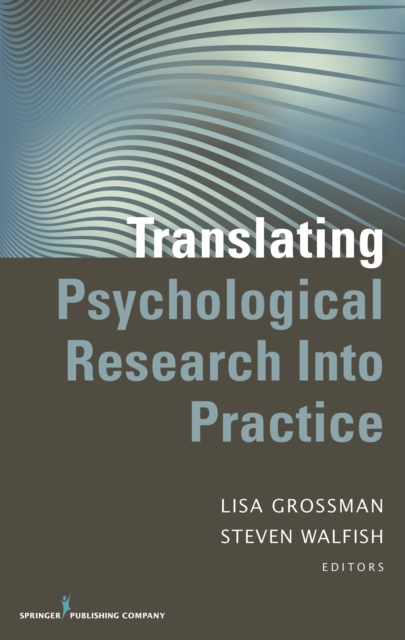
Translating psychological research into practice
It is only through the development of true partnerships between researchers and clinicians that mental health treatment can achieve an optimal level of success.This highly accessible desk reference will assist clinicians in easily incorporating findings from current evidence-based research into their day-to-day practice.
eBook