
Catalogue Search | MBRL


Are you sure you want to remove the book from the shelf?

{{itemTitle}}
68
result(s) for
"Dudden, Faye E"
Sort by:

Fighting chance : the struggle over woman suffrage and Black suffrage in Reconstruction America
The advocates of woman suffrage and black suffrage came to a bitter falling-out in the midst of Reconstruction, when Elizabeth Cady Stanton opposed the 15th Amendment because it granted the vote to black men but not to women. How did these two causes, so long allied, come to this?
Book
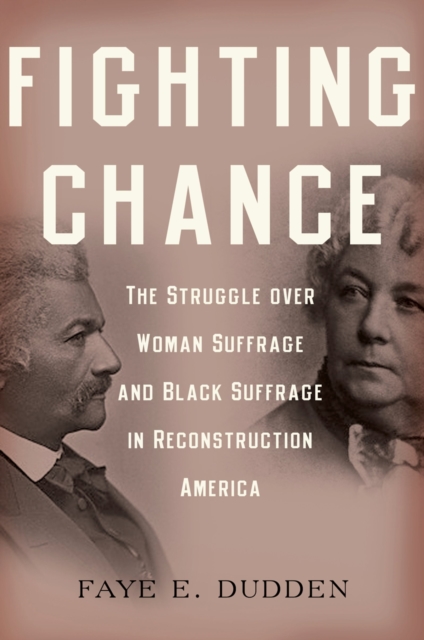
Fighting chance : the struggle over woman suffrage and black suffrage in reconstruction America
The advocates of woman suffrage and black suffrage came to a bitter falling-out in the midst of Reconstruction, when Elizabeth Cady Stanton opposed the Fifteenth Amendment for granting black men the right to vote but not women. How did these two causes, so long allied, come to this? This book offers answers to this question and reveals that racism was not the only cause, but that the outcome also depended heavily on money and political maneuver. The book shows that Stanton and Susan B. Anthony, believing they had a fighting chance to win woman suffrage after the Civil War, tried but failed to exploit windows of political opportunity, especially in Kansas. When they became most desperate, they succeeded only in selling out their long-held commitment to black rights and their invaluable friendship and alliance with Frederick Douglass.
eBook

Women's Rights Advocates and Abortion Laws
For decades, a group called Feminists for Life (FFL) has insisted that the founders of the women's rights movement, including Susan B. Anthony and Elizabeth Cady Stanton, opposed abortion and worked to make it illegal. In fact, most early feminists expressed decided skepticism about outlawing abortion. This article revisits the sources and context to show that the early feminists condemned abortion but also predicted that anti-abortion laws would not work because they did not consult women's interests. The theories of sexuality on which these feminists premised their ideas about abortion soon became outdated, but their insight about the laws was prescient. A fuller understanding of this piece of women's history offers little support to anti-choice activists; indeed, it calls their whole project into question.
Journal Article

Experts and Servants: The National Council on Household Employment and the Decline of Domestic Service in the Twentieth Century
The % of F workers in domestic service declined rapidly, from 50% in 1870 to 30% in 1900, to an insignificant number in the 1950s. The National Council on Household Employment (NCHE), first convened in 1928, began the task of reforming worker conditions & changing employer-employee attitudes; these improvements, however, were largely eroded by the Depression. Although work to upgrade the image of the domestic worker continued, such workers were still excluded from legislation regarding wages, working conditions, & pensions. The outbreak of WWII created employment opportunities in defense industries for a large number of women, which affected pay & conditions in domestic service indirectly as the supply of available women decreased. The NCHE was disbanded in 1945, having never successfully reformed the service; this lack of reform is not regarded as a significant factor in its decline, however, since the high cost & menial nature of the work meant that few households could afford such a luxury. J. Peterson
Journal Article

The Struggle for Equal Adulthood: Gender, Race, Age, and the Fight for Citizenship in Antebellum America. (Gender and American Culture)
Dudden reviews The Struggle for Equal Adulthood: Gender, Race, Age, and the Fight for Citizenship in Antebellum America by Corinne T. Field.
Book Review


ADDRESSED TO GENERAL READERS
[...] to fit into the \"pivotal moments\" framework, she was practically obliged to make large, overreaching claims for Seneca Falls and the foremothers. Because the series addresses general readers or introductory-level students who are presumed to know nothing about the subject or the period, McMillen must patiently explain everything. [...] when William Lloyd Garrison enters the story, she pauses for a substantial paragraph of biography; ditto for Frederick Douglass.
Book Review
