
Catalogue Search | MBRL


Are you sure you want to remove the book from the shelf?

{{itemTitle}}
179
result(s) for
"Dudek, Mark"
Sort by:

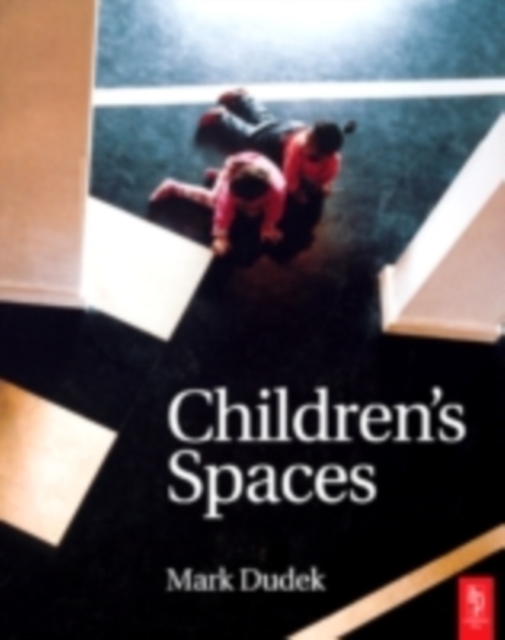
Children's Spaces
This collection of essays is concerned with the experiences children have within the supervised worlds they inhabit, as well as with architecture and landscape architecture.International examples of innovative childcare practice are illustrated together with the design processes which informed their development. The emphasis here is on new and experimental childcare projects which set-out to reassert the rights of children to participate in a complex multi-faceted world, which is no longer available to them, unless under adult supervision. Research supports in depth recommendations regarding the ideal children's environment, across a range of contexts and dimensions. Until recent times, the needs of children within the urban environment were largely ignored. There is little tradition and no broadly agreed contemporary architectural or landscape theory as to how children should be provided for, beyond a limited functional agenda. There is a sense that architecture for childhood is not taken seriously; it is either whimsical and ephemeral or largely designed for adults, an adjunct to the more important business of adult needs and aspirations. Yet children access much of their education and development through play and social interaction with their childhood counterparts. The spaces in and around children\"s daycare centres, schools, supervised parks and other dedicated children\"s environments are the subject of this collection. As more and more purpose designed buildings and gardens for children are opened, the need to listen to children and their carers is becoming more aparant. Mark Dudek gathers together a number of internationally recognized experts in the field of childcare environments to write about different aspects of the landscape. They have been chosen in particular because of their background in enquiring, research orie
eBook
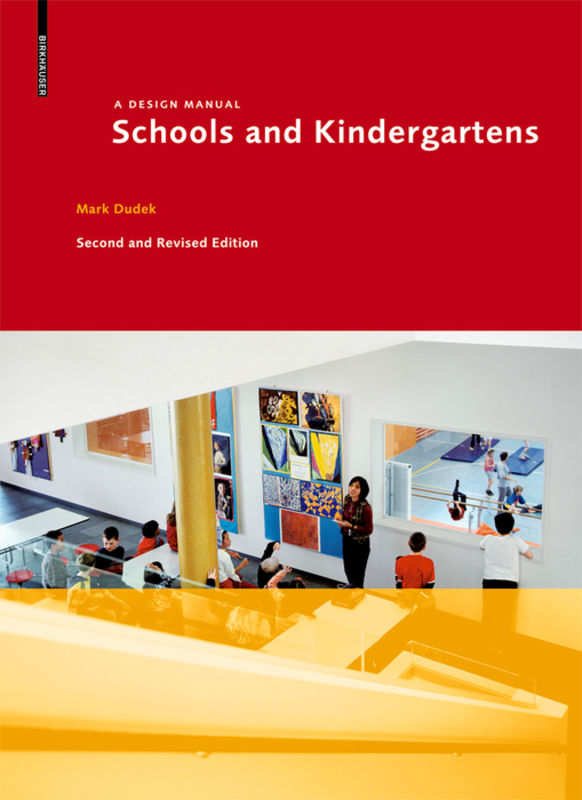
Schools and Kindergartens
As a new generation of educational environments are designed and built, this Design Manual illustrates the most up-to-date educational strategies and how they are realized in built form.Concepts such as working with small teams of students, interdisciplinary learning and inclusion of SEN students all require specific spation solutions.
eBook
Schools and kindergartens
As a new generation of educational environments are designed and built, this Design Manual illustrates the most up-to-date educational strategies and how they are realized in built form. Concepts such as working with small teams of students, interdisciplinary learning and inclusion of SEN students all require specific spation solutions. This specialized field is explained in all its relevant aspects such as role in the community, outdoor spaces, sustainability and technical requirements such as lighting and acoustics. With over 70 case studies from Europe, North America and the Pacific Region, this is an essential guide for architects involved in the design of schools and kindergartens. For the revised edition six groundbreaking new best-practice examples were selected such as Primary School Niederheide near Berlin, the first plus-energy school in Germany, the education center \"Tor zur Welt\", one of the key projects of building exhibition IBA 2013 in Hamburg and \"Children's House for All\" by Maki Onisha and Toyo Ito, conceived for use in refugee camps.
eBook


Experiences of learning within a twentieth-century radical experiment in education: Prestolee School, 1919-1952
Prestolee School, at Kearsley, near Bolton in Lancashire, UK, was the site of an experiment in education between 1919 and 1952 under the leadership of head teacher, Edward Francis O'Neill (1890-1975). The school attracted much national and international attention over three decades owing to the unorthodox methods practised by O'Neill and the extraordinarily rich learning environment set amidst the industrial poverty of this small mill town. However, we know very little about the experience of learning within such a radical experiment in education. This article examines the experiences of the pupils through two main sources: archive documents produced between 1925 and 1945 and oral testimony recorded in 2008. Consideration is given to the methodological challenges and opportunities of mixed method research-in this case, combining cross-disciplinary enquiry with oral testimony and documentary analysis. Reading the school building as a text, the changes in the design of learning spaces over time are foregrounded. Neither a history of school architecture and design nor a social history rooted in memory and the documentary record, the article represents a methodological departure from architectural history and the social history of schooling.
Journal Article
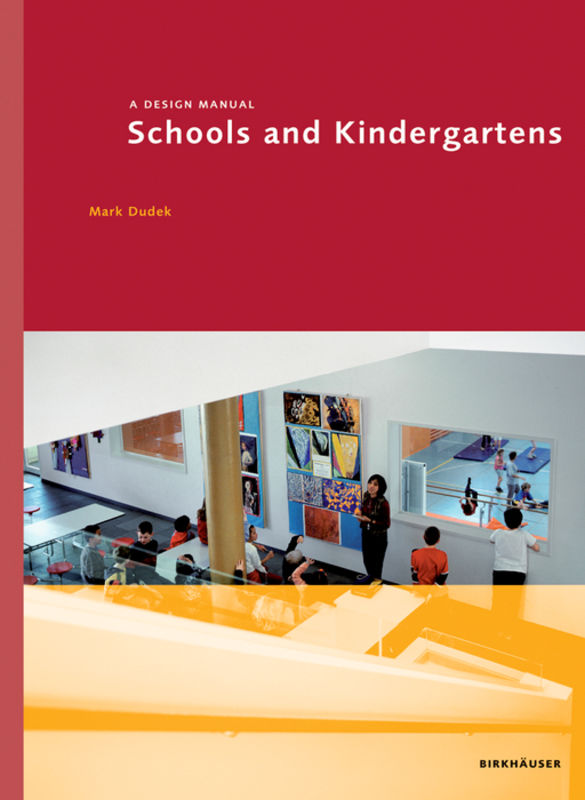
Schools and Kindergartens
As a new generation of educational environments are designed and built, this design manual helps architects to grasp the underlying educational theories and how they can be realized in built form, so that the building fulfills its role as a 3-dimensional curriculum plan. It presents over 80 international case studies.
eBook
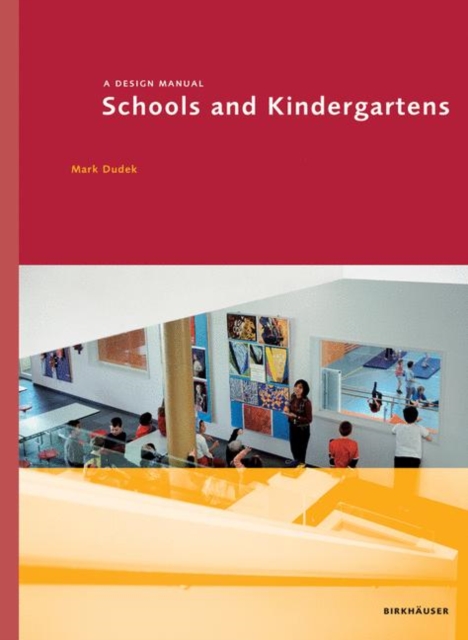
Schools and Kindergartens
The importance of education in a global economy is undisputed, and in the wake of international assessment studies schools and kindergartens have become the focus of considerable public interest. As a new generation of educational environments are designed and built, this Design Manual helps architects to grasp the underlying educational theories and how they can be realized in built form, so that the building fulfils its role as a 3-dimensional curriculum plan. Over 80 international case studies covering all school types are examined and explained in the context of varying national and cultural education approaches. Among the key themes analyzed are the impact of modern communication technology, acoustic and lighting design, sustainability, internal circulation and outdoor spaces, renovation and adaptation to changing requirements.
eBook
