
Catalogue Search | MBRL


Are you sure you want to remove the book from the shelf?

{{itemTitle}}
31
result(s) for
"Dumontheil, Iroise"
Sort by:

Multi-level meta-analysis of whether fostering creativity during physical activity interventions increases their impact on cognitive and academic outcomes during childhood
Neuroplasticity research supports the idea that varied practice and new environments promote cognitive engagement and enhance learning. Expanding on a meta-analysis of the effect of physical activity interventions on cognition and academic outcomes, we reviewed and quantified the impact of task and environmental factors that foster creative physical activity. Interventions were considered as fostering creative physical activity to a greater extent if (1) they were varied, (2) relied less on technical acquisition, instruction or demonstration, (3) involved open spaces, props, or open-ended instructions, and (4) involved interactions with peers. A wide range of physical activities were considered, from dance to aerobic exercise across 92 studies in 5–12-year-old children. Creativity ratings of physical activity interventions were varied but did not associate with greater beneficial effects on executive functions (
k
= 45), academic achievement (
k
= 47), or fluid intelligence (
k
= 8). Studies assessing on-task behaviour (
k
= 5) tended not to foster creativity, while reversely studies assessing creativity tended to foster creative physical activities (
k
= 5). As a group, three studies that fostered more creative PA showed a small significant negative summary effect on cognitive flexibility. Considering qualitative differences in the physical activities performed in schools will improve our understanding of their mechanisms of impact. Future research should consider using more varied measures, including more proximal outcomes that involve body movements (e.g., a Simon Says task to measure inhibitory control).
Journal Article

Inhibitory control and counterintuitive science and maths reasoning in adolescence
Existing concepts can be a major barrier to learning new counterintuitive concepts that contradict pre-existing experience-based beliefs or misleading perceptual cues. When reasoning about counterintuitive concepts, inhibitory control is thought to enable the suppression of incorrect concepts. This study investigated the association between inhibitory control and counterintuitive science and maths reasoning in adolescents (N = 90, 11-15 years). Both response and semantic inhibition were associated with counterintuitive science and maths reasoning, when controlling for age, general cognitive ability, and performance in control science and maths trials. Better response inhibition was associated with longer reaction times in counterintuitive trials, while better semantic inhibition was associated with higher accuracy in counterintuitive trials. This novel finding suggests that different aspects of inhibitory control may offer unique contributions to counterintuitive reasoning during adolescence and provides further support for the hypothesis that inhibitory control plays a role in science and maths reasoning.
Journal Article
Evidence for specificity of polygenic contributions to attainment in English, maths and science during adolescence
How well one does at school is predictive of a wide range of important cognitive, socioeconomic, and health outcomes. The last few years have shown marked advancement in our understanding of the genetic contributions to, and correlations with, academic attainment. However, there exists a gap in our understanding of the specificity of genetic associations with performance in academic subjects during adolescence, a critical developmental period. To address this, the Avon Longitudinal Study of Parents and Children was used to conduct genome-wide association studies of standardised national English (N = 5983), maths (N = 6017) and science (N = 6089) tests. High SNP-based heritabilities (h
2
SNP
) for all subjects were found (41–53%). Further, h
2
SNP
for maths and science remained after removing shared variance between subjects or IQ (N = 3197–5895). One genome-wide significant single nucleotide polymorphism (rs952964, p = 4.86 × 10
–8
) and four gene-level associations with science attainment (
MEF2C, BRINP1
,
S100A1
and
S100A13
) were identified. Rs952964 remained significant after removing the variance shared between academic subjects. The findings highlight the benefits of using environmentally homogeneous samples for genetic analyses and indicate that finer-grained phenotyping will help build more specific biological models of variance in learning processes and abilities.
Journal Article

Digital Technology Use and BMI: Evidence From a Cross-sectional Analysis of an Adolescent Cohort Study
The use of digital technology such as mobile phones is ubiquitous in adolescents. However, excessive use may have adverse health effects, possibly partially mediated by disruptions to sleep.
This study aims to assess the social predictors of digital technology use and their cross-sectional association with BMI z scores and being overweight in a large sample of adolescents.
We used baseline data from a subset of a large adolescent cohort from 39 schools across Greater London who participated in the Study of Cognition, Adolescents and Mobile Phones (n=1473). Digital technology use included phone calls, internet use on mobile phones, and video gaming on any device. Multilevel regression was used to assess the associations between digital technology use and age-specific and sex-specific BMI z scores and being overweight (including obesity). Measurements were derived from height and weight, obtained by the Tanita BC-418 Body Composition Analyzer. We examined whether these associations were mediated by insufficient sleep.
Generally, participants with lower socioeconomic status reported more use of digital technology. Controlling for socioeconomic status, internet use on mobile phones for more than 3 hours per day was associated with higher BMI z scores (adjusted β=.30, 95% CI 0.11-0.48) and greater odds of being overweight (adjusted odds ratio 1.60, 95% CI 1.09-2.34), compared with low use (≤30 minutes). Similar associations were found between video gaming and BMI z scores and being overweight. The BMI z score was more strongly related to weekday digital technology use (internet use on mobile phones and video gaming) than weekend use. Insufficient sleep partly mediated the associations between digital technology use and BMI z scores (proportion of mediation from 8.6% to 17.8%) by an indirect effect.
We found an association between digital technology use and BMI in adolescents, partly mediated by insufficient sleep, suggesting that the underlying mechanisms may be multifactorial. Further research with longitudinal data is essential to explore the direction of the relationships.
Journal Article
SEE+ computerized classroom-based training enhances 7- to 10-year-olds' socio-emotional cognition through observation and inference
Smooth social interactions rely on children’s abilities to decode others’ social signals, which includes what an individual may say or do, and their facial emotional expressions. Failure can lead to exclusion from social groups. Consequently, a number of social and emotional learning (SEL) training programmes have been developed, with some evidence of positive impacts on those skills themselves and on academic achievement. Here, we present and evaluate the efficacy of a novel classroom-based computerized learning activity, called SEE+ (Socio-emotional engagement through observation), in supporting and enhancing 7- to 10-year-olds’ emotion recognition and theory of mind judgements through observation and inference. SEE+ involved observing four virtual characters interacting within social scenarios and inferring their mental states. Participants were recruited from across diverse school settings (rural, urban) in England as part of a large-scale randomised controlled trial ( n = 5585; 7.3–11.0 years old, M age = 9.1, SD = 1.0) resulting in a mix of socio-economic and ethnic backgrounds. Mixed model ANOVAs were used to compare performance on socio-emotional tasks between the SEE+ group, an active control group and a teaching-as-usual control group. SEE + was associated with the equivalent of 4–6 months improvement in performance on the socio-emotional assessment tasks. Children showed near transfer effects of the intervention (i.e., when characters present in the computerized learning activity were used in the assessment), while no strong evidence of far transfer effects (i.e., when photographs of unknown children were used in the assessment) was found. Limitations were the use of pen-and-paper assessments with a reduced number of trials, and a possible ceiling effect in the older children in the photograph condition. Our findings point to the relative plasticity of younger children’s socio-emotional cognition and underscore SEE+ as an easy-to-use cost-effective socio-emotional resource for teachers to embed SEL in the school curriculum.
Journal Article

Function and localization within rostral prefrontal cortex (area 10)
We propose that rostral prefrontal cortex (PFC; approximating area 10) supports a cognitive system that facilitates either stimulus-oriented (SO) or stimulus-independent (SI) attending. SO attending is the behaviour required to concentrate on current sensory input, whereas SI attending is the mental processing that accompanies self-generated or self-maintained thought. Regions of medial area 10 support processes related to the former, whilst areas of lateral area 10 support processes that enable the latter. Three lines of evidence for this 'gateway hypothesis' are presented. First, we demonstrate the predicted patterns of activation in area 10 during the performance of new tests designed to stress the hypothetical function. Second, we demonstrate area 10 activations during the performance of established functions (prospective memory, context memory), which should hypothetically involve the proposed attentional system. Third, we examine predictions about behaviour-activation patterns within rostral PFC that follow from the hypothesis. We show with meta-analysis of neuroimaging investigations that these predictions are supported across a wide variety of tasks, thus establishing a general principle for functional imaging studies of this large brain region. We then show that while the gateway hypothesis accommodates a large range of findings relating to the functional organization of area 10 along a medial-lateral dimension, there are further principles relating to other dimensions and functions. In particular, there is a functional dissociation between the anterior medial area 10, which supports processes required for SO attending, and the caudal medial area 10, which supports processes relating to mentalizing.
Journal Article

Social networking site use, depressive and anxiety symptoms in adolescents: evidence from a longitudinal cohort study (SCAMP)
Background
The growing and pervasive use of social network sites (SNS) has raised concerns about their impact on adolescent mental health during this sensitive developmental phase. Existing longitudinal studies are constrained by methodological limitations and limited exploration of underlying mechanisms. We investigated the longitudinal associations between SNS use and depressive and anxiety symptoms in adolescents and whether sleep mediated these associations.
Methods
We analysed longitudinal data from 2350 adolescents from 31 schools in London, participating in the Study of Cognition, Adolescents, and Mobile Phones (SCAMP). The exposure was self-reported duration of SNS use at baseline (aged 11–12 years). Outcomes were depressive and anxiety symptoms at follow-up, analysed as symptom severity and clinically significant symptoms (aged 13–15 years). The associations between SNS use and depressive and anxiety symptoms were assessed via multi-level ordinal logistic regression (symptom severity) and logistic regression (clinically significant symptoms). The mediation effects of insufficient sleep, sleep onset latency, and sleep disturbance were assessed by mediation analysis.
Results
Compared to 0–30 min per day, more than 3 h per day of SNS use at baseline was associated with higher severity levels of depressive and anxiety symptoms (adjusted odds ratio (OR) = 1.47, 95% CI 1.12, 1.93 and OR = 1.40, 95% CI 1.06, 1.83, respectively) and clinically significant depressive and anxiety symptoms at follow-up (OR = 1.70, 95% CI 1.19, 2.42 and OR = 1.60, 95% CI 1.11, 2.31, respectively). The associations between total and weekend SNS use and depressive symptom severity were stronger in girls than boys. Other associations were similar by gender. Insufficient sleep duration (particularly on weekdays) and sleep onset latency at baseline partly mediated the associations of SNS use and depressive and anxiety symptoms (proportion of mediation ranged between 11.1% and 33.1%). The mediation effects of sleep disturbance were less marked.
Conclusions
In a large longitudinal cohort, we found that SNS use exceeding 3 h per day is associated with increased risks of depressive and anxiety symptoms in adolescents. Findings from mediation analysis suggest that addressing poor sleep hygiene in relation to SNS use might mitigate the negative impact of high SNS use. Our findings may inform the development of early secondary school curricula incorporating digital literacy and sleep hygiene education.
Journal Article

Comment on \Wandering Minds: The Default Network and Stimulus-Independent Thought\
Mason et al. (Reports, 19 January 2007, p. 393) attributed activity in certain regions of the “resting” brain to the occurrence of mind-wandering. However, previous research has demonstrated the difficulty of distinguishing this type of stimulus-independent thought from stimulus-oriented thought (e.g., watchfulness). Consideration of both possibilities is required to resolve this ambiguity.
Journal Article
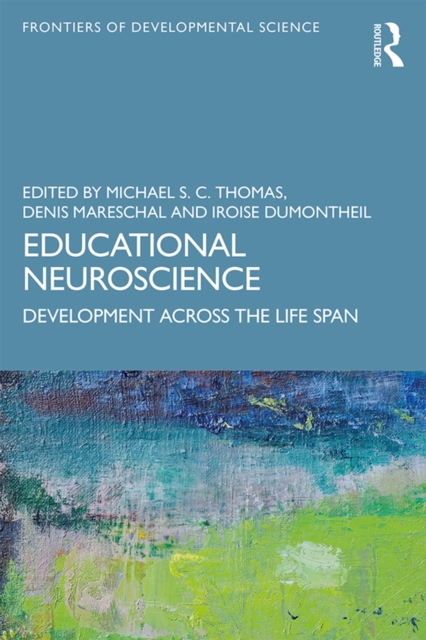
Educational Neuroscience
The field of educational neuroscience uses new insights about the neural mechanisms of learning to improve educational practices and outcomes. The first volume to bring together the latest knowledge on the development of educational neuroscience from a life-span perspective, this important text offers state of the art, authoritative research findings in educational neuroscience before providing evidence-based recommendations for classroom practice.
Thomas, Mareschal, Dumontheil, and the team of expert international contributors assembled in this volume thoroughly explore four main themes throughout the book. The first theme is individual differences, or what makes children perform better or worse in the classroom. The second theme is the nature of individual differences at different stages in development, from early years into adulthood. The third theme addresses cognitive enhancement, summarizing research that has investigated activities that might give general benefits to cognition. And the fourth theme considers the translation of research findings into classroom practices, discussing broader ethical issues raised by educational neuroscience, and what teachers need to know about neuroscience to enhance their day-to-day practice. Specific topics explored include neuropsychological perspectives on socioeconomic disparities in educational achievement, reading difficulties, phonological skills, executive function, and emotional development.
Educational Neuroscience is essential reading for researchers and graduate students of educational psychology, developmental science, developmental psychology, and cognitive psychology, especially those specializing in emotion regulation.
eBook

The case for the development and use of “ecologically valid” measures of executive function in experimental and clinical neuropsychology
This article considers the scientific process whereby new and better
clinical tests of executive function might be developed, and what form
they might take. We argue that many of the traditional tests of executive
function most commonly in use (e.g., the Wisconsin Card Sorting Test;
Stroop) are adaptations of procedures that emerged almost coincidentally
from conceptual and experimental frameworks far removed from those
currently in favour, and that the prolongation of their use has been
encouraged by a sustained period of concentration on
“construct-driven” experimentation in neuropsychology. This
resulted from the special theoretical demands made by the field of
executive function, but was not a necessary consequence, and may not even
have been a useful one. Whilst useful, these tests may not therefore be
optimal for their purpose. We consider as an alternative approach a
function-led development programme which in principle could yield tasks
better suited to the concerns of the clinician because of the transparency
afforded by increased “representativeness” and
“generalisability.” We further argue that the requirement of
such a programme to represent the interaction between the individual and
situational context might also provide useful constraints for purely
experimental investigations. We provide an example of such a programme
with reference to the Multiple Errands and Six Element tests.
(JINS, 2006, 12, 194–209.)
Journal Article