
Catalogue Search | MBRL


Are you sure you want to remove the book from the shelf?

{{itemTitle}}
4
result(s) for
"Duncanson, Fred"
Sort by:

Treatment of adult chronic indeterminate Chagas disease with benznidazole and three E1224 dosing regimens: a proof-of-concept, randomised, placebo-controlled trial
Chagas disease is a major neglected vector-borne disease. In this study, we investigated the safety and efficacy of three oral E1224 (a water-soluble ravuconazole prodrug) regimens and benznidazole versus placebo in adult chronic indeterminate Chagas disease.
In this proof-of-concept, double-blind, randomised phase 2 clinical trial, we recruited adults (18–50 years) with confirmed diagnosis of Trypanosoma cruzi infection from two outpatient units in Bolivia. Patients were randomised with a computer-generated randomisation list, which was stratified by centre and used a block size of ten. Patients were randomly assigned (1:1:1:1:1) to five oral treatment groups: high-dose E1224 (duration 8 weeks, total dose 4000 mg), low-dose E1224 (8 weeks, 2000 mg), short-dose E1224 (4 weeks + 4 weeks placebo, 2400 mg), benznidazole (60 days, 5 mg/kg per day), or placebo (8 weeks, E1224-matched tablets). Double-blinding was limited to the E1224 and placebo arms, and assessors were masked to all treatment allocations. The primary efficacy endpoint was parasitological response to E1224 at the end of treatment, assessed by PCR. The secondary efficacy endpoints were parasitological response to benznidazole at end of treatment, assessed by PCR; sustainability of parasitological response until 12 months; parasite clearance and changes in parasite load; incidence of conversion to negative response in conventional and non-conventional (antigen trypomastigote chemiluminescent ELISA [AT CL-ELISA]) serological response; changes in levels of biomarkers; and complete response. The primary analysis population consisted of all randomised patients by their assigned treatment arms. This trial is registered with ClinicalTrials.gov, number NCT01489228.
Between July 19, 2011, and July 26, 2012, we screened 560 participants with confirmed Chagas disease, of whom 231 were enrolled and assigned to high-dose E1224 (n=45), low-dose E1224 (n=48), short-dose E1224 (n=46), benznidazole (n=45), or placebo (n=47). Parasite clearance was observed with E1224 during the treatment phase, but no sustained response was seen with low-dose and short-dose regimens, whereas 13 patients (29%, 95% CI 16·4–44·3) had sustained response with the high-dose regimen compared with four (9%, 2·4–20·4) in the placebo group (p<0·0001). Benznidazole had a rapid and sustained effect on parasite clearance, with 37 patients (82%, 67·9–92·0) with sustained response at 12-month follow-up. After 1 week of treatment, mean quantitative PCR repeated measurements showed a significant reduction in parasite load in all treatment arms versus placebo. Parasite levels in the low-dose and short-dose E1224 groups gradually returned to placebo levels. Both treatments were well tolerated. Reversible, dose-dependent liver enzyme increases were seen with E1224 and benznidazole. 187 (81%) participants developed treatment-emergent adverse events and six (3%) developed treatment-emergent serious adverse events. Treatment-emergent adverse events were headaches, nausea, pruritus, peripheral neuropathy, and hypersensitivity.
E1224 is the first new chemical entity developed for Chagas disease in decades. E1224 displayed a transient, suppressive effect on parasite clearance, whereas benznidazole showed early and sustained efficacy until 12 months of follow-up. Despite PCR limitations, our results support increased diagnosis and access to benznidazole standard regimen, and provide a development roadmap for novel benznidazole regimens in monotherapy and in combinations with E1224.
Drugs for Neglected Diseases initiative.
Journal Article

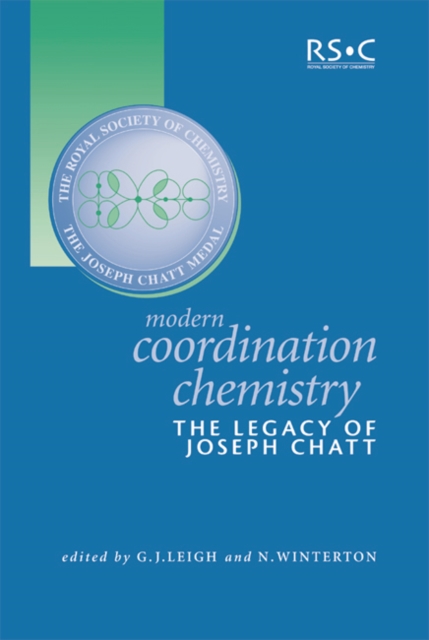
Modern coordination chemistry
Coordination chemistry, as we know it today, has been shaped by major figures from the past, one of whom was Joseph Chatt. Beginning with a description of Chatt's career presented by co-workers, contemporaries and students, this fascinating book then goes on to show how many of today's leading practitioners in the field, working in such diverse areas as phosphines, hydrogen complexes, transition metal complexes and nitrogen fixation, have been influenced by Chatt. The reader is then brought right up-to-date with the inclusion of some of the latest research on these topics, all of which serves to underline Chatt's continuing legacy. Intended as a permanent record of Chatt's life, work and influence, this book will be of interest to lecturers, graduate students, researchers and science historians.
eBook

Harnessing the Power of Data to Improve Agricultural Policy and Conservation Outcomes
Relevant public and private agriculture data in the United States tend to be decentralized and disorganized. Section 12618 of the Agriculture Improvement Act of 2018 is an important first step toward promoting research that will enable changes in agriculture policies and practices.
Magazine Article