
Catalogue Search | MBRL


Are you sure you want to remove the book from the shelf?

{{itemTitle}}
1,209
result(s) for
"Eagleton, Terry"
Sort by:


Reason, Faith, and Revolution
Terry Eagleton's witty and polemicalReason, Faith, and Revolutionis bound to cause a stir among scientists, theologians, people of faith and people of no faith, as well as general readers eager to understand the God Debate. On the one hand, Eagleton demolishes what he calls the \"superstitious\" view of God held by most atheists and agnostics and offers in its place a revolutionary account of the Christian Gospel. On the other hand, he launches a stinging assault on the betrayal of this revolution by institutional Christianity.
There is little joy here, then, either for the anti-God brigade-Richard Dawkins and Christopher Hitchens in particular-nor for many conventional believers. Instead, Eagleton offers his own vibrant account of religion and politics in a book that ranges from the Holy Spirit to the recent history of the Middle East, from Thomas Aquinas to the Twin Towers.
eBook


Why Marx Was Right
In this combative, controversial book, Terry Eagleton takes issue with the prejudice that Marxism is dead and done with. Taking ten of the most common objections to Marxism-that it leads to political tyranny, that it reduces everything to the economic, that it is a form of historical determinism, and so on-he demonstrates in each case what a woeful travesty of Marx's own thought these assumptions are. In a world in which capitalism has been shaken to its roots by some major crises,Why Marx Was Rightis as urgent and timely as it is brave and candid. Written with Eagleton's familiar wit, humor, and clarity, it will attract an audience far beyond the confines of academia.
eBook

Materialism
\"Terry Eagleton makes a powerful argument that materialism is at the center of today's important scientific and cultural as well as philosophical debates, following the inroads being made by contemporary neuroscience on such issues as the nature of consciousness, the body's role in cognition, and the existence of mental states. The author reveals entirely fresh ways of considering the values and beliefs of three very different materialists--Marx, Nietzsche, and Wittgenstein--drawing striking comparisons between their philosophies while reflecting on a wide array of topics, from ideology and history to language, ethics, and the aesthetic.\"-- Provided by publisher.
Book

Tragedy
A new account of tragedy and its fundamental position in
Western culture In this compelling account, eminent
literary critic Terry Eagleton explores the nuances of tragedy in
Western culture-from literature and politics to philosophy and
theater. Eagleton covers a vast array of thinkers and
practitioners, including Nietzsche, Walter Benjamin, and Slavoj
Žižek, as well as key figures in theater, from Sophocles and
Aeschylus to Shakespeare and Ibsen. Eagleton examines the political
nature of tragedy, looking closely at its connection with periods
of historical transition. The dramatic form originated not as a
meditation on the human condition, but at moments of political
engagement, when civilizations struggled with the conflicts that
beset them. Tragedy, Eagleton demonstrates, is fundamental to human
experience and culture.
eBook

Culture
Culture is a defining aspect of what it means to be human. Defining culture and pinpointing its role in our lives is not, however, so straightforward. Terry Eagleton, one of our foremost literary and cultural critics, is uniquely poised to take on the challenge. In this keenly analytical and acerbically funny book, he explores how culture and our conceptualizations of it have evolved over the last two centuries - from rarified sphere to humble practices, and from a bulwark against industrialism's encroaches to present-day capitalism's most profitable export.
Book

Culture and the Death of God
How to live in a supposedly faithless world threatened by religious fundamentalism? Terry Eagleton, formidable thinker and renowned cultural critic, investigates in this thought-provoking book the contradictions, difficulties, and significance of the modern search for a replacement for God. Engaging with a phenomenally wide range of ideas, issues, and thinkers from the Enlightenment to today, Eagleton discusses the state of religion before and after 9/11, the ironies surrounding Western capitalism's part in spawning not only secularism but also fundamentalism, and the unsatisfactory surrogates for the Almighty invented in the post-Enlightenment era.The author reflects on the unique capacities of religion, the possibilities of culture and art as modern paths to salvation, the so-called war on terror's impact on atheism, and a host of other topics of concern to those who envision a future in which just and compassionate communities thrive. Lucid, stylish, and entertaining in his usual manner, Eagleton presents a brilliant survey of modern thought that also serves as a timely, urgently needed intervention into our perilous political present.
eBook

Humour
Written by an acknowledged master of comedy, this study reflects on the nature of humour and the functions it serves. Why do we laugh? What are we to make of the sheer variety of laughter, from braying and cackling to sniggering and chortling? Is humour subversive, or can it defuse dissent? Can we define wit? Packed with illuminating ideas and a good many excellent jokes, the book critically examines various well-known theories of humour, including the idea that it springs from incongruity and the view that it reflects a mildly sadistic form of superiority to others. Drawing on a wide range of literary and philosophical sources, Terry Eagleton moves from Aristotle and Aquinas to Hobbes, Freud, and Bakhtin, looking in particular at the psychoanalytical mechanisms underlying humour and its social and political evolution over the centuries.
Book
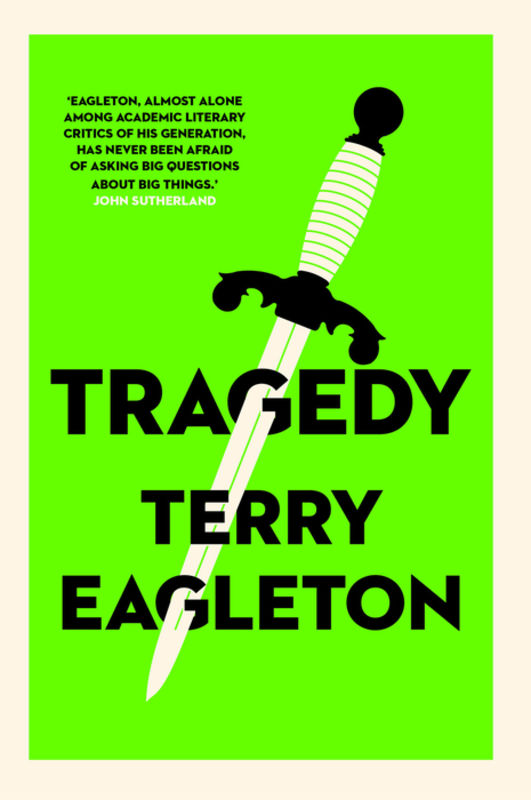
Tragedy
A new account of tragedy and its fundamental position in Western culture In this compelling account, eminent literary critic Terry Eagleton explores the nuances of tragedy in Western culture-from literature and politics to philosophy and theater. Eagleton covers a vast array of thinkers and practitioners, including Nietzsche, Walter Benjamin, and Slavoj Zizek, as well as key figures in theater, from Sophocles and Aeschylus to Shakespeare and Ibsen. Eagleton examines the political nature of tragedy, looking closely at its connection with periods of historical transition. The dramatic form originated not as a meditation on the human condition, but at moments of political engagement, when civilizations struggled with the conflicts that beset them. Tragedy, Eagleton demonstrates, is fundamental to human experience and culture.
eBook