
Catalogue Search | MBRL


Are you sure you want to remove the book from the shelf?

{{itemTitle}}
186
result(s) for
"Earle, Rebecca"
Sort by:

Beyond notation : the music of Earle Brown
Earle Brown (1926-2002) was a crucial part of the seminal group of experimental composers known as the New York School, and his work intersects in fascinating ways with that of his colleagues John Cage, Morton Feldman, and Christian Wolff. This book seeks to expand our view of Brown's work, addressing his practices as a painter and composer as well as his collaborations with visual artists Alexander Calder, Robert Rauschenberg, and the American abstract expressionists. The essays collected here explore Brown's compositional methods and their historical place in depth: not only his influential experiments with open form composition and graphic notation, but his interest in collaboration, mixed media, and his engagement with the European avant-garde. The volume includes several short essays by Brown that shed new light on his relationships with colleagues and the ideas that drove his work.
Book

The Pleasures of Taxonomy: Casta Paintings, Classification, and Colonialism
A new model for thinking about the socioracial categories depicted in casta paintings (remarkable eighteenth-century Spanish American images representing the outcome of “racial mixing”) takes seriously both their fluidity and their genealogical character. Approaching classification, and casta paintings, from this direction clarifies the underlying epistemologies that structured colonial society and helps connect the paintings more explicitly to the debates about human difference that captivated Enlightenment thinkers. Ultimately, however, these paintings were produced and collected in the hundreds not simply because they visualized Atlantic debates about classification and human difference but because these visualizations were interesting and pleasant to contemplate. They agreeably roused the pleasures of the imagination via their taxonomic as well as their narrative power. Linking casta paintings to the importance accorded to pleasure in both the scientific and the colonial imagination helps explain their fascination, which derived from their ability to condense the complex interconnections of classification, colonialism, and sexuality into appealing images.
Journal Article
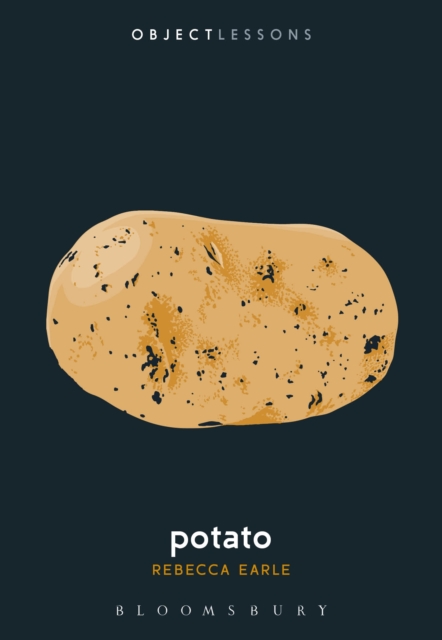
Potato
Object Lessons is a series of short, beautifully designed books about the hidden lives of ordinary things.Baked potatoes, Bombay potatoes, pommes frites...everyone eats potatoes, but what do they mean?To the United Nations they mean global food security (potatoes are the world's fourth most important food crop).
eBook

“If You Eat Their Food …”: Diets and Bodies in Early Colonial Spanish America
Earle argues that many aspects of early modern colonial expansion proved unsettling for its European protagonists. The encounter with entirely new territories and peoples raised doubts about the reliability of existing knowledge and also posed theoretical and practical questions about the proper way for Europeans to interact with these new peoples and places. Far from being an enterprise based on an unquestioning assumption of European superiority, early modern colonialism was an anxious pursuit. This anxiety is captured most profoundly in the fear that living in an unfamiliar environment, and among unfamiliar peoples, might alter not only the customs but also the very bodies of settlers.
Journal Article

Promoting Potatoes in Eighteenth-Century Europe
Eating acquired an unprecedented political resonance during the eighteenth century. This article uses the promotion of the potato as an Enlightenment super-food to trace the emergence of new models of political economy and governance, which stressed the importance of a healthy, well-nourished population to the strength and wealth of the state. Integrating the slower history of the potato's conquest of European dietaries with its frenetic promotion in the late eighteenth century illuminates the central role that everyday eating practices came to play in Enlightened models of statecraft.
Journal Article


THE POLITICAL ECONOMY OF NUTRITION IN THE EIGHTEENTH CENTURY
Eighteenth-century European writers frequently described foods as ‘nourishing’. Nourishing foods were acknowledged to play a central role in building the healthy, energetic populations identified as key to commercial and political success, but their objective scientific characterisation proved impossible. In practice, only the people actually eating the food could determine its nutritive power. Eighteenth-century nutrition was perforce a form of embodied knowledge, not a set of scientific facts.
This article contrasts nutrition's unquestioned importance to enlightened political and economic discourse with its evolving position within scientific and vernacular systems of knowledge. Despite intense investigation of food chemistry, the embodied experience of eaters remained stubbornly central to all discussion of a food’s ability to nourish. The vernacular nutritional evaluations of ordinary people infiltrated more lofty discussions of diet to create an uneasy and unequal dialogue. Elite schemes to promote particular foodstuffs as suitable for the labouring population thus relied not simply on the expert opinions of scientists, but also on the bodies and opinions of the very people at whom these campaigns were aimed. Only in the nineteenth century was nutrition converted into an objective, quantifiable object of knowledge.
Journal Article
