
Catalogue Search | MBRL


Are you sure you want to remove the book from the shelf?

{{itemTitle}}
112
result(s) for
"Eber, Irene"
Sort by:

Wartime Shanghai and the Jewish Refugees from Central Europe
The study discusses the history of the Jewish refugees within the Shanghai setting and its relationship to the two established Jewish communities, the Sephardi and Russian Jews. Attention is also focused on the cultural life of the refugees who used both German and Yiddish, and on their attempts to cope under Japanese occupation after the outbreak of the Pacific War.
eBook

Luo Chen (1883–1970), a Jewish Author in China
Readers of histories of twentieth-century Chinese literature might search in vain for Ho Ro-se's name. Yet she was very well known in China in the 1920s and 1930s, mainly for her book Love and Duty ([TEXT NOT REPRODUCIBLE IN ASCII], Lianai yu yiwu), which she published in 1923 under the pen name of Luo Chen. In 1931, the appearance of a film based on the novel added to its popularity. Widely read among Chinese intellectuals and seen by many large audiences, the novel and the film dealt with a crucial May Fourth issue: arranged marriages. Although she had grown up not in China but in eastern Europe, the book's Jewish author approached the topic with remarkable sensitivity. Avoiding pat solutions, she regarded the marriage question as integral to larger social issues that needed attention, including early childhood education, the assigning of a different role to women within the family structure, and, consequently, male awareness of male and female roles. A second and equally important message of the novel is that things take time. While love, marriage and other issues are interrelated, they cannot all be solved at once. One by one, each will be taken care of in its own way.
Journal Article
Voices from Shanghai
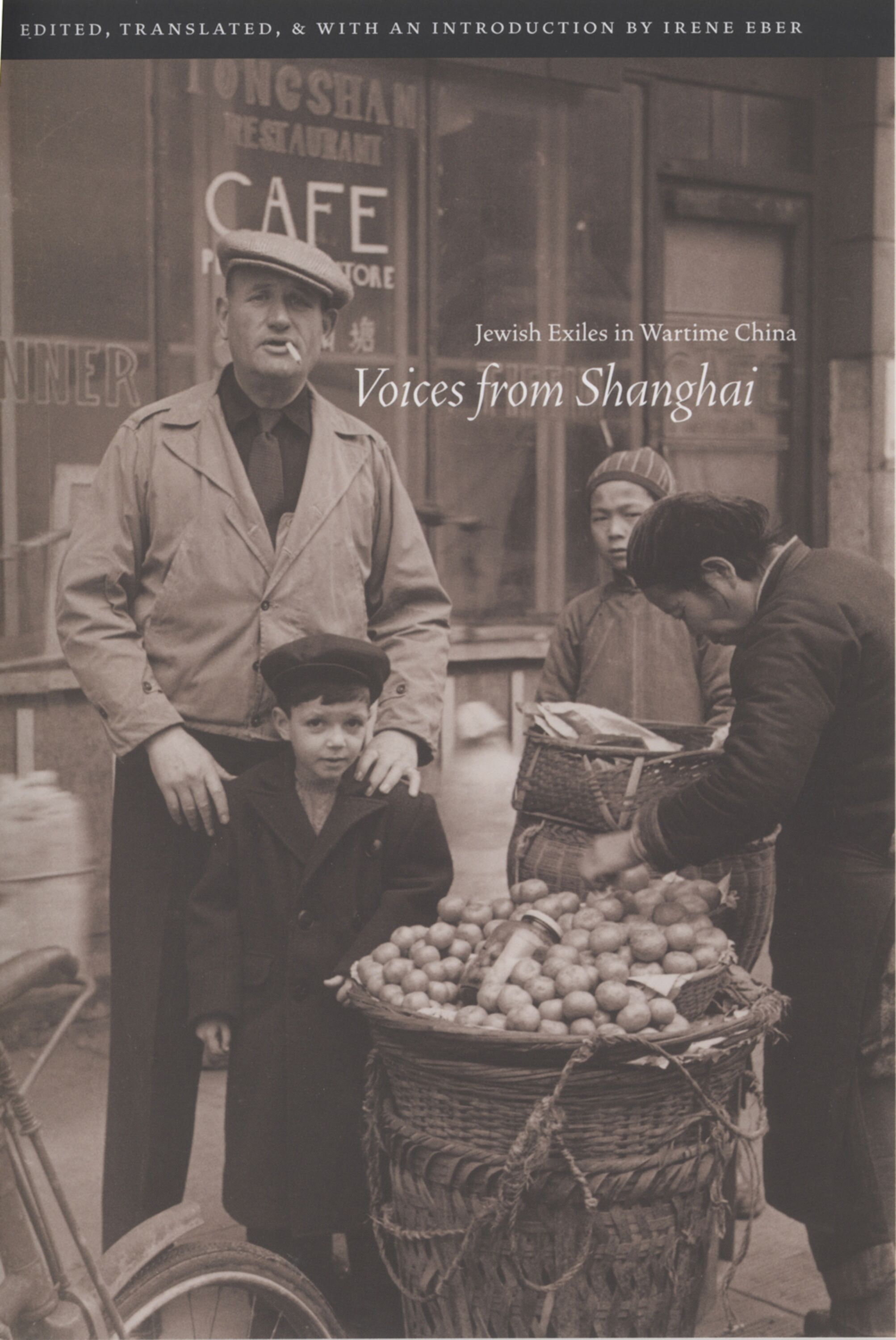
When Hitler came to power and the German army began to sweep through Europe, almost 20,000 Jewish refugees fled to Shanghai. A remarkable collection of the letters, diary entries, poems, and short stories composed by these refugees in the years after they landed in China, Voices from Shanghai fills a gap in our historical understanding of what happened to so many Jews who were forced to board the first ship bound for anywhere. Once they arrived, the refugees learned to navigate the various languages, belief systems, and ethnic traditions they encountered in an already booming international city, and faced challenges within their own community based on disparities in socioeconomic status, levels of religious observance, urban or rural origin, and philosophical differences. Recovered from archives, private collections, and now-defunct newspapers, these fascinating accounts make their English-languge debut in this volume. A rich new take on Holocaust literature, Voices from Shanghai reveals how refugees attempted to pursue a life of creativity despite the hardships of exile.
eBook
