
Catalogue Search | MBRL


Are you sure you want to remove the book from the shelf?

{{itemTitle}}
7
result(s) for
"Edwards, Elizabeth, 1952-"
Sort by:


Photographs Objects Histories
This innovative volume explores the idea that while photographs are images, they are also objects, and this materiality is integral to their meaning and use. The case studies presented focus on photographs active in different institutional, political, religious and domestic spheres, where physical properties, the nature of their use and the cultural formations in which they function make their 'objectness' central to how we should understand them. The book's contributions are drawn from disciplines including the history of photography, visual anthropology and art history, with case studies from a range of countries such as the Netherlands, North America, Australia, Japan, Romania and Tibet. Each shows the methodological strategies they have developed in order to fully exploit the idea of the materiality of photographic images.
eBook

Uncertain images : museums and the work of photographs
\"Almost all museums hold photographs in their collections, and museum professionals and their audiences engage with photographs in a myriad of ways. Yet despite some three decades of critical museology and photographic theory, and an extensive debate on the politics of representation, outside art museums, almost no critical attention has been given specifically to the roles, purposes and lives of these photographs within museums\"--Provided by publisher.
Book

Photography, Anthropology and History
Photography, Anthropology and History examines the complex historical relationship between photography and anthropology, and in particular the strong emergence of the contemporary relevance of historical images. Thematically organized, and focusing on the visual practices developed within anthropology as a discipline, this book brings together a range of contemporary and methodologically innovative approaches to the historical image within anthropology. Importantly, it also demonstrates the ongoing relevance of both the historical image and the notion of the archive to recent anthropological thought. As current research rethinks the relationship between photography and anthropology, this volume will serve as a stimulus to this new phase of research as an essential text and methodological reference point in any course that addresses the relationship between anthropology and visuality.
eBook

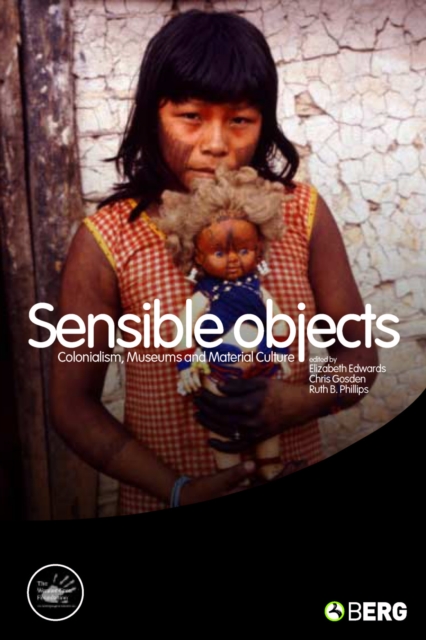
Sensible objects : colonialism, museums, and material culture
Anthropologists of the senses have long argued that cultures differ in their sensory registers. This groundbreaking volume applies this idea to material culture and the social practices that endow objects with meanings in both colonial and postcolonial relationships. It challenges the privileged position of the sense of vision in the analysis of material culture. Contributors argue that vision can only be understood in relation to the other senses. In this they present another challenge to the assumed western five-sense model, and show how our understanding of material culture in both historical and contemporary contexts might be reconfigured if we consider the role of smell, taste, touch and sound, as well as sight, in making meanings about objects.
eBook
English-language poetry from wales 1789-1806 (Wales and the French revolution)
This new selection of Anglophone Welsh poetry presents a range of literary responses to the French Revolution and the ensuing wars with France, a period in which Wales and its history became prime imaginative territory for poets of all political sympathies.
eBook