
Catalogue Search | MBRL


Are you sure you want to remove the book from the shelf?

{{itemTitle}}
26
result(s) for
"Eilenberg, Michael"
Sort by:

At the edges of states : dynamics of state formation in the Indonesian borderlands
\"Set in West Kalimantan, Indonesian Borneo, this study explores the shifting relationships between border communities and the state along the political border with East Malaysia. The book rests on the premises that remote border regions offer an exciting study arena that can tell us important things about how marginal citizens relate to their nation-state. The basic assumption is that central state authority in the Indonesian borderlands has never been absolute, but waxes and wanes, and state rules and laws are always up for local interpretation and negotiation. In its role as key symbol of state sovereignty, the borderland has become a place were central state authorities are often most eager to govern and exercise power. But as illustrated, the borderland is also a place were state authority is most likely to be challenged, questioned and manipulated as border communities often have multiple loyalties that transcend state borders and contradict imaginations of the state as guardians of national sovereignty and citizenship\"--Back cover.
BOOK
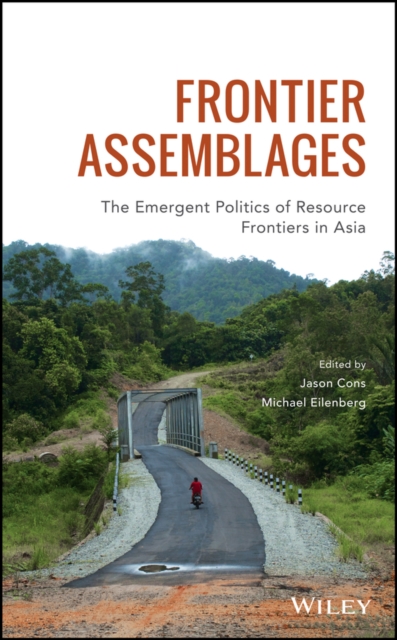
Frontier Assemblages
Frontier Assemblages offers a new framework for thinking about resource frontiers in Asia
* Presents an empirical understanding of resource frontiers and provides tools for broader engagements and linkages
* Filled with rich ethnographic and historical case studies and contains contributions from noted scholars in the field
* Explores the political ecology of extraction, expansion and production in marginal spaces in Asia
* Maps the flows, frictions, interests and imaginations that accumulate in Asia to transformative effect
* Brings together noted anthropologists, geographers and sociologists
eBook

Speed adaptation in a powered transtibial prosthesis controlled with a neuromuscular model
Control schemes for powered ankle–foot prostheses would benefit greatly from a means to make them inherently adaptive to different walking speeds. Towards this goal, one may attempt to emulate the intact human ankle, as it is capable of seamless adaptation. Human locomotion is governed by the interplay among legged dynamics, morphology and neural control including spinal reflexes. It has been suggested that reflexes contribute to the changes in ankle joint dynamics that correspond to walking at different speeds. Here, we use a data-driven muscle–tendon model that produces estimates of the activation, force, length and velocity of the major muscles spanning the ankle to derive local feedback loops that may be critical in the control of those muscles during walking. This purely reflexive approach ignores sources of non-reflexive neural drive and does not necessarily reflect the biological control scheme, yet can still closely reproduce the muscle dynamics estimated from biological data. The resulting neuromuscular model was applied to control a powered ankle–foot prosthesis and tested by an amputee walking at three speeds. The controller produced speed-adaptive behaviour; net ankle work increased with walking speed, highlighting the benefits of applying neuromuscular principles in the control of adaptive prosthetic limbs.
Journal Article
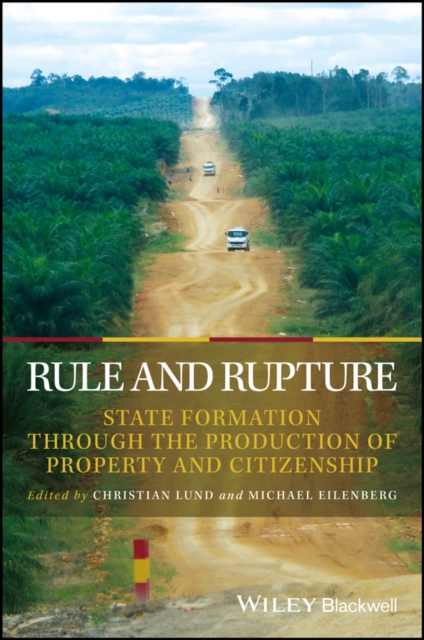
Rule and rupture
Rule and Rupture - State Formation Through the Production of Property and Citizenship examines the ways in which political authority is defined and created by the rights of community membership and access to resources.
Combines the latest theory on property rights and citizenship with extensive fieldwork to provide a more complex, nuanced assessment of political states commonly viewed as “weak,” “fragile,” and “failed” Contains ten case studies taken from post-colonial settings around the world, including Cambodia, Nepal, Indonesia, Afghanistan, Rwanda, Somalia, Democratic Republic of Congo, Colombia, and Bolivia Characterizes the results of societal ruptures into three types of outcomes for political power: reconstituted and consolidated, challenged, and fragmented Brings together exciting insights from a global group of scholars in the fields of political science, development studies, and geography
eBook

Biomechanic and Energetic Effects of a Quasi-Passive Artificial Gastrocnemius on Transtibial Amputee Gait
State-of-the-art transtibial prostheses provide only ankle joint actuation and thus do not provide the biarticular function of the amputated gastrocnemius muscle. We develop a prosthesis that actuates both knee and ankle joints and then evaluate the incremental effects of this prosthesis as compared to ankle actuation alone. The prosthesis employs a quasi-passive clutched-spring knee orthosis, approximating the largely isometric behavior of the biological gastrocnemius, and utilizes a commercial powered ankle-foot prosthesis for ankle joint functionality. Two participants with unilateral transtibial amputation walk with this prosthesis on an instrumented treadmill, while motion, force, and metabolic data are collected. Data are analyzed to determine differences between the biarticular condition with the activation of the knee orthosis and the monoarticular condition with the orthosis behaving as a free-joint. As hypothesized, the biarticular system is shown to reduce both affected-side knee and hip moment impulse and positive mechanical work in both participants during the late stance knee flexion phase of walking, compared to the monoarticular condition. The metabolic cost of walking is also reduced for both participants. These very preliminary results suggest that biarticular functionality may provide benefits beyond even those of the most advanced monoarticular prostheses.
Journal Article
Development and Evaluation of a Powered Artificial Gastrocnemius for Transtibial Amputee Gait
Existing robotic transtibial prostheses provide only ankle joint actuation and do not restore biarticular function of the gastrocnemius muscle. This paper presents the first powered biarticular transtibial prosthesis, which is a combination of a commercial powered ankle-foot prosthesis and a motorized robotic knee orthosis. The orthosis is controlled to emulate the human gastrocnemius based on neuromuscular models of matched nonamputees. Together with the ankle-foot prosthesis, the devices provide biarticular actuation. We evaluate differences between this biarticular condition and a monoarticular condition with the orthosis behaving as a free-joint. Six participants with transtibial amputation walk with the prosthesis on a treadmill while motion, force, and metabolic data are collected and analyzed for differences between conditions. The biarticular prosthesis reduces affected-side biological knee flexion moment impulse and hip positive work during late-stance knee flexion, compared to the monoarticular condition. The data do not support our hypothesis that metabolism decreases for all participants, but some participants demonstrate large metabolic reductions with the biarticular condition. These preliminary results suggest that a powered artificial gastrocnemius may be capable of providing large metabolic reductions compared to a monoarticular prosthesis, but further study is warranted to determine an appropriate controller for achieving more consistent metabolic benefits.
Journal Article


Straddling the Border: A Marginal History of Guerrilla Warfare and ‘Counter-Insurgency’ in the Indonesian Borderlands, 1960s–1970s
Post-independence ethnic minorities inhabiting the Southeast Asian borderlands were willingly or unwillingly pulled into the macro politics of territoriality and state formation. The rugged and hilly borderlands delimiting the new nation-states became battlefronts of state-making and spaces of confrontation between divergent political ideologies. In the majority of the Southeast Asian borderlands, this implied violent disruption in the lives of local borderlanders that came to affect their relationship to their nation-state. A case in point is the ethnic Iban population living along the international border between the Indonesian province of West Kalimantan and the Malaysian state of Sarawak on the island of Borneo. Based on local narratives, the aim of this paper is to unravel the little known history of how the Iban segment of the border population in West Kalimantan became entangled in the highly militarized international disputes with neighbouring Malaysia in the early 1960s, and in subsequent military co-operative ‘anti-communist’ ‘counter-insurgency’ efforts by the two states in the late 1960–1970s. This paper brings together facets of national belonging and citizenship within a borderland context with the aim of understanding the historical incentives behind the often ambivalent, shifting and unruly relationship between marginal citizens like the Iban borderlanders and their nation-state.
Journal Article

Negotiating autonomy at the margins of the state: The dynamics of elite politics in the borderland of West Kalimantan, Indonesia
Recent processes of decentralization have dramatically changed local political configurations and access to resources throughout Indonesia. In particular, the resource-rich regions at the margins of the state have, in the name of regional autonomy, experienced new spaces for manoeuvre in their claims for a larger share of forest resources. By stressing the unfolding relationship between local ethnic elites and the state, and their different strategies in negotiating and claiming authority over forests within Indonesia's changing forest regimes, the paper examines how local-level politics has taken on its special configuration in the remote border region of West Kalimantan, Indonesia. The author demonstrates this by focusing on the ongoing struggle over forest resources and by tracking the fate of a political movement for a new district in this resource-rich region. The paper further examines how current local elite strategies and networks can be related back to the period of border militarization in the 1960s and, once again, how these seem to challenge the exclusivity of the Indonesian—Malaysian border. The main argument is that central authority in the borderland has never been absolute, but waxes and wanes, and thus that state rules and laws are always up for local interpretation and negotiation, although the degree of such negotiation changes depending on the strength of the central state.
Journal Article
Flouting the Law: Vigilante Justice and Regional Autonomy on the Indonesian Border
After the Asian Economic Crisis in 1997 and the fall of president Suharto's authoritarian regime in 1998, rural and urban Indonesia experienced a surge in vigilante killings and the rise of non-state forms of authorities working within the twilight of legality and illegality, assuming the role of the state. Institutional uncertainty, large-scale decentralisation reforms and the deterioration of formal legal authority in post-New Order Indonesia encouraged these processes. This apparent 'lawlessness' became especially evident along the fringes of the Indonesian state where state authority has continuously been contested and in a state of flux. This paper argues that observing these processes of lawlessness and vigilantism from the borderlands provides us with an exceptional window to understand the ambiguous relationship between law and order in post-New Order Indonesia. [PUBLICATION ABSTRACT]
Journal Article