
Catalogue Search | MBRL


Are you sure you want to remove the book from the shelf?

{{itemTitle}}
357
result(s) for
"Ekserdjian, David"
Sort by:

Still life before still life
This book illustrates the simple but important point that artists were fascinated by still life long before the true emergence of 'still-life painting' as an independent genre at the beginning of the seventeenth century. Instead of the genre beginning in the early 17th century, noted scholar David Ekserdjian explores its origins in classical antiquity and the gradual re-emergence of still life in Renaissance painting. The author presents a visual anthology of finely executed flowers, fruit, food, household objects, and furnishings seen in the background of paintings. Paintings are reproduced in full and paired with detailed close-ups of still-life elements within the work. Ekserdjian further examines both the artistic and symbolic significance of a chosen detail, as well as information about each artist's career. Featured works include paintings from Renaissance greats such as Da Vinci, Durer, Holbein, Michelangelo, Raphael, and Van Eyck, as well as the work of less-celebrated masters Barthelemy d'Eyck and Ortolano.
Book
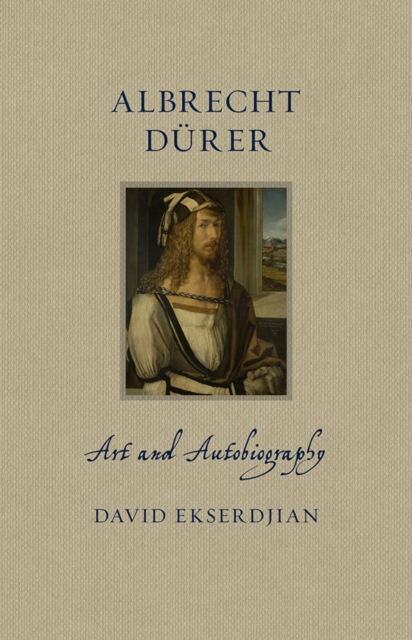
Albrecht Dürer
An exploration of the life and works of German artist Albrecht Dürer and his self-obsession. The Italian Renaissance birthed the modern sense of self, and no artist from the period compares with Albrecht Dürer (1471–1528) in terms of the almost obsessive interest he displayed in his own life. Dürer's works are filled with personal details from his day-to-day, his dreams, and his escapades. In this brief biography, David Ekserdjian explores Dürer's life and times—his studies, travels, and influences—as well as his paintings, drawings, and prints. This book is essential reading for anyone interested in Renaissance or Northern European art.
eBook


Identification of the remains of King Richard III
In 2012, a skeleton was excavated at the presumed site of the Grey Friars friary in Leicester, the last-known resting place of King Richard III. Archaeological, osteological and radiocarbon dating data were consistent with these being his remains. Here we report DNA analyses of both the skeletal remains and living relatives of Richard III. We find a perfect mitochondrial DNA match between the sequence obtained from the remains and one living relative, and a single-base substitution when compared with a second relative. Y-chromosome haplotypes from male-line relatives and the remains do not match, which could be attributed to a false-paternity event occurring in any of the intervening generations. DNA-predicted hair and eye colour are consistent with Richard’s appearance in an early portrait. We calculate likelihood ratios for the non-genetic and genetic data separately, and combined, and conclude that the evidence for the remains being those of Richard III is overwhelming.
King Richard III was a controversial English King whose remains are presumably deposited in Grey Friars in Leicester. Here the authors sequence the mitochondrial genome and Y-chromosome DNA of the skeletal remains and living relatives of Richard III and confirm that the remains belong to King Richard III.
Journal Article


What’s in a Name? Emulation and the Hazards of Attribution
The present article explores both the difficulty that already existed in the Renaissance of being certain who painted what, and also the practice of artistic emulation, above all – but not exclusively – again during the Renaissance. Both subjects are vast ones, and often at least part of the motivation behind individual borrowings was the illustrious authorship of the prototypes. However, in the specific case studies considered here, for all that the borrowers must have been entirely confident of the authorship of their models, the verdict of posterity has been a very different one, and their sources of inspiration turn out not to be by the greatest artists of the period. This in turn may well explain previous failures to recognise most of these ‘Homages to Misattribution’.
Journal Article


BAD RECEPTION AND THE RENAISSANCE ALTARPIECE
This study explores a number of specific examples of the bad reception of altarpieces in Renaissance Italy. It also attempts to investigate the main ways in which both patrons and artists endeavoured to avoid the possibility of commissioned works being rejected, above all because such occurrences were so undesirable for both sides. The case studies which are examined are not wholly unknown, but there is more to be said about almost all of them, not least when they are seen together. Moreover, the overall approach departs from that taken by previous studies in various ways, most obviously in connection with the demolition of the widespread – but manifestly false – notion that contract drawings were invariably highly finished. Specific works that are explored range in date from the second half of the fifteenth century to the first decade of the seventeenth, and particular emphasis is placed upon the extent to which more generally decisions – other than those concerning the basic subject matter of the altarpieces in question, which rested with the patrons – were very often left to the judgement of artists.
Journal Article


Correggio’s reclining ‘Magdalen’ rediscovered
A painting of the reclining Magdalen in the Gemäldegalerie, Dresden, lost since 1945, is usually assumed to have been the prime version of this composition by Correggio. A newly discovered panel is instead here identified as his original, which was probably commissioned by Isabella d’Este after she had visited the saint’s shrine at the Sainte-Baume in 1517.
Journal Article