
Catalogue Search | MBRL


Are you sure you want to remove the book from the shelf?

{{itemTitle}}
30
result(s) for
"El-Kattan, Ayman"
Sort by:

Predicting Clearance Mechanism in Drug Discovery: Extended Clearance Classification System (ECCS)
Early prediction of clearance mechanisms allows for the rapid progression of drug discovery and development programs, and facilitates risk assessment of the pharmacokinetic variability associated with drug interactions and pharmacogenomics. Here we propose a scientific framework – Extended Clearance Classification System (ECCS) – which can be used to predict the predominant clearance mechanism (rate-determining process) based on physicochemical properties and passive membrane permeability. Compounds are classified as: Class 1A – metabolism as primary systemic clearance mechanism (high permeability acids/zwitterions with molecular weight (MW) ≤400 Da), Class 1B – transporter-mediated hepatic uptake as primary systemic clearance mechanism (high permeability acids/zwitterions with MW >400 Da), Class 2 – metabolism as primary clearance mechanism (high permeability bases/neutrals), Class 3A –renal clearance (low permeability acids/zwitterions with MW ≤400 Da), Class 3B – transporter mediated hepatic uptake or renal clearance (low permeability acids/zwitterions with MW >400 Da), and Class 4 – renal clearance (low permeability bases/neutrals). The performance of the ECCS framework was validated using 307 compounds with single clearance mechanism contributing to ≥70% of systemic clearance. The apparent permeability across clonal cell line of Madin − Darby canine kidney cells, selected for low endogenous efflux transporter expression, with a cut-off of 5 × 10
−6
cm/s was used for permeability classification, and the ionization (at pH7) was assigned based on calculated pKa. The proposed scheme correctly predicted the rate-determining clearance mechanism to be either metabolism, hepatic uptake or renal for ~92% of total compounds. We discuss the general characteristics of each ECCS class, as well as compare and contrast the framework with the biopharmaceutics classification system (BCS) and the biopharmaceutics drug disposition classification system (BDDCS). Collectively, the ECCS framework is valuable in early prediction of clearance mechanism and can aid in choosing the right preclinical tool kit and strategy for optimizing drug exposure and evaluating clinical risk of pharmacokinetic variability caused by drug interactions and pharmacogenomics.
Journal Article
Mechanistic Modeling to Predict the Transporter- and Enzyme-Mediated Drug-Drug Interactions of Repaglinide
ABSTRACT
Purpose
Quantitative prediction of complex drug-drug interactions (DDIs) is challenging. Repaglinide is mainly metabolized by cytochrome-P-450 (CYP)2C8 and CYP3A4, and is also a substrate of organic anion transporting polypeptide (OATP)1B1. The purpose is to develop a physiologically based pharmacokinetic (PBPK) model to predict the pharmacokinetics and DDIs of repaglinide.
Methods
In vitro
hepatic transport of repaglinide, gemfibrozil and gemfibrozil 1-
O
-β-glucuronide was characterized using sandwich-culture human hepatocytes. A PBPK model, implemented in Simcyp (Sheffield, UK), was developed utilizing
in vitro
transport and metabolic clearance data.
Results
In vitro
studies suggested significant active hepatic uptake of repaglinide. Mechanistic model adequately described repaglinide pharmacokinetics, and successfully predicted DDIs with several OATP1B1 and CYP3A4 inhibitors (<10% error). Furthermore, repaglinide-gemfibrozil interaction at therapeutic dose was closely predicted using
in vitro
fraction metabolism for CYP2C8 (0.71), when primarily considering reversible inhibition of OATP1B1 and mechanism-based inactivation of CYP2C8 by gemfibrozil and gemfibrozil 1-
O
-β-glucuronide.
Conclusions
This study demonstrated that hepatic uptake is rate-determining in the systemic clearance of repaglinide. The model quantitatively predicted several repaglinide DDIs, including the complex interactions with gemfibrozil. Both OATP1B1 and CYP2C8 inhibition contribute significantly to repaglinide-gemfibrozil interaction, and need to be considered for quantitative rationalization of DDIs with either drug.
Journal Article
Projecting ADME Behavior and Drug-Drug Interactions in Early Discovery and Development: Application of the Extended Clearance Classification System
Purpose
To assess the utility of Extended Clearance Classification System (ECCS) in understanding absorption, distribution, metabolism, and elimination (ADME) attributes and enabling victim drug-drug interaction (DDI) predictions.
Methods
A database of 368 drugs with relevant ADME parameters, main metabolizing enzymes, uptake transporters, efflux transporters, and highest change in exposure (%AUC) in presence of inhibitors was developed using published literature. Drugs were characterized according to ECCS using ionization, molecular weight and estimated permeability.
Results
Analyses suggested that ECCS class 1A drugs are well absorbed and systemic clearance is determined by metabolism mediated by CYP2C, esterases, and UGTs. For class 1B drugs, oral absorption is high and the predominant clearance mechanism is hepatic uptake mediated by OATP transporters. High permeability neutral/basic drugs (class 2) showed high oral absorption, with metabolism mediated generally by CYP3A, CYP2D6 and UGTs as the predominant clearance mechanism. Class 3A/4 drugs showed moderate absorption with dominant renal clearance involving OAT/OCT2 transporters. Class 3B drugs showed low to moderate absorption with hepatic uptake (OATPs) and/or renal clearance as primary clearance mechanisms. The highest DDI risk is typically seen with class 2/1B/3B compounds manifested by inhibition of either CYP metabolism or active hepatic uptake. Class 2 showed a wider range in AUC change likely due to a variety of enzymes involved. DDI risk for class 3A/4 is small and associated with inhibition of renal transporters.
Conclusions
ECCS provides a framework to project ADME profiles and further enables prediction of victim DDI liabilities in drug discovery and development.
Journal Article

Delineating the role of cooperativity in the design of potent PROTACs for BTK
Proteolysis targeting chimeras (PROTACs) are heterobifunctional small molecules that simultaneously bind to a target protein and an E3 ligase, thereby leading to ubiquitination and subsequent degradation of the target. They present an exciting opportunity to modulate proteins in a manner independent of enzymatic or signaling activity. As such, they have recently emerged as an attractive mechanism to explore previously “undruggable” targets. Despite this interest, fundamental questions remain regarding the parameters most critical for achieving potency and selectivity. Here we employ a series of biochemical and cellular techniques to investigate requirements for efficient knockdown of Bruton’s tyrosine kinase (BTK), a nonreceptor tyrosine kinase essential for B cell maturation. Members of an 11-compound PROTAC library were investigated for their ability to form binary and ternary complexes with BTK and cereblon (CRBN, an E3 ligase component). Results were extended to measure effects on BTK–CRBN cooperative interactions as well as in vitro and in vivo BTK degradation. Our data show that alleviation of steric clashes between BTK and CRBN by modulating PROTAC linker length within this chemical series allows potent BTK degradation in the absence of thermodynamic cooperativity.
Journal Article

Targeting host metabolism by inhibition of acetyl-Coenzyme A carboxylase reduces flavivirus infection in mouse models
Flaviviruses are (re)-emerging RNA viruses strictly dependent on lipid metabolism for infection. In the search for host targeting antivirals, we explored the effect of pharmacological modulation of fatty acid metabolism during flavivirus infection. Considering the central role of acetyl-Coenzyme A carboxylase (ACC) on fatty acid metabolism, we analyzed the effect of three small-molecule ACC inhibitors (PF-05175157, PF-05206574, and PF-06256254) on the infection of medically relevant flaviviruses, namely West Nile virus (WNV), dengue virus, and Zika virus. Treatment with these compounds inhibited the multiplication of the three viruses in cultured cells. PF-05175157 induced a reduction of the viral load in serum and kidney in WNV-infected mice, unveiling its therapeutic potential for the treatment of chronic kidney disease associated with persistent WNV infection. This study constitutes a proof of concept of the reliability of ACC inhibitors to become viable antiviral candidates. These results support the repositioning of metabolic inhibitors as broad-spectrum antivirals.
Journal Article
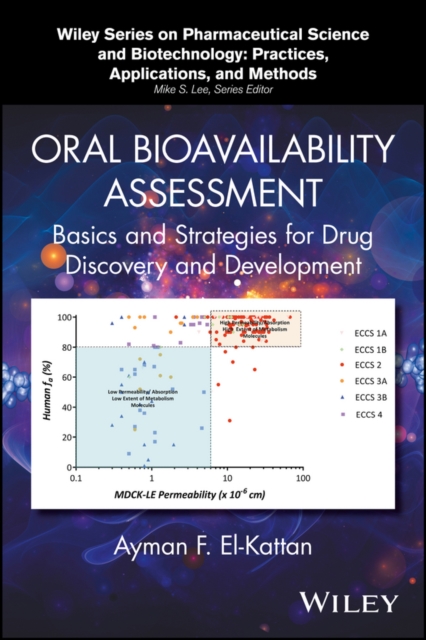
Oral Bioavailability Assessment
Specifically geared to personnel in the pharmaceutical and biotechnology industries, this book describes the basics and challenges of oral bioavailability – one of the most significant hurdles in drug discovery and development. • Describes approaches to assess pharmacokinetics and how drug efflux and uptake transporters impact oral bioavailability
• Helps readers reduce the failure rate of drug candidates when transitioning from the bench to the clinic during development
• Explains how preclinical animal models – used in preclinical testing – and in vitro tools translate to humans, which is an underappreciated and complicated area of drug development
• Includes chapters about pharmacokinetic modelling, the Biopharmaceutics Drug Disposition Classification System (BDDCS), and the Extended Clearance Classification System (ECCS)
• Has tutorials for applying strategies to medicinal chemistry practices of drug discovery/development
eBook
Evaluation of a human bio-engineered skin equivalent for drug permeation studies
To test the barrier function of a bio-engineered human skin (BHS) using three model drugs (caffeine, hydrocortisone, and tamoxifen) in vitro. To investigate the lipid composition and microscopic structure of the BHS.
The human skin substitute was composed of both epidermal and dermal layers, the latter having a bovine collagen matrix. The permeability of the BHS to three model drugs was compared to that obtained in other percutaneous testing models (human cadaver skin, hairless mouse skin, and EpiDerm). Lipid analysis of the BHS was performed by high performance thin layered chromatography. Histological evaluation of the BHS was performed using routine H&E staining.
The BHS mimicked human skin in terms of lipid composition, gross ultrastructure, and the formation of a stratum corneum. However, the permeability of the BHS to caffeine, hydrocortisone, and tamoxifen was 3-4 fold higher than that of human cadaver skin.
In summary, the results indicate that the BHS may be an acceptable in vitro model for drug permeability testing.
Journal Article

Development and validation of an UPLC-MS/MS assay for quantitative analysis of the ghrelin receptor inverse agonist PF-5190457 in human or rat plasma and rat brain
PF-5190457 is a ghrelin receptor inverse agonist that is currently undergoing clinical development for the treatment of alcoholism. Our aim was to develop and validate a simple and sensitive assay for quantitative analysis of PF-5190457 in human or rat plasma and rat brain using liquid chromatography-tandem mass spectrometry. The analyte and stable isotope internal standard were extracted from 50 μL plasma or rat brain homogenate by protein precipitation using 0.1 % formic acid in acetonitrile. Chromatography was carried out on an Acquity UPLC BEH C18 (2.1 mm × 50 mm) column with 1.7 μm particle size and 130 Å pore size. The flow rate was 0.5 mL/min and total chromatographic run time was 2.2 min. The mobile phase consisted of a gradient mixture of water: acetonitrile 95:5 % (v/v) containing 0.1 % formic acid (solvent A) and 100 % acetonitrile containing 0.1 % formic acid (solvent B). Multiple reaction monitoring was carried out in positive electro-spray ionization mode using m/z 513.35 → 209.30 for PF-5190457 and m/z 518.47 → 214.43 for the internal standard. The recovery ranged from 102 to 118 % with coefficient of variation (CV) less than 6 % for all matrices. The calibration curves for all matrices were linear over the studied concentration range (R ² ≥ 0.998, n = 3). The lower limit of quantification was 1 ng/mL in rat or human plasma and 0.75 ng/g in rat brain. Intra- and inter-run mean percent accuracies were between 85 and 115 % and percent imprecision was ≤15 %. The assays were successfully utilized to measure the concentration of PF-5190457 in pre-clinical and clinical pharmacology studies of the compound.
Journal Article
Transporters-Mediated Drug Disposition - Physiochemistry and in silico Approaches
Drug discovery is time consuming and expensive that involves many scientists synthesizing thousands of molecules and running countless experiments over many years. To select viable candidates entering clinical development,
in silico
models are built based on experimental data and physicochemical properties of existing compounds, and used to predict early on the role of clinically relevant transporters/enzymes in absorption, distribution, clearance, and elimination (ADCE) and prioritize new molecular entities (NMEs) before compound synthesis and testing are done. In addition, a framework of the extended clearance classification system (ECCS) is implemented and applied to identify the rate‐determining step of drug clearance, as well as extent of elimination, and enable the discovery scientist to determine if particular transporter(s) would affect the disposition of the molecule of interest and selectively run supporting studies to confirm/eliminate arising liabilities. Quantitative pharmacokinetics modeling approaches are further implemented to guide study design for first in‐human dose‐ranging studies. After a quantitative model is verified and refined using human data, it can be applied to predict drug–drug interactions (DDIs), food–drug interactions, and impact of transporter/enzyme pharmacogenomics, as well as disease state on pharmacokinetics in humans. This chapter includes (i) the physicochemical properties that determine the drug disposition pathways including hepatobiliary and renal elimination, and review the
in silico
models that aim to readout the relevant endpoints; (ii)
in silico
models studied for ligand affinity to the major hepatic and renal uptake transporters and drug efflux transporters; and (iii) industrial prospective on implementation of physicochemical understanding and
in silico
models in drug discovery settings.
Book Chapter
Impact of Influx Transporters on Drug Absorption
Historically, high‐throughput screening (HTS) approaches that were adopted throughout the pharmaceutical industry were geared toward enabling rapid identification of biologically relevant new molecular entities (NMEs) by primarily focusing on maximizing potency against the biological target. By understanding the transport mechanisms and required structural activity relationship (SAR) involved in the influx of drug molecules, it may allow the medicinal chemist to use rational drug design to discover molecules that take advantage of these processes and improve the oral absorption of NMEs. Another contributing factor is the keen interest by the pharmaceutical industry to optimize the physicochemical space of NMEs to minimize their CYP‐mediated metabolic liability. Reducing lipophilicity and increasing polarity would lead to reduced CYP‐mediated clearance and potential for CYP‐mediated drug‐drug interactions (DDI). This chapter talks about the differences between intestinal low‐capacity/high‐affinity and high‐capacity/ low‐affinity uptake transporters.
Book Chapter