
Catalogue Search | MBRL


Are you sure you want to remove the book from the shelf?

{{itemTitle}}
838
result(s) for
"Elliott, Jonathan"
Sort by:
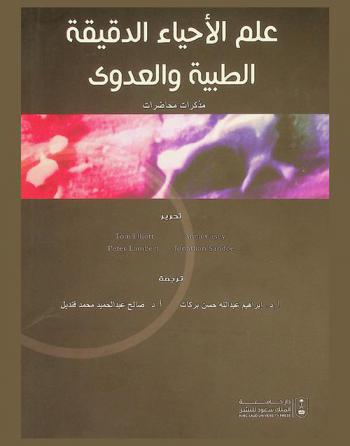
علم الأحياء الدقيقة الطبية والعدوى : مذكرات محاضرات
يشتمل الكتاب على اثنى وأربعون فصلا مقسمة إلى أربعة أبواب. تناول الباب الأول أساسيات علم الأحياء الدقيقة من حيث تعريف وتصنيف ووصف الكائنات الدقيقة سواء كانت بكتريا أو فطريات أو فيروسات. أما الباب الثاني فقد تناول في فصوله المختلفة الأدوية المضادة لهذه الكائنات التي تم التحدث عنها في الباب الأول. أما فصول الباب الثالث فقد تناولت بالشرح المفصل موضوع العدوى بالكائنات الدقيقة المختلفة من حيث طرق العدوى والعلاج وتشخيص الأمراض الناجمة عن هذه الكائنات والتي تصيب أجهزة الجسم المختلفة. أخيرا في الباب الرابع تم سرد مجموعة من الأسئلة المتنوعة وأجوبتها عن كل فصل من فصول الكتاب المختلفة لتركيز وتبسيط ومراجعة المادة العلمية التي تناولها الكتاب.
Book

Sleep-Wake Disturbances After Traumatic Brain Injury: Synthesis of Human and Animal Studies
Abstract
Sleep–wake disturbances following traumatic brain injury (TBI) are increasingly recognized as a serious consequence following injury and as a barrier to recovery. Injury-induced sleep–wake disturbances can persist for years, often impairing quality of life. Recently, there has been a nearly exponential increase in the number of primary research articles published on the pathophysiology and mechanisms underlying sleep–wake disturbances after TBI, both in animal models and in humans, including in the pediatric population. In this review, we summarize over 200 articles on the topic, most of which were identified objectively using reproducible online search terms in PubMed. Although these studies differ in terms of methodology and detailed outcomes; overall, recent research describes a common phenotype of excessive daytime sleepiness, nighttime sleep fragmentation, insomnia, and electroencephalography spectral changes after TBI. Given the heterogeneity of the human disease phenotype, rigorous translation of animal models to the human condition is critical to our understanding of the mechanisms and of the temporal course of sleep–wake disturbances after injury. Arguably, this is most effectively accomplished when animal and human studies are performed by the same or collaborating research programs. Given the number of symptoms associated with TBI that are intimately related to, or directly stem from sleep dysfunction, sleep–wake disorders represent an important area in which mechanistic-based therapies may substantially impact recovery after TBI.
Journal Article

370 Sports-related concussion (SRC) in road cycling: establishing the RoadsIde heaD injury assEssment (RIDE) for elite road cycling
BackgroundDespite recent advances in the diagnosis and management of sports-related concussion (SRC) in the sports medicine community; as well as heightened recognition of the condition by the public and media, some sports, such as road cycling, appear to lack effective concussion assessment, diagnosis and management protocols.ObjectivesUndertake a systematic review of the literature on SRC assessment in road cycling and from this evidence, suggest a model for the RoadsiIe heaD injury assessment (RIDE) as well model return to riding guidelines.DesignSystematic review.SettingElite Sport.Patients (Or Participants)This systematic review is reported in line with the Preferred Reporting Items for Systematic Reviews and Meta-analyses guidance.Interventions (Or Assessment Of Risk Factors)The Physiotherapy Evidence Database (PEDro) scale was used to assess the quality of included papers in the review.Main Outcome MeasurementsFrom 94 studies identified, 65 studies were excluded after screening the titles and abstracts and two studies were included in the review.ResultsGordon et al describe the presentation of a single case of paediatric concussion following a cycling crash. They highlight the utility of SRC evaluation using the Sport Concussion Assessment Tool (SCAT) as well as the importance of a stepwise return-to-play protocol. Greve and Modabber discuss a number of traumatic brain injuries that occurred during the 2011 road cycling season and,as a minimum, call for riders to be withdrawn from competition following loss of consciousness or amnesia. From this review, we then suggest a Roadside head injury assessment (RIDE) for assessing SRC in elite road cycling.ConclusionsThe elite road cycling race environment poses a unique challenge to the identification of suspected SRC and this review illustrates the lack of published evidence to advise effective means of SRC assessment within road cycling. We are calling for The Union Cycliste Internationale (UCI) to host a consensus meeting to agree the operational detail required to implement a standardised RIDE - informed by the Berlin Consensus Guidelines, SCAT5 and return-to-riding protocol for road cycling.
Journal Article
Posttraumatic stress disorder increases the odds of REM sleep behavior disorder and other parasomnias in Veterans with and without comorbid traumatic brain injury
Abstract
Study Objectives
To describe the crude prevalence of rapid eye movement (REM) sleep behavior disorder (RBD) following traumatic brain injury (TBI) and posttraumatic stress disorder (PTSD) in Veterans, given potential relationships between TBI, PTSD, RBD, and neurodegeneration.
Methods
Veterans (n = 394; 94% male; 54.4 ± 15.5 years of age) were prospectively/cross-sectionally recruited from the VA Portland Health Care System and completed in-lab video-polysomnography and questionnaires. TBI and PTSD were assessed via diagnostic screening and medical record review. Subjects were categorized into four groups after assessment of REM sleep without atonia (RSWA) and self-reported dream enactment: (1) “Normal,” neither RSWA nor dream enactment, (2) “Other Parasomnia,” dream enactment without RSWA, (3) “RSWA,” isolated-RSWA without dream enactment, and (4) “RBD,” RSWA with dream enactment. Crude prevalence, prevalence odds ratio, and prevalence rate for parasomnias across subjects with TBI and/or PTSD were assessed.
Results
Overall prevalence rates were 31%, 7%, and 9% for Other Parasomnia, RSWA, and RBD, respectively. The prevalence rate of RBD increased to 15% in PTSD subjects [age adjusted POR: 2.81 (1.17–4.66)] and to 21% in TBI + PTSD subjects [age adjusted POR: 3.43 (1.20–9.35)]. No subjects met all diagnostic criteria for trauma-associated sleep disorder (TASD), and no overt dream enactment was captured on video.
Conclusions
The prevalence of RBD and related parasomnias is significantly higher in Veterans compared with the general population and is associated with PTSD and TBI + PTSD. Considering the association between idiopathic-RBD and synucleinopathy, it remains unclear whether RBD (and potentially TASD) associated with PTSD or TBI + PTSD similarly increases risk for long-term neurologic sequelae.
Journal Article

Energy Code Compliance in Modular vs. Site-Built Multifamily Buildings: A Field Study Across Four Climate Zones
Prefabrication in a controlled factory setting may improve the energy performance of modular buildings compared to traditional site-built facilities. However, few studies report empirical evidence to support this premise in full-scale operational buildings. Since energy efficiency standards in the United States are driven by building code, the compliance path chosen and field verification through site inspection, an investigation of how site-built and modular projects satisfy code requirements is critical to understanding long-term energy consumption. Therefore, this study investigated and compared Energy Code Compliance (ECC) among 55 commercial multifamily buildings (25 modular and 30 site-built) in four American Society of Heating, Refrigerating and Air-Conditioning Engineers climate zones (3B, 3C, 4A and 4C). For climate zone 3, ECC analyses indicated that modular slightly exceeded site-built construction. For zone 4, site-built construction slightly exceeded modular. Nearly all buildings met or exceeded the prescriptive energy code requirements for each climate zone regardless of whether a performance or trade-off compliance path was utilized. Field observations suggest that envelope construction quality in modular buildings could be higher. Results provide insights for researchers exploring energy use in buildings, as well as the basis for a nuanced understanding of normalized operational energy consumption in an ongoing longitudinal study of the same 55 multifamily buildings.
Journal Article

Feasibility and preliminary efficacy for morning bright light therapy to improve sleep and plasma biomarkers in US Veterans with TBI. A prospective, open-label, single-arm trial
Mild traumatic brain injury (TBI) is associated with persistent sleep-wake dysfunction, including insomnia and circadian rhythm disruption, which can exacerbate functional outcomes including mood, pain, and quality of life. Present therapies to treat sleep-wake disturbances in those with TBI (e.g., cognitive behavioral therapy for insomnia) are limited by marginal efficacy, poor patient acceptability, and/or high patient/provider burden. Thus, this study aimed to assess the feasibility and preliminary efficacy of morning bright light therapy, to improve sleep in Veterans with TBI (NCT03578003). Thirty-three Veterans with history of TBI were prospectively enrolled in a single-arm, open-label intervention using a lightbox (~10,000 lux at the eye) for 60-minutes every morning for 4-weeks. Pre- and post-intervention outcomes included questionnaires related to sleep, mood, TBI, post-traumatic stress disorder (PTSD), and pain; wrist actigraphy as a proxy for objective sleep; and blood-based biomarkers related to TBI/sleep. The protocol was rated favorably by ~75% of participants, with adherence to the lightbox and actigraphy being ~87% and 97%, respectively. Post-intervention improvements were observed in self-reported symptoms related to insomnia, mood, and pain; actigraphy-derived measures of sleep; and blood-based biomarkers related to peripheral inflammatory balance. The severity of comorbid PTSD was a significant positive predictor of response to treatment. Morning bright light therapy is a feasible and acceptable intervention that shows preliminary efficacy to treat disrupted sleep in Veterans with TBI. A full-scale randomized, placebo-controlled study with longitudinal follow-up is warranted to assess the efficacy of morning bright light therapy to improve sleep, biomarkers, and other TBI related symptoms.
Journal Article

Relationship between serum iohexol clearance, serum SDMA concentration, and serum creatinine concentration in non-azotemic dogs
Abstract
Background
Serum creatinine and symmetric dimethylarginine (SDMA) are used as surrogate markers of glomerular filtration rate (GFR) in clinical practice. Data pertaining to the correlations between GFR, SDMA, and serum creatinine in client-owned dogs are limited.
Objectives
To describe the relationship between GFR, SDMA, and serum creatinine in a population of client-owned dogs, and to compare clinical utility of SDMA to GFR estimation for detecting pre-azotemic chronic kidney disease.
Animals
Medical records of 119 dogs that had GFR estimation performed via serum iohexol clearance between 2012 and 2017.
Methods
Prospective study using archived samples. GFR, SDMA, and serum creatinine results were reviewed and submitting practices contacted for outcome data. All dogs included in the study population were non-azotemic. Correlations between GFR, SDMA, and serum creatinine were determined by regression analysis. Sensitivity, specificity, and positive and negative likelihood ratios of different cutoffs for SDMA and serum creatinine for detecting decreased GFR were calculated, using a 95% confidence interval.
Results
Serum creatinine and SDMA were moderately correlated with GFR (R2 = 0.52 and 0.27, respectively, P < .0001) and with each other (R2 = 0.33, P < .0001). SDMA >14 μg/dL was sensitive (90%) but nonspecific (50%) for detecting a ≥40% decrease in GFR. Optimal SDMA concentration cutoff for detecting a ≥40% GFR decrease was >18 μg/dL (sensitivity 90%, specificity 83%).
Conclusions and Clinical Importance
In non-azotemic dogs being screened for decreased renal function, using a cutoff of >18 μg/dL rather than >14 μg/dL increases the specificity of SDMA, without compromising sensitivity.
Journal Article

Increased Sleep Disturbances and Pain in Veterans With Comorbid Traumatic Brain Injury and Posttraumatic Stress Disorder
Study Objectives:
Veterans are at an increased risk for traumatic brain injury (TBI) and posttraumatic stress disorder (PTSD), both of which are associated with sleep disturbances and increased pain. Furthermore, sleep disturbances and pain are reciprocally related such that each can exacerbate the other. Although both TBI and PTSD are independently linked to sleep disturbances and pain, it remains unclear whether Veterans with comorbid TBI+PTSD show worse sleep disturbances and pain compared to those with only TBI or PTSD. We hypothesized that sleep and pain would be worse in Veterans with comorbid TBI+PTSD compared to Veterans with only TBI or PTSD.
Methods:
Veterans (n = 639) from the VA Portland Health Care System completed overnight polysomnography and self-report questionnaires. Primary outcome variables were self-reported sleep disturbances and current pain intensity. Participants were categorized into four trauma-exposure groups: (1) neither: without TBI or PTSD (n = 383); (2) TBI: only TBI (n = 67); (3) PTSD: only PTSD (n = 126); and (4) TBI+PTSD: TBI and PTSD (n = 63).
Results:
The PTSD and TBI+PTSD groups reported worse sleep compared to the TBI and neither groups. The TBI+PTSD group reported the greatest pain intensity compared to the other groups.
Conclusions:
These data suggest sleep and pain are worst in Veterans with TBI and PTSD, and that sleep is similarly impaired in Veterans with PTSD despite not having as much pain. Thus, although this is a complex relationship, these data suggest PTSD may be driving sleep disturbances, and the added effect of TBI in the comorbid group may be driving pain in this population.
Citation:
Balba NM, Elliott JE, Weymann KB, Opel RA, Duke JW, Oken BS, Morasco BJ, Heinricher MM, Lim MM. Increased sleep disturbances and pain in Veterans with comorbid traumatic brain injury and posttraumatic stress disorder.
J Clin Sleep Med.
2018;14(11):1865–1878.
Journal Article

Optical coherence tomography for label-free detection and characterization of methicillin-resistant S. aureus biofilms
Orthopedic implant-associated infections cause serious complications primarily attributed to bacterial biofilm formation and are often characterized by increased antibiotic resistance and diminished treatment response. Yet, no methods currently exist to identify biofilms intraoperatively-surgeons rely solely on their eyes and hands and cannot detect or differentiate infected tissue to determine the location and extent of contamination.
As the first step in addressing this unmet clinical need, here, we develop an optical coherence tomography (OCT)-based imaging method capable of detection
and quantification of one of the most dangerous orthopedic biofilms formed by methicillin-resistant
(MRSA).
Growing biofilms on orthopedic hardware, we identify MRSA distinct optical signature through histogram-based multi-parametric texture analysis of OCT images and support the findings with bioluminescence imaging and scanning electron microscopy. Under identical experimental conditions, we identify an optical signature of
(
) biofilms and use it to distinguish and quantify both species within MRSA-
biofilms.
The developed OCT-based methodology was successfully tested for (1) MRSA colonies delineation, (2) detection of metal hardware (an important feature for clinical translation where the metal surface of most orthopedic hardware is not flat), (3) automated quantification of biofilm thickness and roughness, and (4) identification of pores and, therefore, ability to evaluate the role of porosity-one of the critical biological metrics in relation to biofilm maturity and response to treatment. For the first time, we demonstrated complex pore structures of thick (
) MRSA biofilms
with an unprecedented level of detail.
The proposed rapid noninvasive detection/quantification of MRSA biofilms on metal surfaces and delineation of their complex network of pores opens new venues for label-free MRSA detection in preclinical models of trauma surgery, expansion to other bacterial strains, and further clinical translation.
Journal Article

Anti-nausea effects and pharmacokinetics of ondansetron, maropitant and metoclopramide in a low-dose cisplatin model of nausea and vomiting in the dog: a blinded crossover study
Background
Nausea is a subjective sensation which is difficult to measure in non-verbal species. The aims of this study were to determine the efficacy of three classes of antiemetic drugs in a novel low dose cisplatin model of nausea and vomiting and measure change in potential nausea biomarkers arginine vasopressin (AVP) and cortisol. A four period cross-over blinded study was conducted in eight healthy beagle dogs of both genders. Dogs were administered 18 mg/m
2
cisplatin intravenously, followed 45 min later by a 15 min infusion of either placebo (saline) or antiemetic treatment with ondansetron (0.5 mg/kg; 5-HT
3
antagonist), maropitant (1 mg/kg; NK
1
antagonist) or metoclopramide (0.5 mg/kg; D
2
antagonist). The number of vomits and nausea associated behaviours, scored on a visual analogue scale, were recorded every 15 min for 8 h following cisplatin administration. Plasma samples were collected to measure AVP, cortisol and antiemetic drug concentrations.
Results
The placebo treated group vomited an average number of 7 times (range 2–13). None of the dogs in either the ondansetron or maropitant treated groups vomited during the observation period. The onset of nausea-like behaviour in the placebo-treated group occurred at t
3.5h
and peaked at t
4.75h
with nausea behaviour score of 58.5 ± 4.6 mm. Ondansetron and maropitant reduced overall the area under the curve of nausea behaviour score by 90% and 25%, respectively. Metoclopramide had no effect on either vomiting or nausea.
Cisplatin-induced nausea and vomiting caused concomitant increases in AVP and cortisol. In the placebo-treated group, AVP and cortisol increased from t
2.5h
, peaked at t
5h
(11.3 ± 2.9 pmol L
−1
and 334.0 ± 46.7 nmol/L, respectively) and returned to baseline by t
8h
. AVP and cortisol increases were completely prevented by ondansetron and only partially by maropitant, while metoclopramide had no effect. The terminal half-lives (harmonic mean ± pseudo SD) for ondansetron, maropitant and metoclopramide were 1.21 ± 0.51, 5.62 ± 0.77 and 0.87 ± 0.17 h respectively.
Conclusions
5-HT
3
receptor antagonist ondansetron demonstrates the greatest anti-emetic and anti-nausea efficacy of the three drugs. AVP and cortisol appear to be selective biomarkers of nausea rather than emesis, providing a means of objectively measuring of nausea in the dog.
Journal Article