
Catalogue Search | MBRL


Are you sure you want to remove the book from the shelf?

{{itemTitle}}
11
result(s) for
"Emerson, John, author"
Sort by:


The New England Knight
Born in 1651 in what is now Maine, William Phips became a sea captain out of Boston, an adventurer in search of Spanish treasure in the Caribbean. He captured and plundered Port Royal in Acadia, now Nova Scotia, and led an unsuccessful expedition against Quebec in 1690. He became the first royal governor of Massachusetts in 1692, put an end to the Salem witchcraft trials, and negotiated a treaty with the native Wabanaki.
This biography presents a well-rounded picture of Phips, one that looks at all phases of his colourful career. He was an unusual figure among colonial governors, and his very uniqueness, as well as his difficulties as governor, help us to understand the politics and society of New England during his era. Helped and hindered by his obscure origins, Phips struggled for advancement, and his struggle illustrates the fluid nature of the British Empire in the late seventeenth century.
Phips's life was left unexplored by scholars for the past seventy years. The New England Knight reconstructs his career using contemporary material that brings life and immediacy to the narrative. It interacts with recent studies in colonial, imperial, aboriginal, and marine history to set Phips's eventful life in context.
eBook

The United States and the rise of tyrants : diplomatic relations with nationalist dictatorships between the World Wars
\"Nationalist dictatorships proliferated around the world during the 1920s and 1930s. American policymakers were primarily concerned with fostering stability in these countries. The dictatorships looked to American corporations and bankers, whose investments cemented the need to support the regimes. Through an examination of records in nine countries, the author describes the logistics and consequences of these relationships\"--Provided by publisher.
Book

Essays on Northeastern North America, 17th & 18th Centuries
In examining the history of northeastern North America in the seventeenth and eighteen centuries, it is important to take into account diverse influences and experiences. Not only was the relationship between native inhabitants and colonial settlers a defining characteristic of Acadia/Nova Scotia and New England in this era, but it was also a relationship shaped by wider continental and oceanic connections.
The essays in this volume deal with topics such as colonial habitation, imperial exchange, and aboriginal engagement, all of which were pervasive phenomena of the time. John G. Reid argues that these were complicated processes that interacted freely with one another, shaping the human experience at different times and places. Northeastern North America was an arena of distinctive complexities in the early modern period, and this collection uses it as an example of a manageable and logical basis for historical study. Reid also explores the significance of anniversary observances and commemorations that have served as vehicles of reflection on the lasting implications of historical developments in the early modern period. These and other insights amount to a fresh perspective on the region and offer a deeper understanding of North American history.
eBook
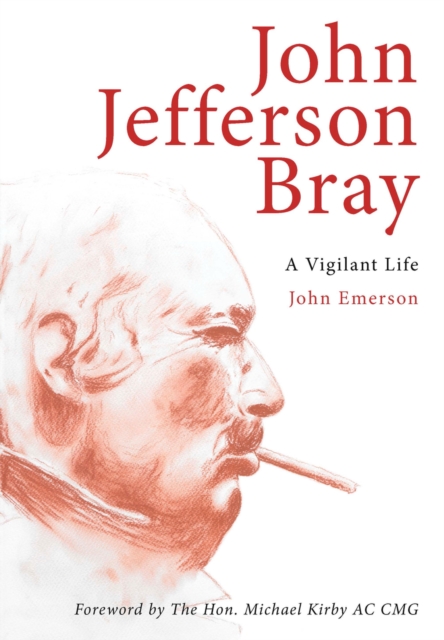
John Jefferson Bray
In March 1967, South Australian Premier Don Dunstan appointed his State's most outstanding barrister as Chief Justice: John Jefferson Bray. In public, Bray's appointment brought barely a ripple, but in the murky urban waters of Adelaide's corridors of power, this decision unleashed waves of outrage and bitter revenge seeking. After his successful defense of Rupert Murdoch's News in 1960 in a seditious libel case, John Jefferson Bray made a powerful enemy who coveted the position that Chief Justice Bray would come to hold; an enemy who would then ruthlessly target Bray's unconventional private life. Conditions would eventually lead to the sacking of a police commissioner, the resignation of Dunstan, and the early retirement of Bray. This is the story of an extraordinarily gifted man whose judicial writings continue to be cited across the Commonwealth and who was determined to defend not only his own natural right to a private life, but that of all citizens. As the Honorable Michael Kirby relates in his Foreword, \"the abuse of power, recorded in those pages, stands as a warning to us.\" *** This biography...unravel(s) the puzzle of how such a gifted legal scholar, advocate and judge could, at the same time, live a life that so outraged the orthodox expectations that ascended upon him. - From the Foreword by the Hon. Michael Kirby AC CMG *** \"What a fascinating life! What a gripping book! Yes, I did select the word 'gripping' to describe the life of the Chief Justice of an Australian state, South Australia. Not only by reason of the fact that the highest levels of the police apparatus were apparently involved in opposing his nomination in 1967, but as a result of the maintenance of active surveillance files touching upon his person and activities for years to come. His biographer succeeds in demonstrating that such oversights represent a major threat to judicial independence but the ultimate value of this book is presenting the life and thoughts of a truly great man whose ideas ought to continue to influence contemporary jurisprudence.\" -- Justice Gilles Renaud, Ontario Court of Justice, Provincial Judges' Journal, Winter 2016 (Series: Biography) [Subject: Biography, Australian Studies, Politics, Legal History]
eBook


EMERSON IN HIS PRIME `IN THE APPARENT CHAOS OF NATURE HE FOUND ORDER ABOUNDING
First, Thoreau-\"A Life of the Mind\" (1986). Now, Emerson-\"The Mind on Fire.\" Never mistake Robert Richardson's intentions. He is not making mere courtesy calls on illustrious Concordians. He comes as a headhunter, determined to take possession of the intellects of his subjects. His goal as a biographer is not to glamorize but to anatomize, and if his Emerson is more accessible than his Thoreau, that betokens not alteration of method but the contrasting temperaments of his subjects. Emerson was more open emotionally, more social. To give the pertinent years a frame, Richardson tells us that Emerson, a year after his young bride's death in 1831, came to terms with his loss by opening her coffin and viewing her moldering remains. Twenty-five years later, he replenished his awareness of the transiency of human existence by opening the coffin of his \"hyacinthian\" son, Waldo, dead then 10 years. With these coffin episodes Richardson recollects Melville's Ishmael, saved by coffins at beginning and end of his voyage. Emerson, who grew up in the heart of Boston, was out of college before, at Aunt Mary [Moody Emerson]'s behest, he thought of consorting with Nature. He at once made amends. At the heart of his first book, \"Nature,\" Richardson finds the \"closely observed natural world.\" Yet, soon after, we find Emerson deploring the scant harvest of ideas-\"the poor chupes and berries I find in my basket after endless and aimless rambles in woods and pastures\"-that his pursuit of Nature had brought him. This dearth did not persist. In the apparent chaos of Nature he found order abounding. Fact and observation, opening his mind to science, anchored his thought in the real world.
Newspaper Article

To Battle for God and the Right
Emerson Opdycke, a lieutenant with the 41st Ohio Infantry and later a commander of the 125th Ohio Volunteer Infantry, won fame at the Battle of Franklin when his brigade saved the Union Army from defeat. He also played pivotal roles in some of the major battles of the western theater, including Chickamauga, Chattanooga, and Missionary Ridge. _x000B__x000B_Opdycke's wartime letters to his wife, Lucy, offer the immediacy of the action as it unfolded and provide a glimpse into the day-to-day life of a soldier. Viewing the conflict with the South as a battle between the rights of states and loyalty to the Union, his letters reveal his dislike of slavery, devotion to the Union, disdain for military ineptitude, and opinions of combat strategies and high-ranking officers. A thorough introduction by editors Glenn V. Longacre and John E. Haas and a foreword by Peter Cozzens provide additional historical context and biographical information.
eBook

Religion and American politics : from the colonial period to the present
How do religion and politics interact in America? How has that relationship changed over time? Why have American religious and political thought sometimes developed along a parallel course while at other times they have moved in opposite directions? These are among the many questions addressed in this volume. Originally published in 1990 as Religion and American Politics: From The Colonial Period to the 1980s, this book offers a survey of the relationship between religion and politics in America. It features scholars including Richard Carwardine, Nathan Hatch, Daniel Walker Howe, George Marsden, Martin Marty, Harry Stout, John Wilson, Robert Wuthnow, and Bertram Wyatt-Brown. Since its publication, the influence of religion on American politics—and, therefore, interest in the topic—has grown exponentially. For this new edition, the editors offer a completely new introduction, and have also commissioned several new pieces, eliminating those that are now out of date. The resulting book offers a historically grounded approach to one of the most divisive issues of our time.
eBook
A Shavian tapestry Michael Holroyd's monumental life of GBS reaches its conclusion
Having already published two volumes of his epic biography of George Bernard Shaw, Michael Holroyd found his subject already 63 years old when he began the final volume, \"Bernard Shaw: The Lure of Fantasy.\" That fact can have occasioned him no dismay. Shaw was to remain a dynamic presence on the world scene for another 32 years. In that span he brought out a succession of masterpieces-\"Heartbreak House\" (\"Behold my Lear\"), \"Back to Methuselah\" (\"my Ring\"), the \"Intelligent Woman's Guide to Socialism\" (\"my magnum opus\"), and \"St. Joan,\" which brought him the Nobel Prize. Another dozen plays followed, even as he re-edited his collected works for their Standard Edition and rescripted seven plays for the movies. While this went on he girdled the globe, assessed the changing political scene as he went and recast friendships that had fallen vacant. At 82, Shaw assured H.G. Wells, \"I seem to have dried up at last; I am absolutely barren.\" But a week after his 86th birthday he began writing plays again. At 93, he lamented, \"the days pass like a flight of arrows.\" Yet new projects still engrossed him. His final play was written in 1950, in a single week, when he was 95. \"My God, what women,\" said an exultant Robert Louis Stevenson on first seeing a Shaw play. Athletic grip, bounding pulse, bossiness, arrogance were hallmarks of the Shavian woman. She exemplified the Life Force that GBS not only celebrated but also personally manifested. Wherever Shaw went he grabbed the headlines. That was as intended. \"Whenever you meet someone more important than you are,\" he told an aspiring youth, \"disagree with him and, if possible, insult him.\" Direct, purposeful, he gave sentiment no quarter. Yet, forward as he was, he spoke without malice or vituperation. \"Only twice,\" said Blanche Patch, his secretary during his last 30 years, \"did he ever lose his temper with me.\" Yet she heard no words of praise from him either.
Newspaper Article