
Catalogue Search | MBRL


Are you sure you want to remove the book from the shelf?

{{itemTitle}}
52
result(s) for
"Emmer, Pieter C"
Sort by:

Barriers Instead of Bridges: The Developed World and Intercontinental Migration
In this article I discuss intercontinental migration during the early modern period. The discovery of the New World sparked a large-scale movement lasting more than four centuries. Before 1800, only 2 to 3 million Europeans availed themselves of the opportunity to move to the New World. Colonial powers, therefore, turned to Africa and transported about 11.5 million slaves to America. After 1850 and the gradual abolition of slavery, the migration of Europeans increased dramatically, but these migrants avoided the former slave regions. Some areas therefore resorted to the importation of Asian indentured labourers, mainly from British India.
Journal Article
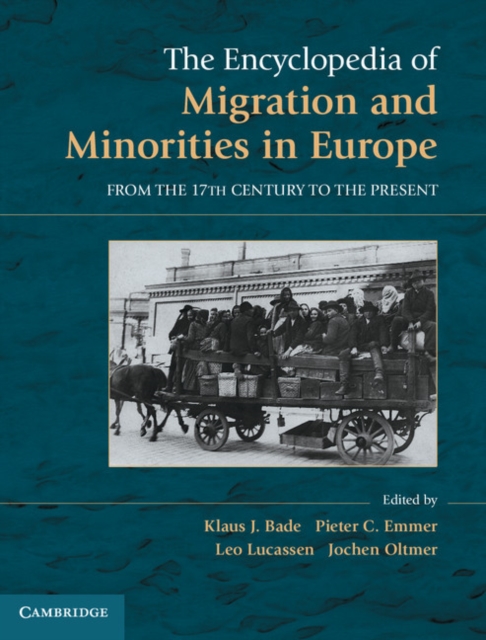
The encyclopedia of migration and minorities in Europe : from the 17th century to the present
\"Although migration and integration have become important concepts today as a result of globalization, migration movements, integration, and multiculturalism have always been part of the history of Europe. Few people realize how many ethnic groups participated in migration within Europe or into Europe and this ignorance has grave consequences for the social and political status of immigrants. Newly available to an English-speaking audience, this encyclopaedia presents a systematic overview of the existing scholarship regarding migration within and into Europe. The first section contains survey studies of the various regions and countries in Europe covering the last centuries. The second section presents information on about 220 individual groups of migrants from the Sephardic Jews emigration from Spain and Portugal in the sixteenth and seventeenth centuries to the present-day migration of old-age pensioners to the holiday villages in the sun. The first resource of its kind, The Encyclopaedia of Migration is a comprehensive and authoritative research tool\"--
eBook

The Rise and Decline of the Dutch Atlantic, 1600–1800
The Dutch Republic has sometimes been coined “a miracle.” It stood out among the nations of the world because of its large trading empire in Europe, Asia and the Atlantic. Around 1650, the Dutch share in world trade might well have been larger than that of any other nation in Europe and, indeed, in the world. Over time, however, the Dutch were surpassed by their rivals, notably Britain and France, countries with more people and money in addition to their superior military and naval might. In retrospect, it seems a miracle indeed that the Dutch were able to build such
Book Chapter


The Encyclopedia of European Migration and Minorities
Although migration and integration have become important concepts today as a result of globalization, migration movements, integration, and multiculturalism have always been part of the history of Europe. Few people realize how many ethnic groups participated in migration within Europe or into Europe and this ignorance has grave consequences for the social and political status of immigrants. Newly available to an English-speaking audience, this encyclopaedia presents a systematic overview of the existing scholarship regarding migration within and into Europe. The first section contains survey studies of the various regions and countries in Europe covering the last centuries. The second section presents information on about 220 individual groups of migrants from the Sephardic Jews emigration from Spain and Portugal in the sixteenth and seventeenth centuries to the present-day migration of old-age pensioners to the holiday villages in the sun. The first resource of its kind, The Encyclopaedia of Migration and Minorities in Europe is a comprehensive and authoritative research tool.
eBook

Scholarship or solidarity? The post-emancipation era in the Caribbean reconsidered
[First paragraph]From a reading of Michael Craton's (1994) recent contribution to this journal on slave emancipation in the Bahamas, one is struck by two things. First, we have come a long way in the historical study of slavery compared with the analysis of the post-emancipation period. Over the past thirty years we have amassed a mountain of materials covering virtually all aspects of the system of slavery. As a consequence we have been able to reach a large degree of consensus on slavery in the U.S. South, the Caribbean, and Brazil. Of course, certain differences of interpretation remain. For example, we still have not solved all the riddles on issues such as the demographic decline of the slave populations in the tropical regions of the New World or the survival of African norms and values in these parts.
Journal Article