
Catalogue Search | MBRL


Are you sure you want to remove the book from the shelf?

{{itemTitle}}
120
result(s) for
"Eng, Patricia"
Sort by:

Phenotypic manifestations of copy number variation in chromosome 16p13.11
The widespread clinical utilization of array comparative genome hybridization, has led to the unraveling of many new copy number variations (CNVs). Although some of these CNVs are clearly pathogenic, the phenotypic consequences of others, such as those in 16p13.11 remain unclear. Whereas deletions of 16p13.11 have been associated with multiple congenital anomalies, the relevance of duplications of the region is still being debated. We report detailed clinical and molecular characterization of 10 patients with duplication and 4 patients with deletion of 16p13.11. We found that patients with duplication of the region have varied clinical features including behavioral abnormalities, cognitive impairment, congenital heart defects and skeletal manifestations, such as hypermobility, craniosynostosis and polydactyly. These features were incompletely penetrant. Patients with deletion of the region presented with microcephaly, developmental delay and behavioral abnormalities as previously described. The CNVs were of varying sizes and were likely mediated by non-allelic homologous recombination between low copy repeats. Our findings expand the repertoire of clinical features observed in patients with CNV in 16p13.11 and strengthen the hypothesis that this is a dosage sensitive region with clinical relevance.
Journal Article
Navigating the Minefield
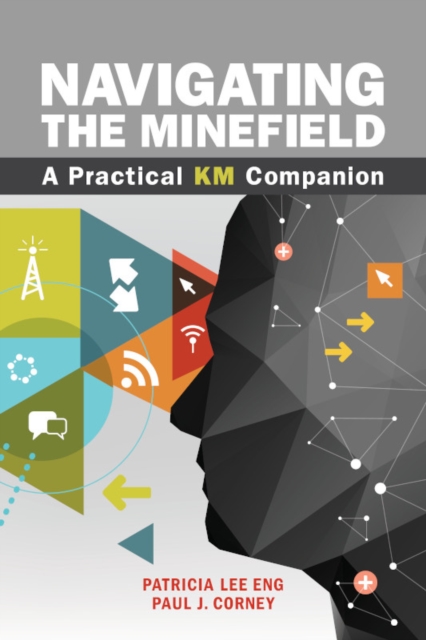
This book was written for anyone who is interested in using their knowledge more effectively to optimize operations. This knowledge can be their own, that of the teams in which they work, or the knowledge of the wider communities and teams in which they participate. Whether you are a recently appointed knowledge management (KM) staffer, an experienced KMer' who feels stagnant and stuck, or a senior manager with KM oversight responsibility looking for ways to improve the use of knowledge in your organization, this book was written for you. It is based on interviews with individuals who have created and managed successful KM programs around the world. The authors examine and analyze diverse KM programs and tactics, using quotes, insights, and stories to show why these programs are successful and how they improve both knowledge capture and knowledge flow. The book examines 19 KM programs, including those at Airbus, ARUP, Cadbury Schweppes, Hewlett Packard (HP), the International Center for Tropical Agriculture, (CIAT), Lloyds Register Marine, NASA, MPM PETRONAS, U.K. National Health Service Digital, and the U.S. Army. Praise for Navigating the Minefield: Having worked with Paul both in person and at workshops across the globe, I've found him to be an incredibly insightful individual. Paul has the rare ability to bridge varying points of view within a room, find the commonality, and carry the debate forward through insight and ingenuity. Patricia's experience working through the U.S. Nuclear Regulatory Commission is a fascinating read, and draws the depth of both knowledge management and an engineering background to the fore. This combination is felt throughout the read, and the incredible experience and expertise both Patricia and Paul bring is felt throughout the pages. The breadth of scope covered is truly compelling, illustrating not just innovative approaches towards cost savings and efficiencies from an organizational knowledge sharing sense, but also quality of life, quality of culture, and in a very literal sense, saving lives as illustrated through narrative regarding the U.S. Army. Navigating the Minefield is a fascinating read, and a must for the global knowledge professional. Eric HunterbrDirector of Knowledge, Technology, Innovation Strategies, Bradford Barthel, LLPRand Executive Director, Spherical Models, LLC Whether you are starting out in KM or have more KM experience, there is something for you in this KM companion. Some of the ideas were new to me and I found much to inspire my own KM efforts. It's good to learn lessons from other KMers, learning from both good and bad KM experiences. What I like about this companion is that it has a range of realistic up-to-date examples both on how to start KM in an organisation and also how to sustain KM. The examples are drawn from 19 KM programmes from diverse organisations, from government and industry sectors from across the world, and provide great stories to encourage KM in organisations. There are useful anecdotes that you can reuse to sell KM in your organisation. Karen McFarlaneCILIP Trustee, CILIP Board ChairFormer UK Government Head of Profession for Knowledge and Information ManagementBooks purporting to educate on the multi-dimensional subject of knowledge management often tend to polarise, over-emphasising the near-religious philosophical aspects of the discipline or over-engineering the technology driven tools and techniques. Eng and Corney have approached the subject from a practical perspective, looking through a selection of concise case studies for what works and what does not across an array of organisations worldwide. That their subject matter comes from multiple sectors across an international pool of organisations with clear multicultural challenges makes the stories documented that much more interesting and useful. As someone who set up the first massively successful knowledge management functions at one of the world's most prominent but risk-averse global financial institutions in its 150-year history, the challenges documented by Eng and Corney and their resolution recommendations resonate. As someone who now has to craft global business strategies by relying on the mature KM solutions of one of the world's most successful consulting firms, the pain points and road blocks highlighted make perfect sense. A quick and easy read, Navigating the Minefield is not a tome meant to outdo War and Peace, but rather is an easy read and a handy reference guide to everyday KM practitioner problems and practical, implementable solutions. A copy of it will sit within easy reach on my desk. Larry CampbellbrHead of Financial Services Strategy, KPMGFormer Group Chief Knowledge Officer, HSBC I first met Patricia Eng when she was describing her KM program at the NRC at KM World in 2009 and was blown away by her candor, her common sense, and her ferocious determination to deliver value. I have worked with Paul Corney on numerous occasions and have always been impressed by his ability to take a strategic, balanced view, followed by an unerring ability to get to the heart of the matter. KM practitioners go deep, KM consultants go broad. When you get an alliance between the two, and then add their formidable personal networks, you get something quite extraordinary. This is an unparalleled distillation of learning and wisdom from multiple continents and organisation types, on how to go about implementing KM. It should be required reading for KM practitioners (and consultants), those who are new and those who want to reflect on their practice. Patrick LambePartner, Straits Knowledge Whether you are new to knowledge management or a seasoned KMer, Navigating the Minefield is an absolute must-read. Chockablock with time-tested techniques and sage advice, this book simplifies the rather complex domain of managing organizational knowledge. Unlike many books in the field, Navigating the Minefield offer solutions that will work in practice, and not just in theory! John P. Girard, Ph.D. Peyton Anderson Endowed ChairMiddle Georgia State University
eBook
Phenotypic spectrum and genotype–phenotype correlations of NRXN1 exon deletions
Copy number variants (CNVs) and intragenic rearrangements of the NRXN1 (neurexin 1) gene are associated with a wide spectrum of developmental and neuropsychiatric disorders, including intellectual disability, speech delay, autism spectrum disorders (ASDs), hypotonia and schizophrenia. We performed a detailed clinical and molecular characterization of 24 patients who underwent clinical microarray analysis and had intragenic deletions of NRXN1. Seventeen of these deletions involved exons of NRXN1, whereas seven deleted intronic sequences only. The patients with exonic deletions manifested developmental delay/intellectual disability (93%), infantile hypotonia (59%) and ASDs (56%). Congenital malformations and dysmorphic features appeared infrequently and inconsistently among this population of patients with NRXN1 deletions. The more C-terminal deletions, including those affecting the β isoform of neurexin 1, manifested increased head size and a high frequency of seizure disorder (88%) when compared with N-terminal deletions of NRXN1.
Journal Article

Deletions in chromosome 6p22.3-p24.3, including ATXN1, are associated with developmental delay and autism spectrum disorders
Interstitial deletions of the short arm of chromosome 6 are rare and have been associated with developmental delay, hypotonia, congenital anomalies, and dysmorphic features. We used array comparative genomic hybridization in a South Carolina Autism Project (SCAP) cohort of 97 subjects with autism spectrum disorders (ASDs) and identified an ~ 5.4 Mb deletion on chromosome 6p22.3-p23 in a 15-year-old patient with intellectual disability and ASDs. Subsequent database queries revealed five additional individuals with overlapping submicroscopic deletions and presenting with developmental and speech delay, seizures, behavioral abnormalities, heart defects, and dysmorphic features. The deletion found in the SCAP patient harbors
ATXN1
,
DTNBP1
,
JARID2
, and
NHLRC1
that we propose may be responsible for ASDs and developmental delay.
Journal Article

The making of a KM Cookbook
\"Navigating the Minefield: A Practical KM Companion\" (Paul Corney and Patricia Eng's book) had just been released to critical acclaim, and Chris Collison and Corney were talking about one of its key observations: the lack of any governing principles, an industry body or a globally recognized accreditation/certification, for Knowledge Management. In December 2017, following the general release of the draft of ISO 30401, Collison and Corney sat down to discuss comments Collison had made on the draft. After a while, it became clear both shared a view that the ISO KM Standard was a great topic around which to base a book. Not a book that promises to help the reader 'pass' an assessment, more one that draws on great examples from leading global organizations and highlights aspects from their KM Programs others might find inspirational. One that is conversational in style and follows a similar format to \"Navigating ...\" and Collison's bestselling \"Learning to Fly\", often cited as the book to read on practical KM.
Journal Article

Effects of marital transitions on changes in dietary and other health behaviours in US male health professionals
Study objective: To examine the effect of change in marital status on health behaviours among men. Design: Longitudinal study of repeated measures of marital status and health behaviours collected at four year intervals (1986–90; 1990–94). Setting: US male health professionals. Participants: 38 865 men aged 40–75 in 1986. Main results: Relative to men who stayed married over four years, men who became widowed increased their alcohol consumption. Men who become divorced or widowed experienced decreases in body mass index. Compared with men who remained unmarried, men who remarried exhibited increases in body mass index along with decreased physical activity. Becoming divorced or widowed was associated with decreased vegetable intake while remarriage was linked to greater consumption. Conclusions: Marital termination may adversely affect health and dietary behaviours among men.
Journal Article
