
Catalogue Search | MBRL


Are you sure you want to remove the book from the shelf?

{{itemTitle}}
59
result(s) for
"Ennaji, Moha"
Sort by:

Women, Gender, and Politics in Morocco
This article analyzes the intersection of gender, women’s activism, and political participation in Morocco in a socio-political approach. The emergence of women’s activism is an answer to the gender-based discrimination in the country. Women’s non-government organizations (NGOs) struggle for women’s rights and participate actively in the feminization and democratization of the public sphere to ensure sustainable development. They create progressive social change through the mobilization and participation of women. The role of women’s NGO’s (liberal and Islamic alike) in the struggle against gender inequalities is remarkable in regard of their efforts to consolidate democracy and social justice and to challenge traditional thinking and inequitable, oppressive, undemocratic, sexist practices of governance. Despite the different approaches, they act together to achieve women’s rights in a variety of places.
Journal Article
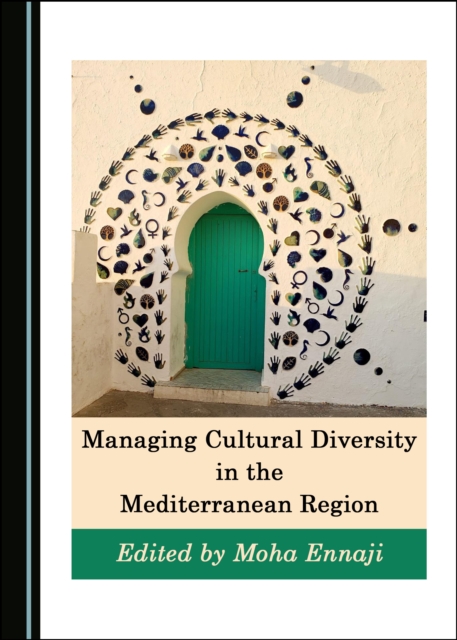
Managing Cultural Diversity in the Mediterranean Region
This book highlights the various cultures and religions of Mediterranean countries, and discusses issues related to managing diversity and minority rights, and the role of intercultural and interreligious dialogue. It centers on the interconnectedness between culture, politics, religion, gender, race, migration, and language. To promote a fruitful exchange, the volume considers approaches that integrate social, economic, cultural, religious and political dimensions, and surveys the theoretical, methodological and practical aspects of multiculturalism. The contributions gathered here also debate issues relating to history, modernity, cultural specificities of the region, and their role in the consolidation of peace, democracy, social justice, and development. The book uses an analytic framework coupled with a synthetic method, while providing a roadmap to achieve a better management of pluralism in the Mediterranean area, which will help different populations to live together in harmony and to continue their battle for broadmindedness, acceptance, and coexistence.
eBook
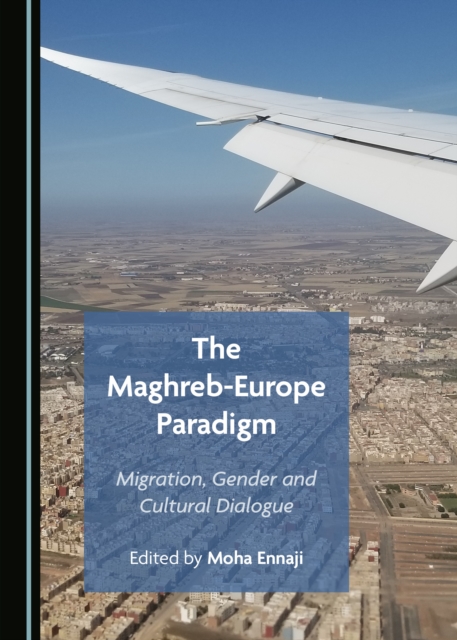
The Maghreb-Europe Paradigm
This book discusses the current socio-cultural situation of North African migrants in Europe, and analyzes migration, gender, and identity in their multiple dimensions, consequences and expressions, which range from sociological approaches to culture and literature. The chapters debate the topic of migration and culture from various angles, making this volume a forum where notions of dispossession, cultural identity, and otherness are debated. It comprises contributions that range in subject matter from sociological and anthropological studies of Maghrebi diaspora and migrants in Europe to reflections on transnational literature. It is an analysis of migration with all its complex aspects, and multiple expressions of 'exile', 'otherness', and 'pain'.
eBook

Logistical tools for refugees and undocumented migrants: smartphones and social media in the city of Fès
This article reports findings from fieldwork and analyses the impact of mobile technologies and social media on increasing migration flows in Morocco, particularly in the city of Fès. The role of smartphones as a means to support the use of maps, global positioning apps and the use of social media like Facebook and WhatsApp have become essential tools for refugees and undocumented migrants. This article focuses on these logistical aspects, intended as constantly changing adaptations between life-forms and interactions with the social, political and economic conditions to which migrants are exposed. Logistics is understood as the nexus between migrants and these various logistical tools, influencing their mobility and identities, as well as modifying the organisation of communities and cities (of provenance, transit and destination).
Journal Article

New Horizons of Muslim Diaspora in Europe and North America
This book provides insights into some of the social topics related to the homogenization and stereotyping of Muslims. It explores the experiences of Muslims in Western societies, with a particular focus not only on gender, home and belonging, multiculturalism, and ethnicity.
eBook
New horizons of Muslim diaspora in North America and Europe
This book provides insights into some of the social topics related to the homogenization and stereotyping of Muslims. It explores the experiences of Muslims in Western societies, with a particular focus not only on gender, home and belonging, multiculturalism, and ethnicity.
eBook

Gender and Violence in the Middle East
This book explores the relationship between Islamism, secularism and violence against women in the Middle East and North Africa. Drawing on case studies from across the region, the authors examine the historical, cultural, religious, social, legal and political factors affecting this key issue.
Chapters by established scholars from within and outside the region highlight:
the interconnections of violence and various sources of power in the Middle East: the state, society, and the family
conceptions of violence as family and social practice and dominant discourse
the role of violence as pattern for social structuring in the nation state.
By centring the chapters around these key areas, the volume provides an innovative theoretical and systematic research model for gender and violence in the Middle East and North Africa. Dealing with issues that are not easily accessible in the West, this book underlines the importance of understanding realities and problems relevant to Muslim and Arab societies and discusses possible ways of promoting reforms in the MENA region. As such it will be of great interest to students and scholars of gender studies, sociology, political science and criminal justice.
eBook

