
Catalogue Search | MBRL


Are you sure you want to remove the book from the shelf?

{{itemTitle}}
45
result(s) for
"Esmail, Ashraf"
Sort by:

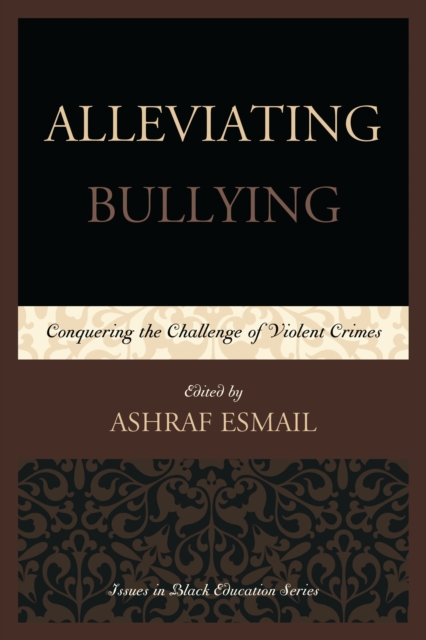
Alleviating bullying
Alleviating Bullying examines the facets of bullying that have become a major concern around the nation. This book explores the impact of bullying on teachers, students, the elderly, prisoners, and other socio-economic groups. This book also identifies warning signs of bullying and provides suggestions on how to alleviate bullying. The book provides deeper insight into the harmful effects of bullying and what a victim can do to prevent bullying behaviors and further victimization.
eBook
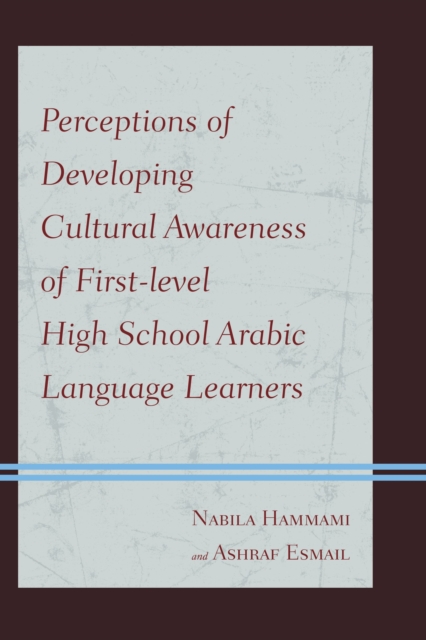
Perceptions of developing cultural awareness of first-level high school arabic language learners
This book analyzes how Arabic teachers develop the cultural awareness of their high school students. Featuring face-to-face conversations with educators about integrating Arabic culture into the language classroom, this study highlights the complexities that characterize Arabic cultural awareness in a post-9/11 world. This book proves that increasing cultural awareness in the classroom facilitates the Arab language learning process.
eBook

Oh, It's Like CSI
\"Oh, it's like CSI...\": A Qualitative Study of Job Satisfaction Experiences of Forensic Scientists goes beyond the glamorous portrayals of CSI professionals on television to highlight the real sources of job satisfaction among forensic scientists.
eBook
Savage sand and surf
A multi-faceted examination into one of the most recent natural disasters in the United States. Scholars from multiple disciplines address a wide range of important aspects of this event, including unique meteorological and social impacts of Sandy, Sandy's intersection with vulnerable social groups in society, and society institutions' adaptations to the disaster. Also, different theoretical models of disasters are explored and applied to better understand and prepare for similar events in the future. -- cover.
eBook
Perspectives on diversity, equity, and social justice in educational leadership
Perspectives on Diversity, Equity, and Social Justice in Educational Leadership provides educational leaders with practical steps for implementing multicultural education into schools. Drawing from multicultural scholars like James Bank’s it equips educational leaders with the knowledge, skills, and dispositions to ensure that schools provide all students with equal educational opportunities. Concepts such culturally responsive leadership, transformative leadership, and restorative justice are discussed throughout the book.
eBook

Understanding Motivational Career Choices of African American Criminal Justice Students
Although research on the negative relationship between African Americans and the criminal justice system has been well documented over the past two decades, researchers have inadequately addressed why African Americans choose a career in the criminal justice field despite this negativity. This phenomenological study was designed to explore the motivations guiding career choice of African American college students enrolled in 2-year and 4-year criminal justice programs. Five males and one female, all within one year of graduating from their program and entering the field, participated. In one-on-one interviews the students responded to a series of 12 semistructured, open-ended questions encompassing their lived experiences with racism and discrimination, identifying the influences for career choice, personal perspectives of the criminal justice system, and expectant career goals. Data analysis revealed four themes: living with racism, career choice influences, racism in criminal justice, and cultural education leads to change based on student responses, specifically with each of the study’s participants unexpectedly reporting to having negative experiences with the criminal justice system as their primary career choice motivation. Critical race and symbolic interactionism theories provided a framework in understanding how these six students’ perceptions of their ethnic identities and lived experiences with racism and discrimination impacted their career choices. Future extensive, qualitative research on the criminal justice career choice made by African American college students will provide a clearer understanding for educators and administrators. This may also provide the foundation for meaningful changes being made in the criminal justice system with regards to cultural sensitivity.
Journal Article
Sworn to Protect
Police abuse is the purposeful practice of unwarranted coercion, frequently physical, but potentially in the form of verbal assaults and psychological intimidation, by police which, constitutes abuse and official misconduct. Police brutality is a grievous form of crime done by the police hired to be prevent the crime itself. The use of force may be judged necessary or excessive depending on whether it was determined to be legitimate under the circumstances to fulfill the police duty (Kania & Mackey, 1977). The media has focused like a laser on the racial divides in the U. S. sparked by the deaths of young African Americans (i.e., Michael Brown in Fergusson, Missouri, Eric Garner, NYC, Oscar Grant in California and Sandra Bland in Texas and many others at the hands of cops with dubious use of force. (Edwards, 2016; Khaleeli, 2016). These deaths lead ultimately to an activists group, ‘Black Lives Matters’. According to FBI statistics, African-Americans represented 31 percent of all shooting victims by police while representing 13 percent of all U. S, inhabitants according to Grochowski & Gabrielson (2014, October 10). Approximately 50 percent of the 14,800 police agencies do not report police involved homicide statistics to the FBI - UCR. This is quite distributing considering that 175 Black males were shot and killed by police since January, 2015. Black’s males represent six percent of the population and 40 percent of victims of police shooting incidents.
Journal Article
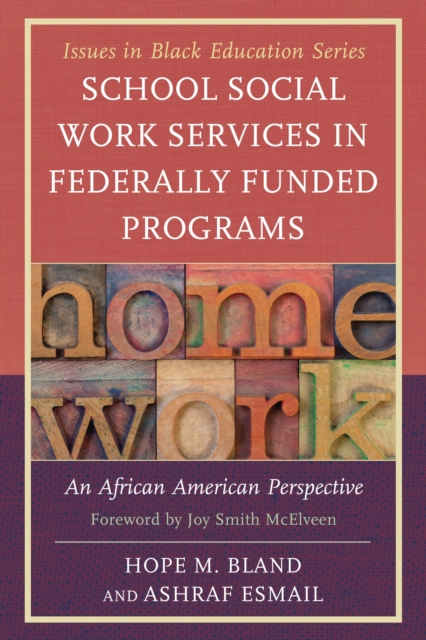
School social work services in federally funded programs : an African American perspective
This book identifies the barriers between social work intervention in education and government-funded programs that impact African American students. The chapters approach these issues from a child-centered perspective, which has proven critical in developing positive and sustainable relationships with African American students. As children begin to understand more about their lives and the world around them, they also develop opinions that help them identify who they are as individuals and where they see themselves in the world. From a qualitative research methodology approach, trust has been identified as a fundamental factor and potential barrier among all variables acknowledged. Interviews with ten African American high school and college students were conducted to discuss their perspectives on education, family life, peer interaction, and social work intervention.
eBook
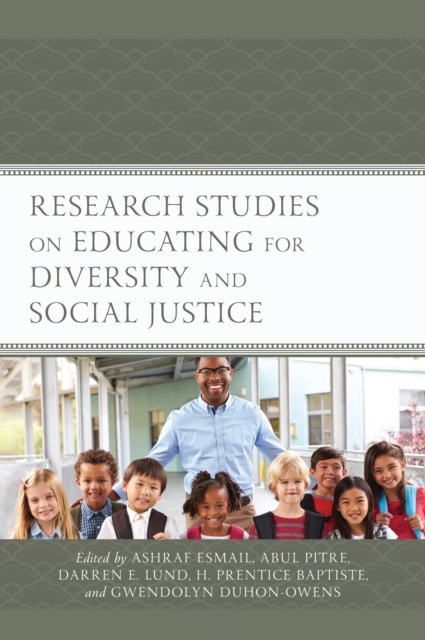
Research studies on educating for diversity and social justice
In the 21st century, issues around diversity and social justice have become popular buzz words in the educational discourse. This volume moves beyond “popular buzz” to critically explore issues of diversity and social justice through research studies that capture the complexity of educating in the 21st century. Drawing from a wide range of topics such as race, gender, sexual orientation, social class, language, parental involvement and special needs along with other issues; this volume pushes the boundaries of exploring diversity and social justice through the lens of intersectionality. It will be helpful for scholars and practitioners seeking to transform the educational experiences of historically underserved students.
eBook