
Catalogue Search | MBRL


Are you sure you want to remove the book from the shelf?

{{itemTitle}}
2,526
result(s) for
"Estes, Richard"
Sort by:


The Social Progress of Nations Revisited
Social progress and well-being throughout the world has arrived at a critical turning point. Following decades of social losses among the world’s poorest developing countries of Africa, Asia and Latin America, the majority of these and other nations now are experiencing significant social gains. Using the Weighted Index of Social Progress (WISP18), the author traces the net social gains and social losses experienced by most the world’s nations over a 50-year time, ranging from 1970 to the present. The data reported draw on the author’s extensive data base of historical and contemporary social indicators and links the current study to his and other reports of social progress and well-being that have been published this period. Data are reported at four levels of analysis, i.e., that of the world-asa-whole, regional (continental) data, subregional data using the preceding and, finally, for selected countries for which the changes have been most remarkable. The net social gains on the WISP18 and earlier version of the WISP portray very positive outcomes for the 162 countries included in the study (representing 95% of the world’s total population) for both the near- and long-term.
Journal Article

Global Advances in Quality of Life and Well-Being
This paper documents global progress in human well-being since the end of World War II and, more specifically, since 1950. The paper focuses on the transformative changes in quality of life that have occurred over this period in four of the most critical sectors of well-being: the health, education, economic, and welfare sectors. We also consider the significant impact that changes in the natural environment have and continue to make on humanity. In all five sectors we also identify what we regard as the underlying “drivers” that have made these transformative changes in the human condition possible and suggest how the strength of these changes can be expected to contribute to the further enhancement of quality of life and well-being over at least the near term. In pursuing these objectives, we argued in favor of adopting a more positive view with respect to the advances in quality of life and well-being that have taken place since 1950.
Journal Article
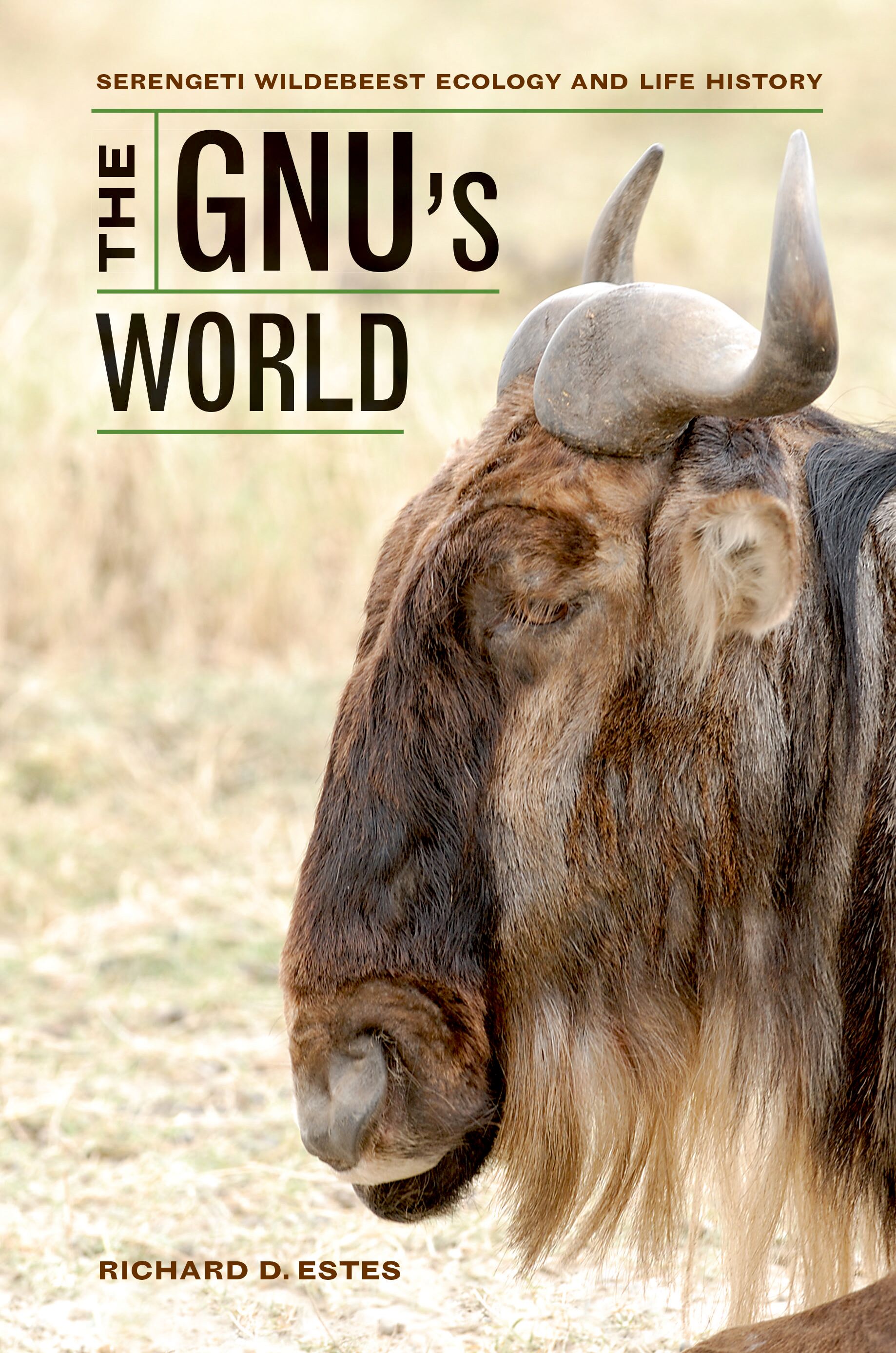
The gnu's world
This is the first scholarly book on the antelope that dominates the savanna ecosystems of eastern and southern Africa. It presents a synthesis of research conducted over a span of fifty years, mainly on the wildebeest in the Ngorongoro and Serengeti ecosystems, where eighty percent of the world's wildebeest population lives. Wildebeest and other grazing mammals drive the ecology and evolution of the savanna ecosystem. Richard D. Estes describes this process and also details the wildebeest's life history, focusing on its social organization and unique reproductive system, which are adapted to the animal's epic annual migrations. He also examines conservation issues that affect wildebeest, including range-wide population declines.
eBook
The Global Challenge of Jihadist Terrorism
What makes some Muslims in identifiable regions of the world accept Jihadism and, more particularly, Jihadist terrorism as a solution to domestic social, economic, and political problems? We attempt to answer this question using a sample of 32,604 Muslims from 26 countries surveyed in 2011–2012 by the Pew Research Center’s Forum on Religion & Public Life. We hypothesized that many Muslims believe that Jihadist terrorism is an acceptable solution to national, regional, and global social problems such as political corruption, recurrent crime, inter-generational poverty, diversity-related social conflict, widespread joblessness and under-employment that pervade many Islamic nations. This belief is determined by attributing blame for recurrent national problems to Western powers and to their overly powerful cultural and political influence in Islamic societies but, especially those that until recently, were colonies of major European powers. National problems blamed on Western influence, in turn, result in a high sense of national ill-being, which in turn is influenced by low levels of subjective well-being (or subjective ill-being). We also hypothesized that certain effects associated with political militancy, including the willingness to engage in acts of terrorism, are moderated by a sense of economic ill-being and by a fervent sense of Muslim religiosity among the strongest believers in each society. The study results reported in this paper are mostly supportive of these hypotheses. The public policy implications of the findings reported herein are discussed throughout the paper as well.
Journal Article

Combatting Jihadist Terrorism: A Quality-of-Life Perspective
Many scholars and commentators have written on ways to counteract acts of terrorism initiated by Islamist militants associated with Jihadist groups operating predominantly in the Middle East and North Africa Region (hereafter the MENA region). Most of what has been published in the academic literature with respect to slowing, eventually stopping, the rate of Islamist-inspired terrorism has focused on short-term public safety solutions to the problem. In this paper, we build a quality-of-life model to address the drivers of Jihadist terrorism and deduce the underlying factors that contribute to counterterrorism programs directly from our understanding of these drivers. Specifically, we provide suggestive evidence to show increased incidence of Jihadist terrorism is mostly motivated by increased negative sentiment of aggrieved Muslims toward their more affluent Western neighbors. This negative sentiment is influenced by a host of quality-of-life factors:
economic ill-being factors
(e.g., income disparities, poverty, and unemployment; and disparities in technological innovation),
political ill-being factors
(e.g., authoritarian tribal and exclusionary regimes),
religious ill-being factors
(e.g., increased Islamic religiosity, and lack of secularism),
globalization and media ill-being factors
(e.g., the global media), and
cultural ill-being factors
(e.g., perceived decadence of Western culture, and Western prejudice and discrimination). More effective counterterrorism strategies are deduced directly from understanding how these quality-of-life factors influence increased incidence of Jihadist terrorism.
Journal Article
World Social Situation: Development Challenges at the Outset of a New Century
World social development has arrived at a critical turning point. Economically advanced nations have made significant progress toward meeting the basic needs of their populations; however, the majority of developing countries have not. Problems of rapid population growth, failing economies, famine, environmental devastation, majority-minority group conflicts, increasing militarization, among others, are pushing many developing nations toward the brink of social chaos. This paper focuses on worldwide development trends for the 40-year period 1970-2009. Particular attention is given to the disparities in development that exist between the world's “rich” and “poor” countries as well as the global forces that sustain these disparities. The paper also discusses more recent positive trends occurring within the world's “socially least developed countries” (SLDCs), especially those located in Africa and Asia, in reducing poverty and in promoting improved quality of life for increasing numbers of their populations.
Journal Article