
Catalogue Search | MBRL


Are you sure you want to remove the book from the shelf?

{{itemTitle}}
4
result(s) for
"Evans, Christopher, 1955-"
Sort by:


Romano-British Settlement and Cemeteries at Mucking
Excavations at Mucking, Essex, between 1965 and 1978, revealed extensive evidence for a multiphase rural Romano-British settlement, perhaps an estate center, and five associated cemetery areas (170 burials) with different burial areas reserved for different groups within the settlement. The settlement demonstrated clear continuity from the preceding Iron Age occupation with unbroken sequences of artefacts and enclosures through the first century AD, followed by rapid and extensive remodeling, which included the laying out a Central Enclosure and an organized water supply with wells, accompanied by the start of large-scale pottery production. After the mid-second century AD the Central Enclosure was largely abandoned and settlement shifted its focus more to the Southern Enclosure system with a gradual decline though the 3rd and 4th centuries although continued burial, pottery and artefactual deposition indicate that a form of settlement continued, possibly with some low-level pottery production. Some of the latest Roman pottery was strongly associated with the earliest Anglo-Saxon style pottery suggesting the existence of a terminal Roman settlement phase that essentially involved an ‘Anglo-Saxon’ community. Given recent revisions of the chronology for the early Anglo-Saxon period, this casts an intriguing light on the transition, with radical implications for understandings of this period. Each of the cemetery areas was in use for a considerable length of time. Taken as a whole, Mucking was very much a componented place/complex; it was its respective parts that fostered its many cemeteries, whose diverse rites reflect the variability and roles of the settlement’s evidently varied inhabitants.
eBook
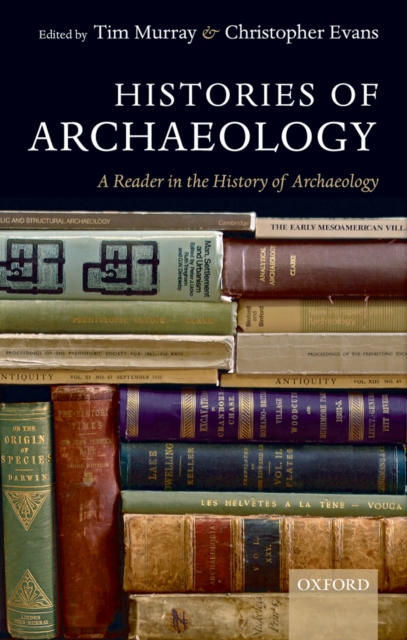
Histories of archaeology : a reader in the history of archaeology
A collection of 19 reprinted papers by distinguished scholars, Histories of Archaeology reflects the growing interest in the historiography of this discipline. A general introduction orients readers by outlining core themes and issues in the field.
eBook

Studies in culture contact : interaction, culture change, and archaeology
People have long been fascinated about times in human history when different cultures and societies first came into contact with each other, how they reacted to that contact, and why it sometimes occurred peacefully and at other times was violent or catastrophic.
Studies in Culture Contact: Interaction, Culture Change, and Archaeology, edited by James G. Cusick,seeks to define the role of culture contact in human history, to identify issues in the study of culture contact in archaeology, and to provide a critical overview of the major theoretical approaches to the study of culture and contact.
In this collection of essays, anthropologists and archaeologists working in Europe and the Americas consider three forms of culture contact—colonization, cultural entanglement, and symmetrical exchange. Part I provides a critical overview of theoretical approaches to the study of culture contact, offering assessments of older concepts in anthropology, such as acculturation, as well as more recently formed concepts, including world systems and center-periphery models of contact. Part II contains eleven case studies of specific contact situations and their relationships to the archaeological record, with times and places as varied as pre- and post-Hispanic Mexico, Iron Age France, Jamaican sugar plantations, European provinces in the Roman Empire, and the missions of Spanish Florida.
Studies in Culture Contact provides an extensive review of the history of culture contact in anthropological studies and develops a broad framework for studying culture contact’s role, moving beyond a simple formulation of contact and change to a more complex understanding of the amalgam of change and continuity in contact situations.
eBook