
Catalogue Search | MBRL


Are you sure you want to remove the book from the shelf?

{{itemTitle}}
201
result(s) for
"Evergates, Theodore"
Sort by:

Geoffroy of Villehardouin, Marshal of Champagne
Geoffroy of Villehardouin, Marshal of
Champagne by Theodore Evergates traces the
remarkable life of Geoffroy of Villehardouin (c. 1148-c. 1217) from
his earliest years in Champagne through his last years in Greece
after the crusade.
The fourth son of a knight, Geoffroy became marshal of
Champagne, principal negotiator in organizing the Fourth Crusade,
chief of staff of the expedition to and conquest of Constantinople,
garrison commander of Constantinople and, in his late fifties,
field commander defending the Latin settlement in the Byzantine
empire against invading Bulgarian armies and revolting Greek
cities. Known for his diplomatic skills and rectitude, he served as
the chief military advisor to Count Thibaut III of Champagne and
later to Emperor Henry of Constantinople.
Geoffroy is remarkable as well for dictating the earliest war
memoir in medieval Europe, which is also the earliest prose
narrative in Old French. Addressed to a home audience in Champagne,
he described what he did, what he saw, and what he heard during his
eight years on crusade and especially during the fraught period
after the conquest of Constantinople. His memoir, The Book of
the Conquest of Constantinople , furnishes a commander's
retrospective account of the main events and inner workings of the
crusade-the innumerable meetings and speeches, the conduct (not
always commendable) of the barons, and the persistent discontent
within the army-as well as a celebration of his own deeds as a
diplomat and a military commander.
eBook

The Aristocracy in the County of Champagne, 1100-1300
Theodore Evergates provides the first systematic analysis of the aristocracy in the county of Champagne under the independent counts. He argues that three factors-the rise of the comital state, fiefholding, and the conjugal family-were critical to shaping a loose assortment of baronial and knightly families into an aristocracy with shared customs, institutions, and identity. Evergates mines the rich, varied, and in some respects unique collection of source materials from Champagne to provide a dynamic picture of a medieval aristocracy and its evolving symbiotic relationship with the counts. Count Henry the Liberal (1152-81) began the process of transforming a quasi-independent baronage accustomed to collegial governance into an elite of landholding families subordinate to the count and his officials. By the time Countess Jeanne married the future King Philip IV of France in 1284, the fiefholding families of Champagne had become a distinct provincial nobility. Throughout, it was the conjugal community, rather than primogeniture or patrilineage, that remained the core familial institution determining the customs regarding community property, dowry, dower, and partible inheritance. Those customs guaranteed that every lineage would survive, but frequently through a younger son or daughter. The life courses of women and men, influenced not only by social norms but also by individual choice and circumstance, were equally unpredictable. Evergates concludes that imposed models of \"the aristocratic family\" fail to capture the diversity of individual lives and lineages within one of the more vibrant principalities of medieval France.
eBook
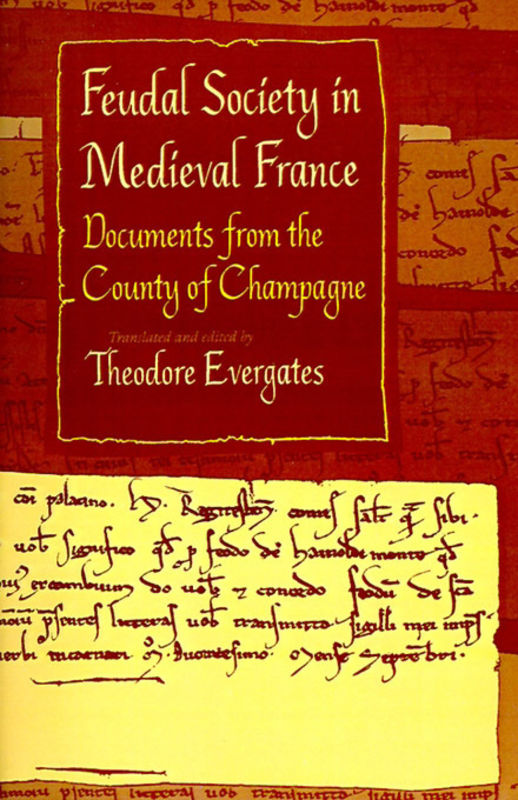
Feudal Society in Medieval France
Theodore Evergates has assembled, translated, and annotated some two hundred documents from the country of Champagne into a sourcebook that focuses on the political, economic, and legal workings of a feudal society, uncovering the details of private life and social history that are embedded in the official records.
eBook
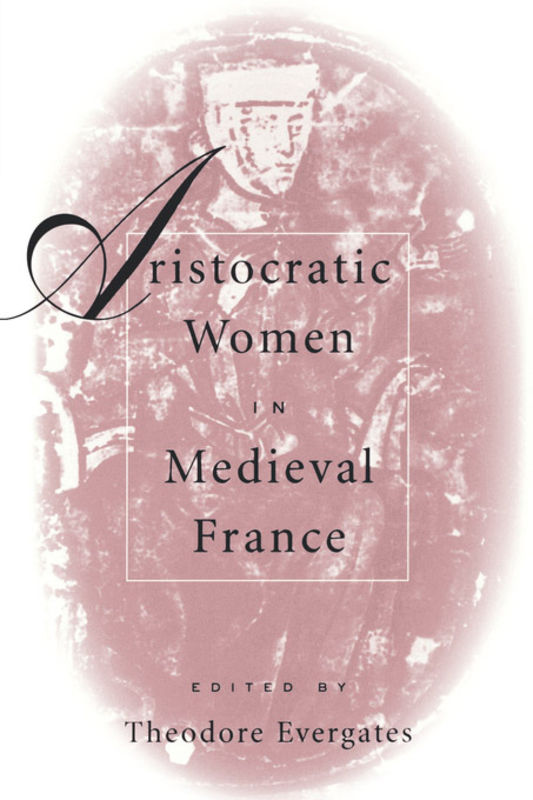
Aristocratic Women in Medieval France
Were aristocratic women in medieval France little more than appendages to patrilineal families, valued as objects of exchange and necessary only for the production of male heirs? Such was the view proposed by the great French historian Georges Duby more than three decades ago and still widely accepted. In Aristocratic Women in Medieval France another model is put forth: women of the landholding elite-from countesses down to the wives of ordinary knights-had considerable rights, and exercised surprising power. The authors of the volume offer five case studies of women from the mid-eleventh through the thirteenth centuries, and from regions as diverse as Blois-Chartres, Champagne, Flanders, and Occitania. They show not only the diversity of life experiences these women enjoyed but the range of social and political roles open to them. The ecclesiastical and secular sources they mine confirm that women were regarded as full members of both their natal and affinal families, were never excluded from inheriting and controlling property, and did not have their share of family property limited to dowries. Women across France exchanged oaths for fiefs and assumed responsibilities for enfeoffed knights. As feudal lords, they settled disputes involving vassals, fortified castles, and even led troops into battle. Aristocratic Women in Medieval France clearly shows that it is no longer possible to depict well-born women as powerless in medieval society. Demonstrating the importance of aristocratic women in a period during which they have been too long assumed to have lacked influence, it forces us to reframe our understanding of the high Middle Ages.
eBook

Marshal of Countess Marie and Count Henry II
Geoffroy of Villehardouin’s horizon during the fifteen years he served as a garrison knight was limited to the city of Troyes and its immediate vicinity. From 1185 his purview as marshal extended across the entire county of Champagne with its thirty or more walled towns and fortified sites located between the royal domain in the west, the German empire in the east, Burgundy in the south, and Hainaut in the north. The county as constituted in 1185 was relatively new, having existed only since 1152 when Count Henry imposed a template of castellany districts over his diverse collection of lands
Book Chapter
Constantinople
On 23 June 1203, the fleet sailed from Abydos to the monastery of Saint Stephen, just southwest of the sea walls of Constantinople, from where they could see the city in all its splendor.¹ “It was a wondrous sight to behold,” said Villehardouin, addressing his listeners. “You should know that those who had not seen Constantinople stared in disbelief that such a magnificent city existed, with its high walls, strong towers encircling the entire city, superb palaces and majestic churches, so many that none believed it possible without seeing them in person…. There was not a man so bold whose
Book Chapter
The Marshal and His Scribe
If the memoirs can be reasonably dated to the eight months Villehardouin spent in Constantinople during the winter and spring of 1207-8, neither the scribe (or scribes) nor the conditions under which they were recorded are known, though it seems likely that he would have dictated to a cleric from Champagne who spoke his dialect. The marshal was familiar with the process of recording proceedings at court. Shortly after he became marshal, for example, he witnessed Countess Marie confirm the resolution of a property dispute involving the leper house in Troyes. A court notary, using shorthand or rapid writing (tachygraphy),
Book Chapter
Marshal of Count Thibaut III
Geoffroy was about fifty when Countess Marie died. As a civil servant embodying three decades of institutional memory and expertise, he would prove an invaluable, trusted mentor to eighteen-year-old Thibaut, whom he had known since birth. In light of subsequent events, it is likely that he played a key but discreet role in the six-month transition between Countess Marie’s last appearance in October 1197 and Thibaut’s homage to the king in April 1198. Of immediate concern was Thibaut’s collateral succession. In 1190 the barons had sworn to accept an eleven-year-old boy as count in the event that his unmarried brother
Book Chapter