
Catalogue Search | MBRL


Are you sure you want to remove the book from the shelf?

{{itemTitle}}
213
result(s) for
"Ewan, Elizabeth"
Sort by:

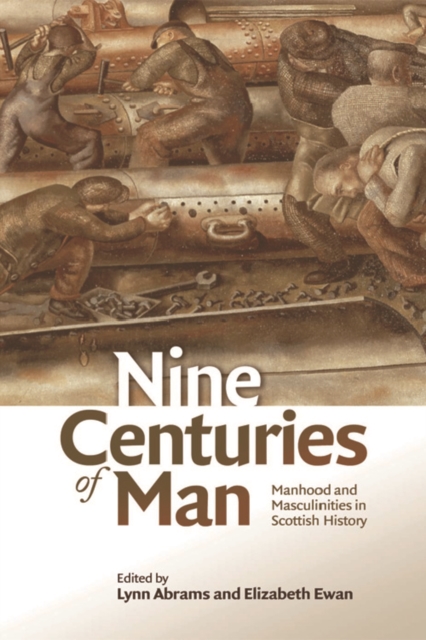
Nine Centuries of Man
This interdisciplinary collection explores a diverse range of the multiple and changing forms of masculinities from the late eleventh to the late twentieth century.
eBook
Nine centuries of man: manhood and masculinity in Scottish history
Scotland, with its stereotypes of the kilted warrior and the industrial 'hard man' has long been characterised in masculine terms, but there has been little historical exploration of what masculinity actually means for men (and women) in a Scottish context. This interdisciplinary collection explores a diverse range of the multiple and changing forms of masculinities from the late eleventh to the late twentieth century, examining the ways in which Scottish society through the ages defined expectations for men and their behaviour. How men reacted to those expectations is examined through sources such as documentary materials, medieval seals, romance, poetry, begging letters, police reports and court records, charity records, oral histories and personal correspondence. Focusing upon the wide range of activities and roles undertaken by men ? work, fatherhood and play, violence and war, sex and commerce ? the book also illustrates the range of masculinities which affected or were internalised by men. Together, they illustrate some of the ways Scotland's gender expectations have changed over the centuries and how more generally masculinities have informed the path of Scottish history.
eBook


Disorderly Damsels? Women and Interpersonal Violence in Pre-Reformation Scotland
This study uses the court records of eight pre-Reformation Scottish towns to examine women's involvement as perpetrators of violent physical assaults in their communities. It examines the nature of the assaults, including whether women were more likely to act alone or with others, the role of family and household, the types of victims, and the weapons used. These matters are compared to patterns found in studies of women's violence elsewhere in contemporary Europe. The article also examines how the community and women themselves perceived their use of physical assault. For example, some could justify violence as an acceptable method of discipline. Many attacks were aimed not only at causing physical harm but were also assaults on the victim's honour; a study of assault thus helps shed light on the nature of male and female honour among ordinary townsfolk in late medieval Scotland.
Journal Article
Disorderly Damsels? Women and Interpersonal Violence in Pre-Reformation Scotland
This study uses the court records of eight pre-Reformation Scottish towns to examine women's involvement as perpetrators of violent physical assaults in their communities. It examines the nature of the assaults, including whether women were more likely to act alone or with others, the role of family and household, the types of victims, and the weapons used. These matters are compared to patterns found in studies of women's violence elsewhere in contemporary Europe. The article also examines how the community and women themselves perceived their use of physical assault. For example, some could justify violence as an acceptable method of discipline. Many attacks were aimed not only at causing physical harm but were also assaults on the victim's honour; a study of assault thus helps shed light on the nature of male and female honour among ordinary townsfolk in late medieval Scotland. (Author abstract)
Journal Article
Schooling in the Towns, c. 1400–c. 1560
This is how the late-fifteenth-century poet Hary, known as Blind Harry, described the boyhood education of William Wallace to his audience. Records suggest that there was at least one school in Dundee from the midthirteenth century; there certainly was one by 1434. Whether Wallace did in fact attend school in Dundee in the late thirteenth century is less important than that Harry’s audience found such a statement believable, and also commendable. However, lest his hero be thought to be too bookish, Harry went on to reassure them that once Wallace had finished his schooling, he went on to many feats
Book Chapter