
Catalogue Search | MBRL


Are you sure you want to remove the book from the shelf?

{{itemTitle}}
146
result(s) for
"FRED MAGDOFF"
Sort by:


Creating an Ecological Society
pSickened by the contamination of their water, their air, of the Earth itself, more and more people are coming to realize that it is capitalism that is, quite literally, killing them. It is now clearer than ever that capitalism is also degrading the Earth's ability to support other forms of life. Capitalism's imperative-to make profit at all costs and expand without end-is destabilizing Earth's climate, while increasing human misery and inequality on a planetary scale. Already, hundreds of millions of people are facing poverty in the midst of untold wealth, perpetual war, growing racism, and gender oppression. The need to organize for social and environmental reforms has never been greater. But crucial as reforms are, they cannot solve our intertwined ecological and social crises. Creating an Ecological Society reveals an overwhelmingly simple truth: Fighting for reforms is vital, but revolution is essential. Because it aims squarely at replacing capitalism with an ecologically sound and socially just society, Creating an Ecological Society is filled with revolutionary hope. Fred Magdoff and Chris Williams, who have devoted their lives to activism, Marxist analysis, and ecological science, provide informed, fascinating accounts of how a new world can be created from the ashes of the old. Their book shows that it is possible to envision and create a society that is genuinely democratic, equitable, and ecologically sustainable. And possible-not one moment too soon-for society to change fundamentally and be brought into harmony with nature./p
eBook


Repairing the Soil Carbon Rift
When Magdoff's studied soil fertility as a graduate student in the mid-1960s, soil organic matter was recognized as something that occurred, but it received little emphasis in textbooks or class discussions. There were a few courses on soil biology, but the focus of practical soil fertility studies was on individual elements needed by plants, how they behaved in soil, and how to determine if they were present in sufficient amounts in forms that were available for plants to use. Over many years, individual soil types develop their unique characteristics as a result of the combined effects of the local climate and the vegetation growing on them, as well as the sources of minerals (parent material) from which a soil develops. As years pass, soils on the bottom of slopes receive eroded soil from the side slopes. This depletes the side slopes of organic matter-enriched topsoil at the same time that soils at the bottom become enriched.
Journal Article

Grand Theft Capital
The working class is being robbed, both through outright expropriation and the more hidden exploitation of countless workers who are struggling to make ends meet while capitalists pocket the surplus value they produce. John Bellamy Foster and Fred Magdoff dissect the neoliberal assault on the working class that is spurring a new generation of labor organizing.
Journal Article

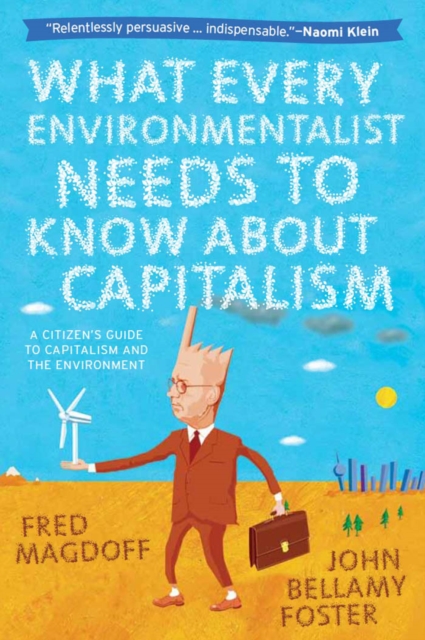
What Every Environmentalist Needs to Know About Capitalism
Praise for Foster and Magdoff's The Great Financial Crisis: In this timely and thorough analysis of the current financial crisis, Foster and Magdoff explore its roots and the radical changes that might be undertaken in response. . . . This book makes a valuable contribution to the ongoing examination of our current debt crisis, one that deserves our full attention.-Publishers WeeklyThere is a growing consensus that the planet is heading toward environmental catastrophe: climate change, ocean acidification, ozone depletion, global freshwater use, loss of biodiversity, and chemical pollution all threaten our future unless we act. What is less clear is how humanity should respond. The contemporary environmental movement is the site of many competing plans and prescriptions, and composed of a diverse set of actors, from militant activists to corporate chief executives.This short, readable book is a sharply argued manifesto for those environmentalists who reject schemes of \"green capitalism\" or piecemeal reform. Environmental and economic scholars Magdoff and Foster contend that the struggle to reverse ecological degradation requires a firm grasp of economic reality. Going further, they argue that efforts to reform capitalism along environmental lines or rely solely on new technology to avert catastrophe misses the point. The main cause of the looming environmental disaster is the driving logic of the system itself, and those in power-no matter how \"green\"-are incapable of making the changes that are necessary.What Every Environmentalist Needs To Know about Capitalism tackles the two largest issues of our time, the ecological crisis and the faltering capitalist economy, in a way that is thorough, accessible, and sure to provoke debate in the environmental movement.
eBook

الأزمة المالية العالمية وأزمة الرأسمالية
يقدم المؤلفان تحليلا نقديا رصينا عن الأصول التاريخية والجذور البنائية للأزمة المالية الحالية، ويرى المؤلفان أنها نتيجة منطقية للتناقضات التي تكتنف تمويل الرأسمال الاحتكاري من خلال العملتين التوأمين \"الأمولة\" و\"الركود\" اللتين تهيمنان على تطور الاقتصاد الأمريكي خلال العقود الحالية وهذا الكتاب مفيد جدا لأولئك الذين يحاولون التعرف على ماهية الأزمة المالية الحقيقة التي تواجه الولايات المتحدة والنظام الرأسمالي المعولم خلال ثمانين عاما.
Book
Twenty-first-century land grabs: accumulation by agricultural dispossession
Land grabs in the historical context of the continuous development of capitalism are examined. The combination of trends that contributed to the twenty-first-century land grabs include the international trade agreements favorable to globalized capital and opening up to foreign direct investment of the global South. The land grabs in Sierra Leone and Indonesia are also discussed.
Journal Article