
Catalogue Search | MBRL


Are you sure you want to remove the book from the shelf?

{{itemTitle}}
52
result(s) for
"FREYHOF, JÖRG"
Sort by:
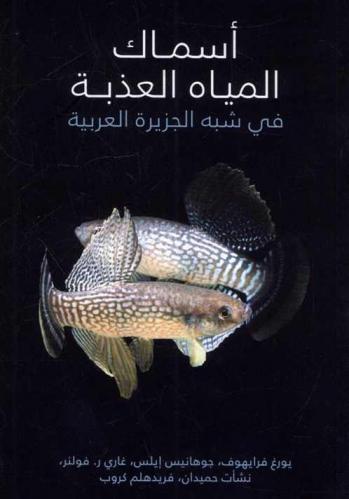
أسماك المياه العذبة في شبه الجزيرة العربية
يتناول كتاب (أسماك المياه العاذبة في شبه الجزيرة العربية) الذي قام بتأليفه (يورغ فرايهوف) والذي يقع في حوالي (272) صفحة من القطع المتوسط موضوع الأسماك مستعرضا المحتويات التالية : الباب الأول طرائق العمل ميدانيا الباب الثاني المفاهيم الجغرافية الحيوية الباب الثالث الباب سجلات أنواع المياه العذبة الأصيلة الرابع سجلات أنواع المياه العذبة الغريبة.
Book

Europe's freshwater biodiversity under climate change: distribution shifts and conservation needs
AIM: To assess the future climatic suitability of European catchments for freshwater species and the future utility of the current network of protected areas. LOCATION: Europe. METHODS: Using recently updated catchment‐scale species data and climate projections from multiple climate models, we assessed the climate change threat by the 2050s for 1648 European freshwater plants, fishes, molluscs, odonates, amphibians, crayfish and turtles for two dispersal scenarios and identified hotspots of change at three spatial scales: major river basins, countries and freshwater ecoregions. We considered both common species and the often overlooked rare species. To set our findings within the context of current and future conservation networks, we evaluated the coverage of freshwater biodiversity by Europe's protected area network. RESULTS: Six per cent of common and 77% of rare species are predicted to lose more than 90% of their current range. Eight fish species and nine mollusc species are predicted to experience 100% range loss under climate change. As the most species‐rich group, molluscs are particularly vulnerable due to the high proportion of rare species and their relatively limited ability to disperse. Furthermore, around 50% of molluscs and fish species will have no protected area coverage given their projected distributions. MAIN CONCLUSIONS: We identified the species most at threat due to projected changes in both catchment suitability and representation within the European protected area network. Our findings suggest an urgent need for freshwater management plans to facilitate adaptation to climate change.
Journal Article

Reconstructing the phylogeny and evolutionary history of freshwater fishes (Nemacheilidae) across Eurasia since early Eocene
Eurasia has undergone substantial tectonic, geological, and climatic changes throughout the Cenozoic, primarily associated with tectonic plate collisions and a global cooling trend. The evolution of present-day biodiversity unfolded in this dynamic environment, characterised by intricate interactions of abiotic factors. However, comprehensive, large-scale reconstructions illustrating the extent of these influences are lacking. We reconstructed the evolutionary history of the freshwater fish family Nemacheilidae across Eurasia and spanning most of the Cenozoic on the base of 471 specimens representing 279 species and 37 genera plus outgroup samples. Molecular phylogeny using six genes uncovered six major clades within the family, along with numerous unresolved taxonomic issues. Dating of cladogenetic events and ancestral range estimation traced the origin of Nemacheilidae to Indochina around 48 mya. Subsequently, one branch of Nemacheilidae colonised eastern, central, and northern Asia, as well as Europe, while another branch expanded into the Burmese region, the Indian subcontinent, the Near East, and northeast Africa. These expansions were facilitated by tectonic connections, favourable climatic conditions, and orogenic processes. Conversely, aridification emerged as the primary cause of extinction events. Our study marks the first comprehensive reconstruction of the evolution of Eurasian freshwater biodiversity on a continental scale and across deep geological time. Stone loaches, also known as Nemacheilidae, are a large family of fish commonly found in the streams and rivers of Europe and Asia, with a small number of species also inhabiting certain Ethiopian lakes. How these fish, which originated in Asia about 50 million years ago, made their way into European and African waters remains poorly understood. Major geological and climate changes took place throughout this period, from the formation of the Himalayas and other mountain ranges in eastern and western Asia to large drops in temperatures or rainfalls in certain regions. Šlechtová et al. studied the influence of these events on the spread and evolution of stone loaches. The team used a large dataset of 471 samples obtained from more than 250 species to reconstruct the evolutionary tree of the Nemacheilidae. The analysis uncovers six major groups (or clades) within the family, all stemming from a common ancestor living 48 million years ago in Indochina (current mainland Southeast Asia). Each clade has separate yet sometimes overlapping geographical distributions. They followed distinct routes to spread across Asia and Europe, which Šlechtová et al. were able to examine in the light of geological and climate changes. For instance, a major aridification event taking place in Central Asia between 34 to 23 million years ago created a geographical divide within an ancestral stone loach group, splitting it into two parts that evolved separately to form two of the six current clades. While the Himalayas also acted as a strong barrier, growing highlands in eastern and western Asia expanded the range of suitable habitats for the fish, allowing them to colonize central and northern Asia and, from there, Europe. Other major geological events played a strong role in the propagation of the Nemacheilidae. When a small tectonic plate known as West Burma Terrane first contacted Southeast Asia 33 million years ago and later northeast India around 30 million years ago, the ancestral fish family used the plate like a ferry boat to spread to these new territories, and from there, expand into the Near East, Southeast Europe and Northeast Africa. These findings build on prior work investigating how geological and climate events have shaped evolution. However, they are the first case study to show the complete evolution of an animal group over such a large area and long period. It is the first detailed example of its type and could be precious to inform future work on evolution.
Journal Article

Phylogenetic relationships and biogeographical patterns in Circum-Mediterranean subfamily Leuciscinae (Teleostei, Cyprinidae) inferred from both mitochondrial and nuclear data
Background
Leuciscinae is a subfamily belonging to the Cyprinidae fish family that is widely distributed in Circum-Mediterranean region. Many efforts have been carried out to deciphering the evolutionary history of this group. Thus, different biogeographical scenarios have tried to explain the colonization of Europe and Mediterranean area by cyprinids, such as the \"north dispersal\" or the \"Lago Mare dispersal\" models. Most recently, Pleistocene glaciations influenced the distribution of leuciscins, especially in North and Central Europe. Weighing up these biogeographical scenarios, this paper constitutes not only the first attempt at deciphering the mitochondrial and nuclear relationships of Mediterranean leuciscins but also a test of biogeographical hypotheses that could have determined the current distribution of Circum-Mediterranean leuciscins.
Results
A total of 4439 characters (mitochondrial + nuclear) from 321 individuals of 176 leuciscine species rendered a well-supported phylogeny, showing fourteen main lineages. Analyses of independent mitochondrial and nuclear markers supported the same main lineages, but basal relationships were not concordant. Moreover, some incongruence was found among independent mitochondrial and nuclear phylogenies. The monophyly of some poorly known genera such as
Pseudophoxinus
and
Petroleuciscus
was rejected. Representatives of both genera belong to different evolutionary lineages. Timing of cladogenetic events among the main leuciscine lineages was gained using mitochondrial and all genes data set.
Conclusions
Adaptations to a predatory lifestyle or miniaturization have superimposed the morphology of some species. These species have been separated into different genera, which are not supported by a phylogenetic framework. Such is the case of the genera
Pseudophoxinus
and
Petroleuciscus
, which real taxonomy is not well known. The diversification of leuciscine lineages has been determined by intense vicariant events following the paleoclimatological and hydrogeological history of Mediterranean region. We propose different colonization models of Mediterranean region during the early Oligocene. Later vicariance events promoted Leuciscinae diversification during Oligocene and Miocene periods. Our data corroborate the presence of leuciscins in North Africa before the Messinian salinity crisis. Indeed, Messinian period appears as a stage of gradually Leuciscinae diversification. The rise of humidity at the beginning of the Pliocene promoted the colonization and posterior isolation of newly established freshwater populations. Finally, Pleistocene glaciations determined the current European distribution of some leuciscine species.
Journal Article

Components and drivers of change in European freshwater fish faunas
Aim Human-induced loss of native species and introduction of non-native species have altered richness and composition of species assemblages worldwide. During the past 15 years many studies have focused on changes in taxonomic similarity and identified numerous yet often contrasting reasons for these changes. This study aims to quantify taxonomic changes in freshwater fish assemblages between the mid-19th century and today, while explicitly separating its different components and drivers. Location Geographic Europe, 251 river basins > 2500 km2. Methods Pairwise catchment comparisons of historic and contemporary fish species inventories, with and without migratory fish, using Jaccard similarity; quantification of relative species turnover using a newly developed Reshuffling Index; determination of the threshold (here: number of catchments occupied) that displays how widespread a species must be to cause homogenization. Results The European freshwater fish fauna changed profoundly since the mid-19th century. All river catchments exhibited an average net gain of 5.7 species, leading to an overall increase in faunal similarity across Europe of 3.1% (4.6% if migratory species are excluded). However, species turnover was much higher than indicated by the net gain. On average, 20% of the historic assemblages became reshuffled. The native catchment range size of an introduced species primarily determined its impact on taxonomic similarity change, irrespective whether it is translocated within or introduced from outside Europe and whether the species is of fisheries importance or not. Main conclusions The concurrent use of multiple indices allowed disentangling the main components and drivers of taxonomic change. It became evident that prevention of intended or unintended species introduction will not lower the rate of taxonomic homogenization per se. However, most species actually caused taxonomic differentiation despite their range gain. All introduced species still considerably contributed to taxonomic change with potential negative effects on ecosystem functions.
Journal Article
Genome differentiation in a species pair of coregonine fishes: an extremely rapid speciation driven by stress-activated retrotransposons mediating extensive ribosomal DNA multiplications
Background
Sympatric species pairs are particularly common in freshwater fishes associated with postglacial lakes in northern temperate environments. The nature of divergences between co-occurring sympatric species, factors contributing to reproductive isolation and modes of genome evolution is a much debated topic in evolutionary biology addressed by various experimental tools. To the best of our knowledge, nobody approached this field using molecular cytogenetics. We examined chromosomes and genomes of one postglacial species pair, sympatric European winter-spawning
Coregonus albula
and the local endemic dwarf-sized spring-spawning
C
.
fontanae
, both originating in Lake Stechlin. We have employed molecular cytogenetic tools to identify the genomic differences between the two species of the sympatric pair on the sub-chromosomal level of resolution.
Results
Fluorescence
in situ
hybridization (FISH) experiments consistently revealed a distinct variation in the copy number of loci of the major ribosomal DNA (the 45S unit) between
C
.
albula
and
C
.
fontanae
genomes. In
C
.
fontanae
, up to 40 chromosomes were identified to bear a part of the major ribosomal DNA, while in
C
.
albula
only 8–10 chromosomes possessed these genes. To determine mechanisms how such extensive genome alternation might have arisen, a PCR screening for retrotransposons from genomic DNA of both species was performed. The amplified retrotransposon
Rex1
was used as a probe for FISH mapping onto chromosomes of both species. These experiments showed a clear co-localization of the ribosomal DNA and the retrotransposon
Rex1
in a pericentromeric region of one or two acrocentric chromosomes in both species.
Conclusion
We demonstrated genomic consequences of a rapid ecological speciation on the level undetectable by neither sequence nor karyotype analysis. We provide indirect evidence that ribosomal DNA probably utilized the spreading mechanism of retrotransposons subsequently affecting recombination rates in both genomes, thus, leading to a rapid genome divergence. We attribute these extensive genome re-arrangements associated with speciation event to stress-induced retrotransposons (re)activation. Such causal interplay between genome differentiation, retrotransposons (re)activation and environmental conditions may become a topic to be explored in a broader genomic context in future evolutionary studies.
Journal Article

Spatial priorities for freshwater biodiversity conservation in light of catchment protection and connectivity in Europe
Freshwater ecosystems host disproportionately high numbers of species relative to their surface area yet are poorly protected globally. We used data on the distribution of 1631 species of aquatic plant, mollusc, odonate and fish in 18,816 river and lake catchments in Europe to establish spatial conservation priorities based on the occurrence of threatened, range-restricted and endemic species using the Marxan systematic conservation planning tool. We found that priorities were highest for rivers and ancient lakes in S Europe, large rivers and lakes in E and N Europe, smaller lakes in NW Europe and karst/limestone areas in the Balkans, S France and central Europe. The a priori inclusion of well-protected catchments resulted in geographically more balanced priorities and better coverage of threatened (critically endangered, endangered and vulnerable) species. The a priori exclusion of well-protected catchments showed that priority areas that need further conservation interventions are in S and E Europe. We developed three ways to evaluate the correspondence between conservation priority and current protection by assessing whether a cathment has more (or less) priority given its protection level relative to all other catchments. Each method found that priority relative to protection was high in S and E Europe and generally low in NW Europe. The inclusion of hydrological connectivity had little influence on these patterns but decreased the coverage of threatened species, indicating a trade-off between connectivity and conservation of threatened species. Our results suggest that catchments in S and E Europe need urgent conservation attention (protected areas, restoration, management, species protection) in the face of imminent threats such as river regulation, dam construction, hydropower development and climate change. Our study presents continental-scale conservation priorities for freshwater ecosystems in ecologically meaningful planning units and will thus be important in freshwater biodiversity conservation policy and practice, and water management in Europe.
Journal Article
Diversity of spined loaches from Asia Minor in a phylogenetic context (Teleostei: Cobitidae)
Accurate determination of species diversity in areas of high endemicity, particularly those lacking comprehensive systematic knowledge, represents a challenge for both taxonomists and conservationists. This need is particularly evident in areas greatly affected by anthropogenic disturbances such as the Eastern Mediterranean and its freshwater environments. To improve our knowledge of Eastern Mediterranean freshwater fishes, we phylogenetically studied Western Palearctic Cobitis species, focusing on those found in Turkey. Overall, our results provide a robust framework to assess the number of species of Cobitis. Phylogenetic reconstructions based on mitochondrial (cyt b) and nuclear (RAG1) sequences show seven major clades (Clades 1-7) grouping all Western Palearctic Cobitis species, except C. melanoleuca. In general, each major clade comprises Cobitis species that inhabit geographically close areas and have similar secondary sexual characters. Multiple divergent lineages were identified in our analyses, some of which were highly divergent such as the ones inhabiting Turkish freshwaters. Moreover, in some analyses, several of the identified lineages were incongruent with a priori defined species. Furthermore, our analyses identified eight potentially new candidate species, six that had been suggested in previous studies and two that are reported here for the first time. Our results reveal Turkey as the area with the greatest diversity of spined loaches in the Mediterranean.
Journal Article
Where Are All the Fish: Potential of Biogeographical Maps to Project Current and Future Distribution Patterns of Freshwater Species
The dendritic structure of river networks is commonly argued against use of species atlas data for modeling freshwater species distributions, but little has been done to test the potential of grid-based data in predictive species mapping. Using four different niche-based models and three different climate change projections for the middle of the 21st century merged pairwise as well as within a consensus modeling framework, we studied the variability in current and future distribution patterns of 38 freshwater fish species across Germany. We used grid-based (11×11 km) fish distribution maps and numerous climatic, topographic, hydromorphologic, and anthropogenic factors derived from environmental maps at a finer scale resolution (250 m-1 km). Apart from the explicit predictor selection, our modeling framework included uncertainty estimation for all phases of the modeling process. We found that the predictive performance of some niche-based models is excellent independent of the predictor data set used, emphasizing the importance of a well-grounded predictor selection process. Though important, climate was not a primary key factor for any of the studied fish species groups, in contrast to substrate preferences, hierarchical river structure, and topography. Generally, distribution ranges of cold-water and warm-water species are expected to change significantly in the future; however, the extent of changes is highly uncertain. Finally, we show that the mismatch between the current and future ranges of climatic variables of more than 90% is the most limiting factor regarding reliability of our future estimates. Our study highlighted the underestimated potential of grid cell information in biogeographical modeling of freshwater species and provides a comprehensive modeling framework for predictive mapping of species distributions and evaluation of the associated uncertainties.
Journal Article