
Catalogue Search | MBRL


Are you sure you want to remove the book from the shelf?

{{itemTitle}}
790
result(s) for
"Fabozzi, Frank J"
Sort by:


Robust portfolios: contributions from operations research and finance
In this paper we provide a survey of recent contributions to robust portfolio strategies from operations research and finance to the theory of portfolio selection. Our survey covers results derived not only in terms of the standard mean-variance objective, but also in terms of two of the most popular risk measures, mean-VaR and mean-CVaR developed recently. In addition, we review optimal estimation methods and Bayesian robust approaches.
Journal Article

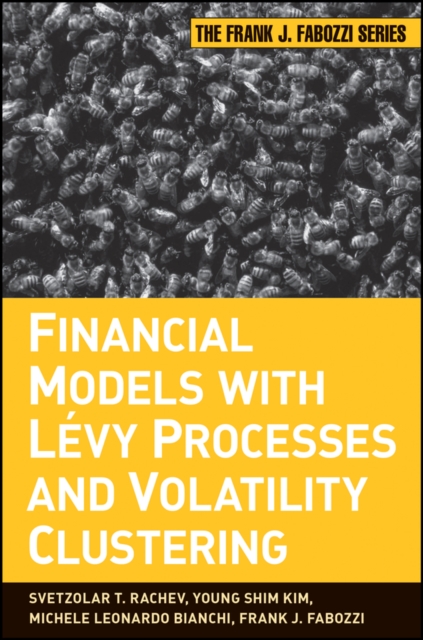
Financial models with Lévy processes and volatility clustering
An in-depth guide to understanding probability distributions and financial modeling for the purposes of investment management In Financial Models with Lévy Processes and Volatility Clustering, the expert author team provides a framework to model the behavior of stock returns in both a univariate and a multivariate setting, providing you with practical applications to option pricing and portfolio management. They also explain the reasons for working with non-normal distribution in financial modeling and the best methodologies for employing it. The book's framework includes the basics of probability distributions and explains the alpha-stable distribution and the tempered stable distribution. The authors also explore discrete time option pricing models, beginning with the classical normal model with volatility clustering to more recent models that consider both volatility clustering and heavy tails. Reviews the basics of probability distributions Analyzes a continuous time option pricing model (the so-called exponential Lévy model) Defines a discrete time model with volatility clustering and how to price options using Monte Carlo methods Studies two multivariate settings that are suitable to explain joint extreme events Financial Models with Lévy Processes and Volatility Clustering is a thorough guide to classical probability distribution methods and brand new methodologies for financial modeling.
eBook

The basics of financial econometrics : tools, concepts, and asset management applications
An accessible guide to the growing field of financial econometrics
As finance and financial products have become more complex, financial econometrics has emerged as a fast-growing field and necessary foundation for anyone involved in quantitative finance. The techniques of financial econometrics facilitate the development and management of new financial instruments by providing models for pricing and risk assessment. In short, financial econometrics is an indispensable component to modern finance.
The Basics of Financial Econometrics covers the commonly used techniques in the field without using unnecessary mathematical/statistical analysis. It focuses on foundational ideas and how they are applied. Topics covered include: regression models, factor analysis, volatility estimations, and time series techniques.
* Covers the basics of financial econometrics—an important topic in quantitative finance
* Contains several chapters on topics typically not covered even in basic books on econometrics such as model selection, model risk, and mitigating model risk
Geared towards both practitioners and finance students who need to understand this dynamic discipline, but may not have advanced mathematical training, this book is a valuable resource on a topic of growing importance.
eBook

The theory and practice of investment management : asset allocation, valuation, portfolio construction, and strategies
\"An updated guide to the theory and practice of investment management Many books focus on the theory of investment management and leave the details of the implementation of the theory up to you. This book illustrates how theory is applied in practice while stressing the importance of the portfolio construction process. The Second Edition of The Theory and Practice of Investment Management is the ultimate guide to understanding the various aspects of investment management and investment vehicles. Tying together theoretical advances in investment management with actual practical applications, this book gives you a unique opportunity to use proven investment management techniques to protect and grow a portfolio under many different circumstances. Contains new material on the latest tools and strategies for both equity and fixed income portfolio management Includes key take-aways as well as study questions at the conclusion of each chapter A timely updated guide to an important topic in today's investment world This comprehensive investment management resource combines real-world financial knowledge with investment management theory to provide you with the practical guidance needed to succeed within the investment management arena.\"--Provided by publisher.
Book
Identifying household finance heterogeneity via deep clustering
Households are becoming increasingly heterogeneous. While previous studies have revealed many important insights (e.g., wealth effect, income effect), they could only incorporate two or three variables at a time. However, in order to have a more detailed understanding of complex household heterogeneity, more variables should be considered simultaneously. In this study, we argue that advanced clustering techniques can be useful for investigating high-dimensional household heterogeneity. A deep learning-based clustering method is used to effectively handle the high-dimensional balance sheet data of approximately 50,000 households. The employment of appropriate dimension-reduction techniques is the key to incorporate the full joint distribution of high-dimensional data in the clustering step. Our study suggests that various variables should be used together to explain household heterogeneity. Asset variables are found to be crucial for understanding heterogeneity within wealthy households, while debt variables are more important for those households that are not wealthy. In addition, relationships with sociodemographic variables (e.g., age, education, and family size) were further analyzed. Although clusters are found only based on financial variables, they are shown to be closely related to most sociodemographic variables.
Journal Article

Equity valuation and portfolio management
\"A detailed look at equity valuation and portfolio management Equity valuation is a method of valuing stock prices using fundamental analysis to determine the worth of the business and discover investment opportunities. In Equity Valuation and Portfolio Management Frank J. Fabozzi and Harry M. Markowitz explain the process of equity valuation, provide the necessary mathematical background, and discuss classic and new portfolio strategies for investment managers. Divided into two comprehensive parts, this reliable resource focuses on valuation and portfolio strategies related to equities.* Discusses both fundamental and new techniques for valuation and strategies* Fabozzi and Markowitz are experts in the fields of investment management and economics* Includes end of chapter bullet point summaries, key chapter take-aways, and study questions Filled with in-depth insights and practical advice, Equity Valuation and Portfolio Management will put you in a better position to excel at this challenging endeavor\"--Back cover.
Book

An Empirical Implementation of the Shadow Riskless Rate
We address the problem of asset pricing in a market where there are no risky assets. Previous work developed a theoretical model for a shadow riskless rate (SRR) for such a market, based on the drift component of the state-price deflator for that asset universe. Assuming that asset prices are modeled by correlated geometric Brownian motion, in this work, we develop a computational approach to estimate the SRR from empirical datasets. The approach employs principal component analysis to model the effects of individual Brownian motions, singular value decomposition to capture abrupt changes in the condition number of the linear system whose solution provides the SRR values, and regularization to control the rate of change of the condition number. Among other uses such as option pricing and developing a term structure of interest rates, the SRR can be used as an investment discriminator between different asset classes. We apply this computational procedure to markets consisting of various groups of stocks, encompassing different asset types and numbers. The theoretical and computational analysis provides the drift as well as the total volatility of the state-price deflator. We investigate the time trajectory of these two descriptive components of the state-price deflator for the empirical datasets.
Journal Article