
Catalogue Search | MBRL


Are you sure you want to remove the book from the shelf?

{{itemTitle}}
646
result(s) for
"Falk, John"
Sort by:

Learning from museums
\"In the second edition of their 2000 book, John H. Falk and Lynn D. Dierking offer an updated version of the Contextual Model of Learning, as well as present the latest advances in museum research, theory, and practice in order to provide readers an inside view of how and why people learn from their museum experiences\"-- Provided by publisher.
Book

The Museum Experience Revisited
The first book to take a \"visitor's eye view\" of the museum visit when it was first published in 1992, The Museum Experience revolutionized the way museum professionals understand their constituents. Falk and Dierking have updated this essential reference, incorporating advances in research, theory, and practice in the museum field over the last twenty years. Written in clear, non-technical style, The Museum Experience Revisited paints a thorough picture of why people go to museums, what they do there, how they learn, and what museum practitioners can do to enhance these experiences.
eBook
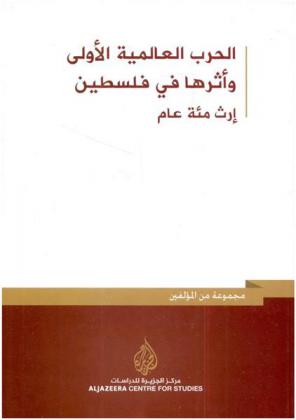
الحرب العالمية الأولى وأثرها في فلسطين: إرث مائة عام
يتناول الكتاب الحرب العالمية الأولى ويبدأ بإحياء بريطانيا الذكرى المئوية للحرب العالمية الأولى، 28 يناير-كانون الثاني 1914-11 نوفمبر-تشرين الثاني 1918. لم تكن الحرب العظمى، كما عرفت، أكثر الحروب تقتيلا في التاريخ فحسب، بل لعلها أيضا أكثرها تبديلا للأحوال وقد تمثل أثرها في تغيرات سياسية وثورات في كل بقاع العالم، فظهرت حدود جديدة وتحددت ممالك. وليس ثمة من هو أخبر بذلك من شعب فلسطين، الذي تأثر مستقبله بفعل تنامي الدعم للهجرة اليهودية خلال الحرب. ويتضح هذا التغير السكاني والسياسي في فلسطين اليوم اتضاحا شديدا ؛ حيث يجد الفلسطينيون أنفسهم مشردين وبلا دولة يحملون جنسيتها. ويستحق هذا الجمع بين الظلم والمقاومة والكارثة الإنسانية، الذي كانت له، ولا تزال، تبعات جيوسياسية بالغة، تحليلا تاريخيا وقانونيا ثاقبا.ليس ثمة من هو أفضل من مركز الجزيرة للدراسات ومركز العودة الفلسطيني للقيام بهذه المهمة، وقد كانا رائدين في مجال الأبحاث والإسهام بقسط وافر في أربعة أبحاث مستفيضة في هذه المسألة عبر عقد من الزمن تقريبا. لذلك، فلا غرو أن يجمعا بين أربعة عشر من المؤرخين وخبراء القانون والأكاديميين والمسؤولين لتقويم الأحداث التي سبقت الحرب العالمية الأولى والتي رافقتها وتلك التي تلتها، لتصحيح النظرة إلى الأزمة الفلسطينية-يشرح الكتاب الكيفية التي أثارت بها خيانات الدبلوماسية قبل قرن أحداثا وتوترات ظلت تعتمل طويلا حتى انفجرت فأودت معها بأرواح وبددت آمالا. وقد مر نحو قرن من الزمن إلى أن اهتزت الأسس التي أرسيت بعيد الحرب العالمية الأولى ؛ إذ شهدت المنطقة في السنوات الأخيرة غليانا غير مسبوق أشعلته سلسلة من التطورات السياسية، وعلى أكثر من صعيد. يعالجها هذا الكتاب على ضوء أحداث وتحركات وتغيرات عميقة وجديدة طالت قضية العرب الأولى.
BOOK

The 95 Percent Solution
Surely the best informed and most science-literate citizens are those who enjoy maximal benefits from both inand out-of-school science learning opportunities. [...] we would argue for increased efforts to measure the cumulative and complementary influences of both in- and out-of-school science learning.
Journal Article

Informal Science Education: Lifelong, Life-Wide, Life-Deep
Informal Science Education: Lifelong, Life-Wide, Life-Deep Informal science education cultivates diverse opportunities for lifelong learning outside of formal K-16 classroom settings, from museums to online media, often with the help of practicing scientists.
Journal Article

MUSEUMS AND THE PANDEMIC - HOW COVID-19 IMPACTED MUSEUMS AS SEEN THROUGH THE LENS OF THE WORLDS' MOST VISITED ART MUSEUMS
COVID-19 (C19) was first recognized and described in November 2019 in Wuhan. In January 2020, WHO declared a public health emergency of international concern as a result of the spreading epidemic. By March of the same year, C19 was declared a pandemic. In connection with the pandemic, individual countries around the world enacted a variety of policies designed to slow the spread of C19; policies which dramatically impacted visits to museums of all kinds. Lockdowns selected institutional closures and restrictions and declines in tourism all contributed to precipitous declines in the use of museums. In response, museum significantly increased their digital presence, attempting to replace in-person experiences with virtual experiences of all kinds. However, the inherent limitations of the digital realm, including and particularly financial limitations, suggest an uncertain future for museums. We use data from visitations to the worlds' ten largest art museums over the period 2007-2020 as a vehicle for tangibly describing and discussing these issues.
Journal Article

Properties and emission factors of cloud condensation nuclei from biomass cookstoves – observations of a strong dependency on potassium content in the fuel
Residential biomass combustion is a significant source of aerosol particles on regional and global scales influencing climate and human health. The main objective of the current study was to investigate the properties of cloud condensation nuclei (CCN) emitted from biomass burning of solid fuels in different cookstoves mostly of relevance to sub-Saharan east Africa. The traditional three-stone fire and a rocket stove were used for combustion of wood logs of Sesbania and Casuarina with birch used as a reference. A natural draft and a forced-draft pellet stove were used for combustion of pelletised Sesbania and pelletised Swedish softwood alone or in mixtures with pelletised coffee husk, rice husk or water hyacinth. The CCN activity and the effective density were measured for particles with mobility diameters of ∽65, ∽100 and ∽200 nm, respectively, and occasionally for 350 nm particles. Particle number size distributions were measured online with a fast particle analyser. The chemical composition of the fuel ash was measured by application of standard protocols. The average particle number size distributions were by number typically dominated by an ultrafine mode, and in most cases a soot mode was centred around a mobility diameter of ∽150 nm. The CCN activities decreased with increasing particle size for all experiments and ranged in terms of the hygroscopicity parameter, κ, from ∽0.1 to ∽0.8 for the ultrafine mode and from ∽0.001 to ∽0.15 for the soot mode. The CCN activity (κ) of the ultrafine mode increased (i) with increasing combustion temperature for a given fuel, and (ii) it typically increased with increasing potassium concentration in the investigated fuels. The primary CCN and the estimated particulate matter (PM) emission factors were typically found to increase significantly with increasing potassium concentration in the fuel for a given stove. In order to link CCN emission factors to PM emission factors, knowledge about stove technology, stove operation and the inorganic fuel ash composition is needed. This complicates the use of ambient PM levels alone for estimation of CCN concentrations in regions dominated by biomass combustion aerosol, with the relation turning even more complex when accounting for atmospheric ageing of the aerosol.
Journal Article

Interested, Disinterested, or Neutral: Exploring STEM Interest Profiles and Pathways in A Low-Income Urban Community
To better understand STEM interest development during adolescence in an urban community, we examined how “STEM Interested” youth differed from disinterested youth and how interest changed over time from age 11/12 to 12/13. We surveyed youth to measure interest in four components of STEM, used cluster analysis to categorize youth based on STEM interest, and examined how interest profiles and pathways differed for several explanatory factors (e.g., parental support, gender). Three STEM interest profiles emerged from the analysis: Stem Interested, Math Disinterested, and STEM Disinterested. Only STEM Disinterested youth lost interest in science, technology/engineering, and mathematics while the remaining 76% of youth remained at least somewhat interested in science and technology/engineering. Girls were just as likely as boys to identify as STEM Interested. Participation in out-of-school STEM activities and positive parental attitudes toward science were significant predictors of persistent STEM interest. Decreases in STEM interest were associated with declines in science self-concept and perceived parental attitudes toward science. Results suggested that declining STEM interest may not be the norm for urban youth. The findings also revealed factors that may influence declining STEM interest and reinforced the importance of out-of-school factors in developing and sustaining STEM interest during adolescence.
Journal Article

Valuing free-choice learning in national parks
Large-scale studies across the National Park Service (NPS) sites are currently underway to better understand what students in these programs learn and how they shape the children's sense of self and their connection to history, nature, or society (Powell, Stern, and Frensley 2020). Focusing mostly on learning outcomes from programmed activities for youth may considerably underestimate the full contribution that national parks make to the learning ecosystem of the United States (and, given the large number of foreign visitors, that of the world). Sometimes this learning happens within the walls of brick-and-mortar settings such as science centers, natural history museums, zoos, aquariums, or planetariums. Park experiences are usually a mixture of designed experiences, such as those delivered by visitor centers, guided tours, or interpretive signs, combined with activities that are fully under the control of the visitor, such as conversations about biology, geology, or history while hiking or camping.
Journal Article