
Catalogue Search | MBRL


Are you sure you want to remove the book from the shelf?

{{itemTitle}}
36
result(s) for
"Featherstone, Susan"
Sort by:

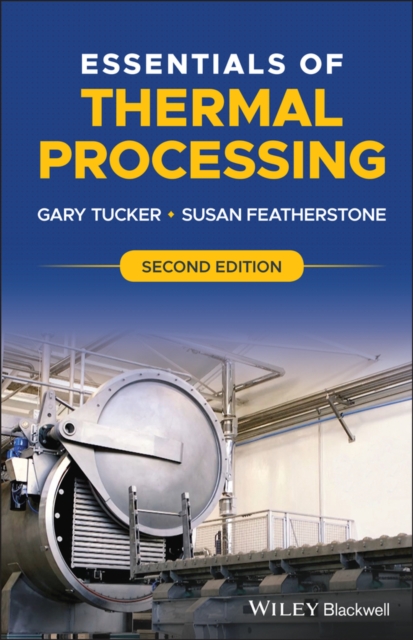
Essentials of Thermal Processing
ESSENTIALS OF THERMAL PROCESSING Explore this fully updated new edition of a practical reference on food preservation from two leading voices in the industry Among all food preservation methods in use today, thermal processing remains the single most important technique used in the industry.
eBook

Environmental Aspects of Thermal Processing
This chapter assesses the environmental impact of thermal processing. Carbon footprinting is one of the most familiar impact factors and calculations are presented for a bottled apple juice product. There are other life cycle analysis (LCA) impact factors that are important for assessing the environmental impact of operations. These are described in the context of thermal processing.
Book Chapter
Processing Systems
This chapter describes the various processing systems used for manufacturing heat preserved foods. For convenience, they are divided into in‐pack and in‐line systems, which are often known as retorts and continuous systems. The main types of batch retort are described, for example steam, steam‐air, water immersion, raining, and sprayed water. Also included are in‐pack continuous retorts such as hydrostatic and reel and spiral cooker–cooler systems. In‐line systems include heat exchangers and pressure vessels. Examples include heat exchangers based on plates, tubes, or scraped surfaces, plus some of the interesting adaptations of these basic designs. Food products heated prior to filling into the package can either be an aseptic fill for ambient shelf life or a clean fill for chilled shelf life. Some of the more commercially relevant newer technologies are described, such as ohmic and microwave processing, that can deliver heat treatments either in‐pack or in‐line.
Book Chapter
Critical Factors in Thermal Processing
It is important to understand the critical factors of the particular product being processed, as many factors can influence the safety of the product and process. This chapter gives a description of the areas to consider and why they can affect the product safety.
Book Chapter
Cooling Water Treatment
Cooling water quality is critical to the safety and shelf‐swtability of all heat processed foods. This chapter discusses the different methods that can be used to treat the water and gives some of the benefits and challenges of each method.
Book Chapter
Hurdles to Microbial Growth
In most processed food products, there are many contributing factors to ensuring that the final product is safe and nutritious. In thermally processed foods, the heat treatment is critical but there are other hurdles that should be in place to ensure that the heat treatment is not excessive and the maximum nutritional and quality parameters are retained. In this chapter, these hurdles are discussed, but each product and process has to be assessed on its own merit.
Book Chapter
Microbiology of Heat Preserved Foods
This chapter discusses the kinds of micro‐organisms that are important in food preservation and those that can cause spoilage. The factors that affect the survival and growth are discussed. Actual examples of different micro‐organisms are given. The chapter concludes with some guidelines for identifying spoilage in canned foods.
Book Chapter
Incubation Testing
This chapter describes the objectives of incubation together with recommendations for incubation times and temperatures for different types of microorganisms. Incubation of processed packs is commonplace in the food industry although a variety of incubation practices occur. Suggestions for sample size and methods for interpretation of results are given. Causes of spoilage are outlined together with descriptions of examples of spoilage with thermally processed foods.
Book Chapter