
Catalogue Search | MBRL


Are you sure you want to remove the book from the shelf?

{{itemTitle}}
32
result(s) for
"Feez, Susan"
Sort by:


Montessori
In 1913 four Australian teachers attendedinspirational educator Dr Maria Montessori's first international trainingcourse in Rome.That same year Blackfriars School in Sydney was one of thefirst schools in the world to adopt the Montessori approach. A century later, Montessori continues to be at theforefront of innovative education in this country.
eBook
Montessori
In 1913, four Australian teachers attended inspirational educator Dr. Maria Montessori's first international training course in Rome. That same year Blackfriars School in Sydney was one of the first schools in the world to adopt the Montessori approach. A century later, Montessori continues to be at the forefront of innovative education in Australia, with 200 schools and centers featuring Indigenous learning programs and a recognized curriculum of its own. This book is the first comprehensive history of the revolutionary Montessori teaching method in Australia.
eBook
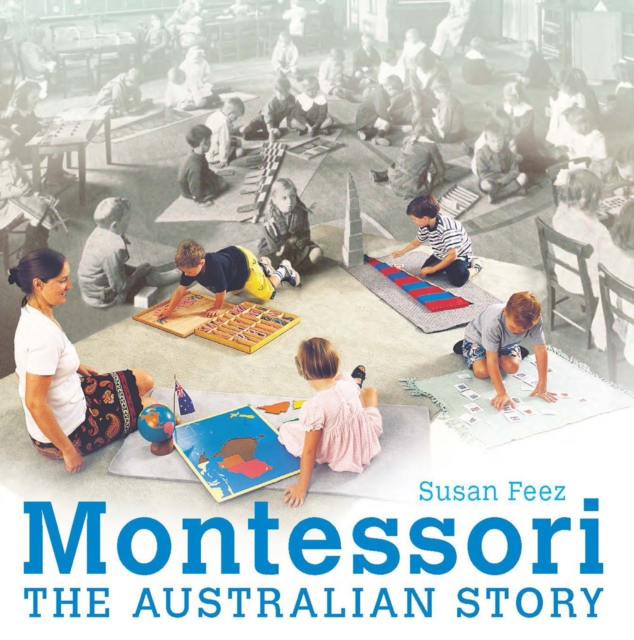
Montessori
In 1913, four Australian teachers attended inspirational educator Dr. Maria Montessori's first international training course in Rome. That same year Blackfriars School in Sydney was one of the first schools in the world to adopt the Montessori approach. A century later, Montessori continues to be at the forefront of innovative education in Australia, with 200 schools and centers featuring Indigenous learning programs and a recognized curriculum of its own. This book is the first comprehensive history of the revolutionary Montessori teaching method in Australia.
eBook
Bringing more than a century of practice to writing pedagogy in the early years
In Montessori classrooms writing is taught using a pedagogy that lays claim to more than a century of practice. In the early 20th century Maria Montessori analysed the process of learning to write for the benefit of street children too young to be at school but who showed interest in writing. Montessori designed a repertoire of lessons and activities that offered the children two separate but parallel developmental pathways, one mechanical and one intellectual. The mechanical pathway had two elements: learning how to hold and control a pencil, and (for alphabetic writing) learning to distinguish individual sounds in the stream of spoken language and to match the sounds with graphic signs. The intellectual pathway also had two elements: learning to use graphic signs to (re)compose the sounds of the language into words, and learning to organise words into written discourse. When the children engaged with Montessori's lessons and activities, they appeared to be teaching themselves to write. Because this same pedagogy is still in use today, it provides a rare opportunity to investigate an enduring educational practice through which children for more than a hundred years and in more than a hundred countries have become writers.
Book Chapter
A shared European heritage
If Dr Montessori’s pedagogy and the new Australian nation shared the idea of liberty as a founding principle, it was because an exploration of the provenance of both leads back to a collection of ideas that emerged in eighteenth-century Europe, a period known as the Age of Enlightenment. The influence of Enlightenment thought, and the impulse to unify and be free of foreign rulers, found expression in nineteenth-century Italy in the Risorgimento, or Resurgence. Maria Montessori was born in 1870, the year the newly liberated Italy finally unified as a nation in its own right. Both her parents were Italian
Book Chapter
Swimming against the tide
The students returning home from the first international Montessori training course in mid-1913 would have left Rome brimming with enthusiasm. As they set out on journeys by steam train and steamship to different corners of the globe, they would have looked forward to implementing all that they had learned in Rome in their own classrooms at home. No matter how far the Montessori graduates travelled, however, whether to other parts of Europe, to the Americas, to Asia or to Australia, they were all heading into an era far less attuned to their enthusiasm for educational reform based on liberty.
Following
Book Chapter
Martha Simpson
On the way home to Sydney, like so many travellers returning from Europe, Martha Simpson broke her journey in Perth. Because Perth was so strategically located on the sea route between the eastern states and Europe, it was often the first landfall for news and new ideas making their way to Australia from Europe. Martha Simpson arrived in Perth just as the education system was being expanded and reformed, and the new primary school curriculum ‘was declared to exhibit as a whole Montessori’s concern for the self-activity of the child’ (Petersen 1983: 252). Perhaps at Miss Simpson’s invitation while she
Book Chapter
Training at home and abroad
A key factor restricting the expansion of Australian Montessori schools over the last hundred years has been an ongoing shortage of trained Montessori teachers, a consequence of the tyranny of distance made more serious when the volatile working conditions in small schools struggling to survive drive teachers away to find more secure careers.
From 1913 to the present there have been three ways Australian Montessori schools have been supplied with trained Montessori teachers. First, Australians travelled to train overseas. As we have seen, before World War II Australians travelled overseas to attend training courses delivered by Dr Montessori herself, first
Book Chapter
Afterword
A century of Montessori schools in Australia has produced many thousands of Montessori graduates. What has become of all these people? What stories do they have to tell of their time in Montessori classrooms and the impact a Montessori start had on their lives? The work to chronicle these stories has barely begun, but with luck this book will be a catalyst for a keen researcher to do just this.
The greatest challenge will be to uncover the stories of those children who attended the earliest Australian Montessori classes, whether at Blackfriars Practising School in Sydney, the Franklin Street Free
Book Chapter